
hardware15.46 min read
NVIDIA DGX Spark 64GB Launches at $4,999 Amid Memory Shortage
5 days ago•Source: TechPowerUp

The latest hardware stories, each synthesized from multiple sources with added background and context.
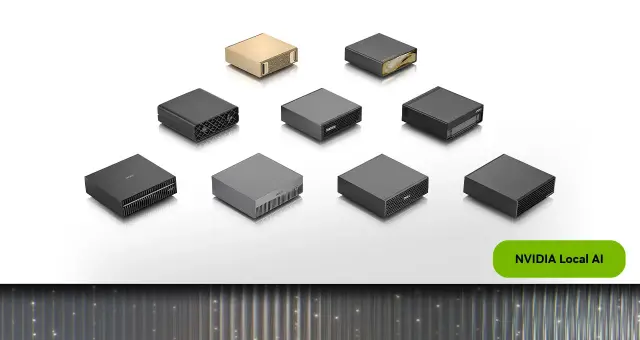
NVIDIA is releasing a 64GB variant of its DGX Spark desktop AI system on October 23, 2026, priced at $4,999. This new configuration addresses the ongoing memory shortage by offering a lower entry point than the 128GB model, which has risen to $6,950. The 64GB unit retains the GB10 Grace Blackwell Superchip and supports up to 100-billion-parameter models, with clustering capabilities to expand capacity.
TechPowerUp•11 days ago
TechSpot•12 days ago

A developer has significantly optimized an unofficial tool that runs NVIDIA’s DLSS 5 Neural Rendering on AMD Radeon GPUs, achieving a 74% performance increase in a single day. The update enables playable framerates in titles like Cyberpunk 2077, though critics note severe input lag and visual artifacts when combined with frame generation.
California-based WiCi has launched the WiCi One, a wireless external GPU (eGPU) enclosure that connects to host devices via Wi-Fi 7 rather than traditional cables like Thunderbolt or OCuLink. The device features an NVIDIA RTX 5060 Ti, an Intel Core Ultra 7 255H processor, and 4TB of NVMe storage. While marketed for high-framerate gaming, WiCi emphasizes its utility for local AI inference and 3D rendering, where latency is less critical. The RTX 5060 Ti version is priced at $2,599, with an early sign-up rate of $1,999, while a more powerful RTX 5090 variant is planned but lacks a set price. A developer preview is expected in Q4 2026.

Walmart is selling CyberPowerPC pre-built gaming PCs featuring NVIDIA’s typically exclusive RTX 5070 Founders Edition graphics card. The deal, part of a limited GeForce Week promotion ending September 27, starts at $1,549 for an Intel Core i7-14700KF build and $1,599 for an AMD Ryzen 7 7800X3D configuration. Both systems include 32 GB of DDR5-6000 RAM, 1 TB of PCIe 4.0 SSD storage, and a 360 mm liquid cooler. This pricing undercuts typical market rates for similar high-end components, which often exceed $2,000 due to current hardware inflation.
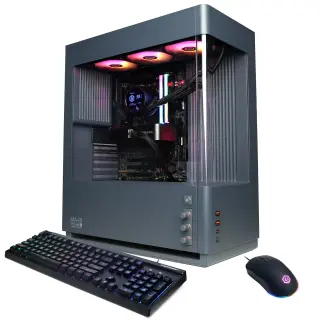
CyberPowerPC is selling pre-built gaming PCs with NVIDIA's typically exclusive Founders Edition GPUs at Walmart through September 27. The lineup includes RTX 5070, 5080, and 5090 Founders Edition cards, with prices starting at $1,549 for an Intel Core i7-14700KF build. Higher-end configurations with AMD Ryzen 7 9850X3D and RTX 5090 Founders Edition are priced at $4,299 but are currently out of stock.
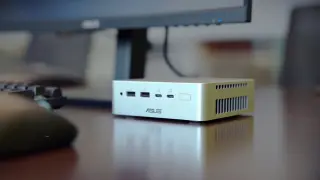
ASUS has begun shipping the Ascent QN10, the first mini PC built around Qualcomm’s Snapdragon X2 Elite platform, delivering up to 80 TOPS of NPU power for local AI tasks. The 0.7‑liter device uses an 18‑core Oryon CPU, Adreno X2‑90 GPU with a Hexagon NPU (up to 80 TOPS), and offers up to 32GB LPDDR5x memory and 512GB–2TB storage, plus Wi‑Fi 7, Bluetooth 6.0, a full port suite, and a novel cooling design. It also provides access to Qualcomm’s AI Hub with 175+ models and is priced at $1,349 at Best Buy.

ASUS has opened pre-orders for the ROG Xbox Ally X20, a major upgrade to the existing Ally X that packs a 7.4-inch OLED HDR display, advanced cooling with a redesigned PCB, refined input controls (Transforming D-pad and hybrid metal dome D-pad, upgraded magnetic thumbsticks), extra RGB lighting, and a MicroSD Express slot. It retains the Ryzen AI Z2 Extreme, 24 GB RAM, 1 TB SSD, and 80 Wh battery, and comes in a standalone $1,299.99 model or a $2,499.99 bundle that includes the ROG XREAL R1 Edition AR glasses; launches October 15 and is available at Best Buy and the ASUS Store.
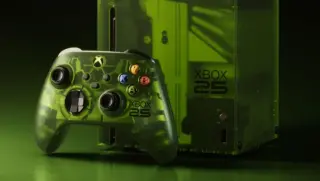
Kotaku reports that the translucent green Anniversary Xbox Series X25 is rumored to cost around $900 in the U.S. (€899.99 in Europe), with the controller shipping in October and the console in November, and no Black Friday deal expected. The price is about $100 more than the current $800 1TB Series X with a disc drive and roughly matches PS5 Pro pricing, though storage details aren’t confirmed. Microsoft has been raising hardware prices amid broader AI/data-center investments, and this model isn’t confirmed to include a storage bump. For collectors, the original Halo Edition Xbox still fetches around $750 on eBay.

Valve’s Steam Machine team says memory shortages are worsening and retail RAM is lagging bulk supply by 3–6 months, signaling prices may rise further into 2027 as Valve scrambles to secure DRAM with no binding supplier contracts; a class-action lawsuit against Samsung, SK Hynix, and Micron offers a potential remedy but provides no immediate relief.

Industry forecasts indicate RAM prices will stay elevated through 2028 due to AI-driven demand and supply constraints, with analysts warning of continued price hikes for PCs and consoles and potential delays for next-gen hardware like PlayStation 6.
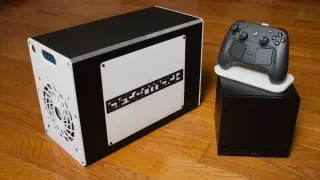
An enthusiast repurposes a discarded ASRock BC250 board—an RDNA2-based, crypto-mining unit resembling a neutered PS5—into a budget, Steam Machine–style PC by flashing a new BIOS, reworking cooling, and running Linux; with community tweaks to unlock up to 40 compute units, it achieves roughly GTX 1060 Ti–level performance at 1080p, illustrating open-hardware ingenuity despite setup complexity and higher power use compared with Valve’s Steam Machine.