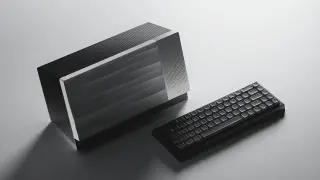
Framework teases a 'Next Gen' event for April 21 with a video full of Linux imagery, suggesting a Linux-centered reveal while noting global expansion (NZ, Norway, Switzerland, Singapore) and reaffirming its hardware-ownership stance amid AI-driven supply pressures.
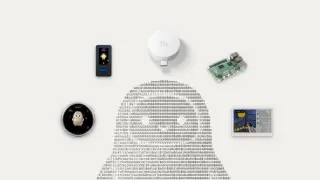
Former Apple Vision Pro engineers unveiled Button, a $179 AI wearable that looks like an iPod Shuffle. It houses a generative AI chatbot and only listens when you press the button, addressing privacy concerns by not passively listening. It can speak aloud or connect to earbuds/glasses via Bluetooth, ships in December, and can be worn or kept in a pocket. The founders frame Button as a fast, hardware AI interface competing with other wearables, not a smartphone replacement.
MSI introduces full AM5 support for AMD’s Ryzen 9 9950X3D2 Dual Edition and unveils the MEG X870E UNIFY-X MAX, a flagship overclocking motherboard featuring an 18+2+1 power design, Direct OC Jumper, OC Engine, and robust cooling for extreme tuning. The Ryzen 9 9950X3D2 is a 16-core, 32-thread CPU with 192 MB L3 cache, up to 5.6 GHz boost, and 200 W TDP, designed to pair with MSI’s CLICK BIOS X, Latency Killer, X3D Gaming Mode, and fast connectivity (Wi-Fi 7 + 5G LAN). An AGESA PI 1.3.0.0 BIOS update is expected for 600 & 800-series boards to optimize Ryzen 9 9950X3D2 Dual Edition performance.
Evercade will unveil a new hardware called the Nexus tomorrow in a 4pm BST/11am EDT/8am PDT live reveal on YouTube; the company has only teased the name so far, leaving questions about the Nexus' form factor and capabilities—whether it's a handheld, dockable hybrid, or more powerful emulation that remains compatible with Evercade cartridges.
A 1991 Sun SPARCstation IPX is revived through a series of hardware swaps—PSU, motherboard, video card, RAM, and disk—to install Solaris 2.6; while it eventually boots to a GUI, performance is slow, illustrating how reviving vintage hardware often requires costly parts and extensive tinkering.
Valve's SteamOS 3.8.0 preview adds initial support for upcoming Steam Machine hardware and broadens compatibility for third-party devices, with upgrades to Arch Linux base, Linux kernel 6.16, and KDE Plasma on Wayland, plus improved GPU memory management, HDMI audio, HDR and multi-monitor scaling; Valve aims to launch the Steam Machine in the first half of 2026 but has not announced pricing or availability.
A Windows Central editor details having her Xbox ROG Ally X repaired and returned, only to fall for the Lenovo Legion Go's bigger screen, detachable controllers, charging options, and overall comfort. She spent around £800 on the Ally X five months earlier and questions the need for the most expensive tech, as the repaired Ally X sits back in its box while the Legion Go becomes her daily driver for games like Stardew Valley and Diablo 4; she even contemplates selling the Ally X as she reassesses what a handheld should deliver.
HP is offering a 57% discount on the Omnibook 5 14-inch AI laptop at HP US, dropping the price to $499.99 (from $1,149.99). The Snapdragon X-powered ARM laptop features 16GB RAM, 512GB SSD, a 2K OLED display with 95% DCI-P3, and an estimated 34-hour battery life. It’s pitched as a cheaper, higher-RAM alternative to Apple’s MacBook Neo, with more RAM and storage for less money, though RAM is soldered and the SSD is upgradeable. As a Windows on ARM device, some traditional x86 apps may run via emulation, and affiliate links are in use.
Dell’s Inspiron 14 2-in-1 is on sale for $549 at Best Buy, packing 16GB of RAM and a 512GB SSD in a 14-inch convertible with a touch display, undercutting the $599 MacBook Neo and offering stronger multitasking and external-display support. The Neo trades portability and brightness for a smaller, lighter chassis and fewer ports, but comes up short on RAM/storage. In short, the Dell represents better value for Windows users at a significantly lower price.
A GamesRadar Hardware piece argues Sony’s “dynamic” PS5 surge pricing for digital games could push players toward retro and physical options, suggesting buying older consoles (PS1/PS2/PS3) or sticking with physical discs as a form of protest. The author notes the price test is an A/B experiment across roughly 150 games in 68 regions for several months, and urges gamers to resist digital price shenanigans and keep classic hardware in play.
Apple’s latest MacBook Air, MacBook Pro, and MacBook Neo now label the tab, caps lock, shift, return, and delete keys with glyphs on US English keyboards, aligning with European layouts and extending to regions where US English is the default; the change accompanies the upcoming launch this week.
A hardware hacker built Orbigator, a transparent globe that rotates to show the International Space Station’s real-time position, inspired by Will Dana’s 2025 ISS-tracking lamp. The device uses a clear globe with an internal mechanism to avoid wiring clutter, and the project is documented with open-source files: 3D-printed parts via OpenSCAD, firmware in MicroPython for the Raspberry Pi Pico 2, and a KiCad PCB design. The work, which includes contributions from Anool Mahidharia, is all available on the project’s GitHub. For folks who want something simpler, a pan-and-tilt security camera can offer a more approachable alternative.
Neural DSP's Quad Cortex mini packs hundreds of amps, cabs, and effects into a palm-sized floor unit for $1,400, with Neural Capture options, Cortex Cloud, and a 7-inch touchscreen; while its grid-based, rectangle-driven interface can be fiddly and steeper to learn, the sound is exceptionally high-quality for home studios, live rigs, and recording, making it a strong contender against larger hardware rigs and software alternatives like Nano Cortex and Tonex pedals.
Valve has reaffirmed plans to ship the Steam Machine and two other announced hardware products in 2026, despite earlier vague timing tied to memory and storage shortages; the company says concrete pricing and launch dates will be announced once plans are finalized.
A sprawling Hacker News “What Are You Working On?” thread from March 2026 features developers sharing a torrent of side projects—from npm-like installers for 10K+ open‑source LLMs and local agent/tooling to indie games, engines, and data/production tools. Threads highlight self‑hosted workflows, OSS collaboration, and AI-driven experimentation across domains, with projects ranging from AI infrastructure and game development to RSS readers, invoicing apps, and hardware prototypes (ESP32, networking, etc.). In short, the community is showcasing a vibrant mix of AI tooling, open-source software, and hands‑on hardware tinkering.