
VW Mission Efficiency Concept Sets Aerodynamic and Range Records Using ID. Polo Hardware
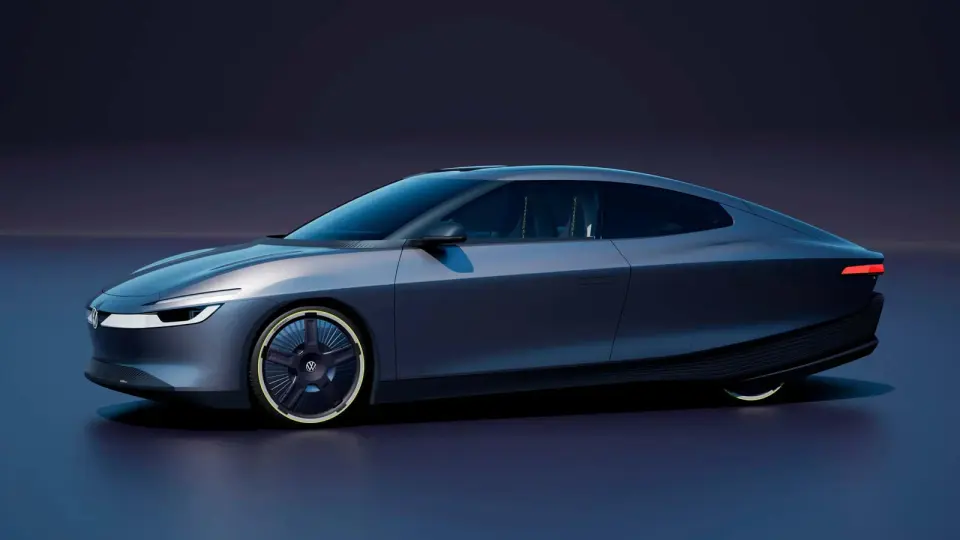
Volkswagen has unveiled the Mission Efficiency, a concept car that achieves a record drag coefficient of 0.158 and covers 794 miles on a single charge. The vehicle utilizes standard ID. Polo powertrain components but features extreme aerodynamic modifications, including a teardrop shape and covered wheels, to minimize energy consumption.
Key points
- The Mission Efficiency concept achieved a drag coefficient of 0.158, the lowest for any road-legal car, with a frontal area of 2.08 square meters.
- It completed a 1,278 km journey from Wolfsburg to Vienna on a single charge, consuming 6.89 kWh/100 km without charging losses, and still had 164 km of range remaining.
- The car is based on the MEB+ platform and uses the same 135 hp electric motor and 54.9 kWh battery as the production ID. Polo, with the battery capacity slightly increased via software for the test.
- Design features include a fully covered underbody, active cooling flaps, covered rear wheels, and a minimalist interior that relies on a smartphone for infotainment and a portable Bluetooth speaker.
- Volkswagen states the concept demonstrates the efficiency potential of mass-production technology rather than exotic, specialized components, though no production version is planned.
Background
This concept follows the legacy of the 2013 Volkswagen XL1, a plug-in hybrid that was the most economical production car at the time. The Mission Efficiency is described as the electric-era successor to the XL1, applying similar aerodynamic principles to modern EV technology. It is distinct from unrelated news regarding flood evacuations in Nepal reported in early September 2026.
How outlets are covering it
Motor1.com and Carscoops.com emphasize the car's role as a spiritual successor to the XL1, highlighting its extreme design and record-breaking efficiency. Top Gear notes the practicality of using affordable ID. Polo hardware but questions the real-world applicability of the range figures. Volkswagen's official newsroom focuses on the technological achievement and the potential for these efficiency gains to benefit future mass-market electric vehicles, with CEO Thomas Schäfer stating the records prove the potential of current production technology. All sources agree on the core metrics but differ in emphasis: Motor1 and Carscoops focus on the novelty and records, while Top Gear and VW focus on the underlying production technology and its implications for future cars.
Why it matters
The Mission Efficiency demonstrates that significant efficiency gains in electric vehicles can be achieved through aerodynamic optimization and weight reduction using existing mass-production components, rather than requiring exotic, expensive technology. This suggests potential for improving the range and efficiency of future mainstream EVs like the ID. Polo and ID. Cross.
What to watch
Volkswagen has not announced any plans to produce the Mission Efficiency as a commercial vehicle. However, some technologies, such as the electromechanical rear brakes, may be integrated into future production models. The concept serves as a technology demonstration for the MEB+ platform and its efficiency potential.
- VW Mission Efficiency Concept Revealed: Ultra-Slippery EV Sets Three Records Motor1.com
- Mission Efficiency - Volkswagen presents the world’s most efficient near-production electric car Volkswagen Newsroom
- Volkswagen’s Sleek New Concept Makes the ID.4 Look Like a Brick Autoblog
- The Volkswagen XL1 has returned as an ID. Polo-based hatch that’ll do 500 miles* topgear.com
- VW’s Hypermiling Supercar Is Back carscoops.com
Want the full story? Read the original reporting
Read on Motor1.com