
Swiss A330 Diverts to Bangor After Cabin Smoke Incident
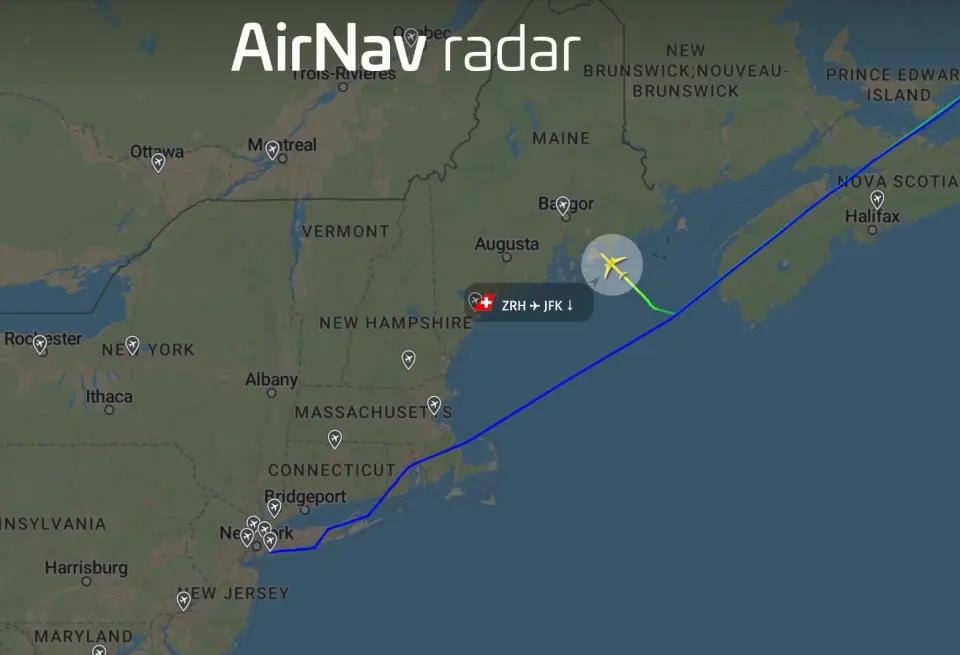
Swiss International Air Lines Flight LX16, an Airbus A330-300 traveling from Zurich to New York, declared an emergency and diverted to Bangor International Airport in Maine on July 27, 2026. The aircraft, carrying 208 people, landed safely around noon after the crew reported smoke in the cabin. While initial reports and air traffic control audio suggested a cockpit fire, Swiss Air Lines later clarified that the issue was exclusively smoke in the business class section. No injuries were reported, and the aircraft was inspected with no signs of fire or heat damage. The FAA is investigating the incident.
Key points
- Swiss Flight LX16, an Airbus A330-300 (registration HB-JHK), diverted from its Zurich-to-JFK route to Bangor International Airport (BGR) on July 27, 2026.
- The aircraft, carrying 208 passengers and crew, landed safely at approximately 12:13 p.m. local time after declaring an emergency.
- Initial FAA statements and air traffic control audio indicated a 'cockpit fire,' but Swiss Air Lines later issued a statement clarifying that the issue was 'explicitly and exclusively smoke in the cabin,' specifically in the forward business class area.
- Local fire crews inspected the aircraft after landing and found no signs of fire or heat damage; passengers reported an electrical smell but did not need to evacuate, and oxygen masks did not deploy.
- The runway at Bangor was closed for approximately one hour, causing delays for other flights, before reopening around 1:30 p.m.
- The FAA is investigating the incident, and Swiss Air Lines is arranging onward travel for affected passengers.
Background
This incident follows a series of recent transatlantic aviation disruptions, including a Ryanair emergency landing in Greece due to a dislodged window and an Air Canada diversion due to a pilot incapacitation. It also follows a JetBlue drone collision near JFK earlier in June, highlighting ongoing scrutiny of transatlantic flight safety and emergency response protocols.
How outlets are covering it
AIRLIVE reported the diversion and emergency declaration but noted that the specific nature of the emergency was undisclosed at the time of publication. WABI and WMTW provided more detailed accounts, confirming the presence of smoke in the cabin and noting that the FAA’s initial statement about a 'cockpit fire' was later amended to 'cabin smoke.' Swiss Air Lines explicitly denied reports of a cockpit fire, stating the smoke was limited to the business class section. Passengers cited by WABI described an electrical smell and a brief period of intensity but praised the crew’s professionalism and calm handling of the situation. All sources agree that the landing was safe and no injuries occurred, but they differ in the initial characterization of the emergency, with WMTW and WABI highlighting the discrepancy between the FAA’s initial statement and Swiss’s later clarification.
Why it matters
The incident underscores the importance of accurate emergency reporting and the potential for initial mischaracterizations in aviation incidents. It also highlights the role of diversion airports like Bangor in managing transatlantic emergencies and the ongoing scrutiny of airline safety protocols and FAA investigations.
What to watch
The FAA will continue its investigation into the cause of the smoke. Swiss Air Lines is working to arrange onward travel for passengers and will conduct a thorough inspection of the aircraft. The airline has stated it will not speculate on the cause of the smoke until the investigation is complete.
- Swiss flight LX16 to JFK is declaring an emergency and diverting to BGR airlive
- Bangor airport runway closed after plane makes emergency landing Bangor Daily News
- Swiss Air flight diverted to Bangor International Airport WABI
- Swiss Air flight diverted to Bangor; runway closed due to 'aircraft emergency' WMTW
- Runway closed at Bangor International Airport after plane makes emergency landing WGME
Want the full story? Read the original reporting
Read on airlive