
Covenant Exits Stealth to Mass-Produce Low-Cost Missiles Amid US Stockpile Crisis
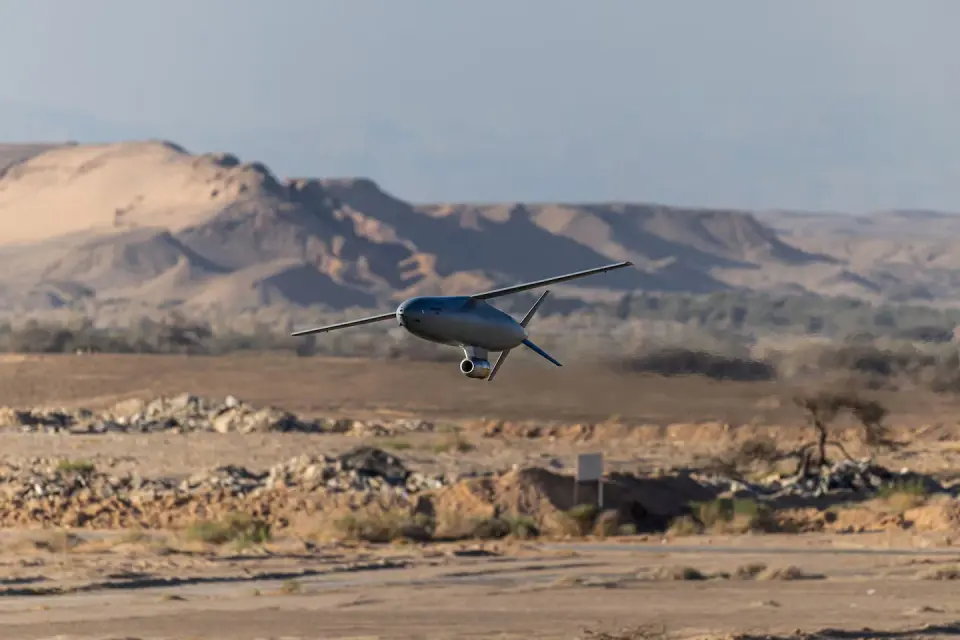
Defense startup Covenant has emerged from stealth mode to announce the opening of a 105,000-square-foot factory in Dallas, Texas, aimed at mass-producing the 'Anthem' long-range cruise missile. Backed by Peter Thiel’s Founders Fund and other venture capital firms, the company seeks to address a critical shortage in US weapons stockpiles caused by the ongoing conflict in Iran. Covenant claims its missiles are significantly cheaper than legacy systems like the Tomahawk and can be produced at scale. The company has secured approximately $150 million in orders, with deliveries expected to begin in 2027, and plans to expand production to facilities in Germany and Israel.
Key points
- Covenant announced the opening of a new manufacturing plant in Dallas, Texas, to produce the 'Anthem' missile, a long-range, heavy-payload cruise missile designed as a low-cost alternative to the Tomahawk.
- The company, founded in 2024 and backed by Peter Thiel’s Founders Fund, Andreessen Horowitz, and others, has raised $250 million and is valued at over $1 billion.
- Covenant has secured roughly $150 million in orders, including contracts with the US Army and Navy, with serial production set to begin in the first quarter of 2027.
- The US military has consumed over 1,000 Tomahawk missiles in the first five weeks of the conflict in Iran, highlighting a severe shortage that Covenant aims to alleviate through high-volume, low-cost production.
- Covenant plans to produce 1,000 missiles per year at its Dallas and German facilities in 2027, scaling to 5,000 annually by 2028, with an additional facility in northern Israel.
Background
This development follows a period of increased scrutiny on private defense firms and their role in US military procurement. Earlier coverage noted Covenant’s strategic positioning to disrupt the traditional defense market dominated by legacy primes like Raytheon and Lockheed Martin. The company’s emergence from stealth mode coincides with broader discussions about the US reliance on expensive, slow-to-produce weapons systems, particularly in the context of the Iran conflict and potential future conflicts with Russia or China. The move also reflects the growing influence of Silicon Valley investors in the defense sector, a trend highlighted in recent analyses of Thiel’s and Andreessen’s expanding roles in Washington.
How outlets are covering it
The Washington Post emphasizes the urgency of the US weapons shortage, citing the consumption of over 1,000 Tomahawk missiles in the Iran conflict, and frames Covenant’s entry as a necessary response to this crisis. CNBC highlights the company’s exit from stealth mode and its strategic partnerships with major venture capital firms, noting the growing influence of tech investors in defense policy. The Financial Times focuses on the geopolitical implications, particularly the European dimension, noting that Germany is considering procuring the Anthem missile and that Covenant is emphasizing a European supply chain to mitigate concerns about US dependence. All three outlets agree on the core facts but differ in emphasis: The Post focuses on the immediate military need, CNBC on the business and investment angle, and the FT on the broader strategic and European context.
Why it matters
Covenant’s move signals a shift in US defense procurement toward faster, cheaper, and more scalable weapons systems, potentially reducing reliance on legacy defense contractors. The company’s success could reshape the defense industry by introducing private-sector agility and cost-efficiency into a sector traditionally dominated by large, slow-moving primes. Additionally, the geopolitical implications are significant, as the company’s expansion into Europe and Israel could influence NATO’s defense strategy and reduce European dependence on US weapons. The move also highlights the growing intersection of Silicon Valley and defense, raising questions about the role of private investors in national security.
What to watch
Covenant is expected to begin serial production of the Anthem missile in the first quarter of 2027, with initial deliveries to the US military. The company plans to expand production to its facilities in Leipzig, Germany, and northern Israel, with output scaling to 5,000 missiles per site by 2028. Germany is considering procuring the missile, and the company is in talks with other potential customers in Europe and the Indo-Pacific. The company will also continue to refine its product, including a maritime version for the US Navy, and may face scrutiny over its US-Israeli ties and the role of its venture capital backers in defense policy.
- Peter Thiel-backed firm to make low-cost missiles amid U.S. shortage The Washington Post
- Andreessen- and Thiel-backed defense startup opens U.S. missile factory as it exits stealth CNBC
- Secretive defense startup Covenant emerges from stealth with $250 million at over $1 billion valuation calcalistech.com
- Silicon Valley-backed Covenant unveils low-cost, mass-producible cruise missile Reuters
- Thiel-backed start-up to mass-produce ‘deep strike’ missiles in Europe and US ft.com
Want the full story? Read the original reporting
Read on The Washington Post