
defense-and-technology4 min read
Ukraine adopts Israeli-Italian satellite links to bypass Starlink restrictions
12 days ago•Source: The Jerusalem Post
View original source
The latest defense and technology stories, each synthesized from multiple sources with added background and context.
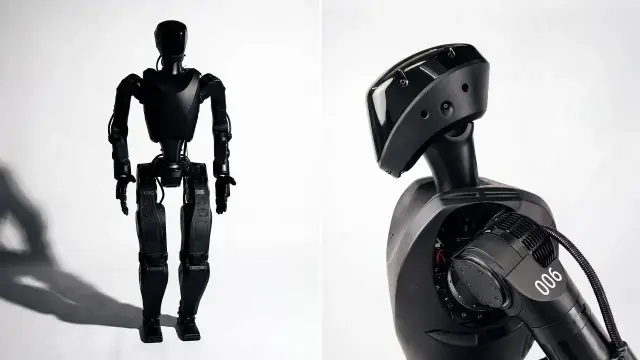
Foundation Future Robotics, backed by Eric Trump, deployed its Phantom MK 1 humanoid robots to Ukraine in February and is now in talks to supply up to 1,000 units to Israel for tunnel operations. Co-founder Mike LeBlanc predicts robots will handle most major combat within a decade, though he acknowledges human oversight remains essential. The company faces political scrutiny over its ties to the Trump family and a $24 million Pentagon contract.
Financial Times•15 days ago
Business Insider•22 days ago

Saab has unveiled the CB90 Capability X (CX), a larger, optionally crewed variant of its Combat Boat 90, designed to transform fast assault craft into multimission combat platforms. The new vessel features three configurations: intelligence, surveillance, and reconnaissance (ISR); anti-ship warfare; and short-range air defense (SHORAD). Sweden is the launch customer, with the first unit undergoing final trials. The boat integrates a new 'Combat Core' digital backbone and autonomous capabilities, allowing it to operate without a crew or with up to ten personnel. This development aligns with Sweden's 'Amphibious Battalion 2030' doctrine, which emphasizes distributed, mobile, and networked naval forces in the Baltic Sea. The launch precedes the Euronaval 2026 defense show in Paris.
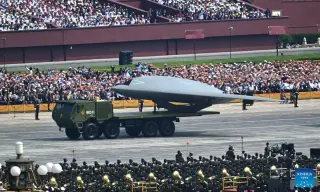
China’s People’s Liberation Army Navy confirmed on October 30, 2026, that the GJ-21 stealth unmanned combat aerial vehicle successfully completed its first takeoff and landing aboard the Type 076 amphibious assault ship, the Sichuan. This marks the world’s first operational deployment of a large, fixed-wing stealth strike and reconnaissance drone from an amphibious platform. The Sichuan, launched in December 2024, features electromagnetic catapult and arresting systems, enabling the GJ-21 to operate with a combat radius comparable to manned fighters like the J-20. Analysts highlight the drone’s low cost, reusability, and superior stealth as key advantages over traditional hypersonic missiles, potentially transforming amphibious warfare by allowing non-contact suppression of enemy defenses before ground troops land.

Ukraine has launched its first test satellite, Obria Nano, into orbit to begin building a sovereign communications network. The move aims to reduce reliance on SpaceX services, which recently faced disruptive speed restrictions. Kyiv is simultaneously pursuing partnerships with Finnish firms Nokia and ICEYE to develop alternative satellite infrastructure.

Ukraine’s Ministry of Defense signed a letter of intent with Finnish firms Nokia and ICEYE to develop sovereign satellite communications, aiming to reduce reliance on SpaceX’s Starlink and Starshield services following recent speed restrictions that disrupted military drone operations.
The U.S. Space Force is facing a critical launch shortage as SpaceX phases out its dominant Falcon 9 rocket in favor of Starship, which cannot accommodate many military satellites. With SpaceX accounting for 85% of U.S. launches in 2025, the transition leaves the Pentagon without reliable alternatives. Competing rockets like ULA’s Vulcan and Blue Origin’s New Glenn are currently grounded or delayed, while newer medium-lift vehicles remain years away from operational readiness. This dependency on a single private entity raises significant national security concerns.
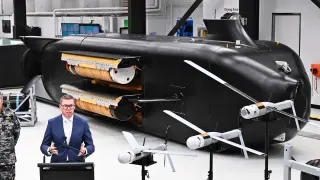
On October 19, 2026, Australia unveiled the first public images of the payload bay for its Ghost Shark extra-large uncrewed underwater vehicle. The announcement confirmed three new mission capabilities: deploying up to 12 sea mines, leaving underwater supply caches, and launching Anduril ALTIUS aerial drones. These modular payloads, developed under AUKUS Pillar II, allow the Royal Australian Navy to configure the vehicle for strike, surveillance, and logistics missions. The reveal coincided with Exercise Maritime Big Play Pacific in San Diego, highlighting Australia’s shift toward autonomous undersea warfare as part of a A$5.8 billion decade-long investment.

Ukrainian drone operators criticize Western manufacturers for producing overly complex, expensive systems that lack the modularity and scale required for high-attrition warfare. While Ukraine prioritizes simple, mass-produced drones that soldiers can easily modify, a recent investigation reveals that Chinese firms are supplying Russia with critical communication modems, enabling Russian drones to operate deeper into Ukrainian territory. These developments highlight a global shift toward cheap, high-volume unmanned systems, with China analyzing the conflict to modernize its own military doctrine despite internal command structure challenges.
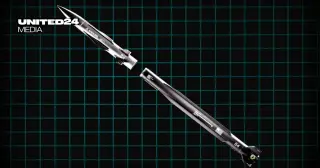
Anduril has unveiled Steelfin, a modular air defense interceptor designed to cost one-third of the current Patriot PAC-3 MSE. The system features interchangeable rocket motors and seekers, allowing it to target threats ranging from low-cost drones to hypersonic weapons. Anduril aims for full-rate production by late 2028 or early 2029, with annual output potentially reaching hundreds of thousands of units. The company is competing in the Army's low-cost interceptor program and believes the design fits requirements for the Future Interceptor program, which seeks a next-generation replacement for the PAC-3 MSE.

Lockheed Martin has revealed the PAC-3 Edge, a next-generation interceptor designed to replace the current PAC-3 MSE in the U.S. Army’s Future Interceptor program. The new missile features an upgraded seeker, a three-pulse solid rocket motor from Northrop Grumman, and enhanced attitude control motors to improve agility against hypersonic and advanced ballistic threats. Testing is scheduled to begin in 2027, with initial deployment targeted for 2031, though Lockheed aims to accelerate this timeline. The development coincides with a major push to triple PAC-3 MSE production to 2,000 units annually by 2030, addressing strained stockpiles from conflicts in Ukraine and the Middle East.
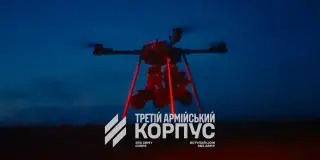
Ukrainian forces have integrated air-dropped ground robots into active combat operations, marking a shift toward fully uncrewed airborne assaults. During Operation Vivaldi, heavy drones delivered armed robots deep into Russian territory, bypassing traditional frontlines. Multiple units, including NC13 and the 93rd Mechanized Brigade, have developed and deployed these systems, with some prototypes reaching combat use within 10 days. This innovation reflects a broader trend in Ukraine’s defense industry to combine drones and ground robots for asymmetric warfare, reducing human risk while expanding operational reach behind enemy lines.