
US Military Shifts to Laser Defense After $3.3B Iran War Losses
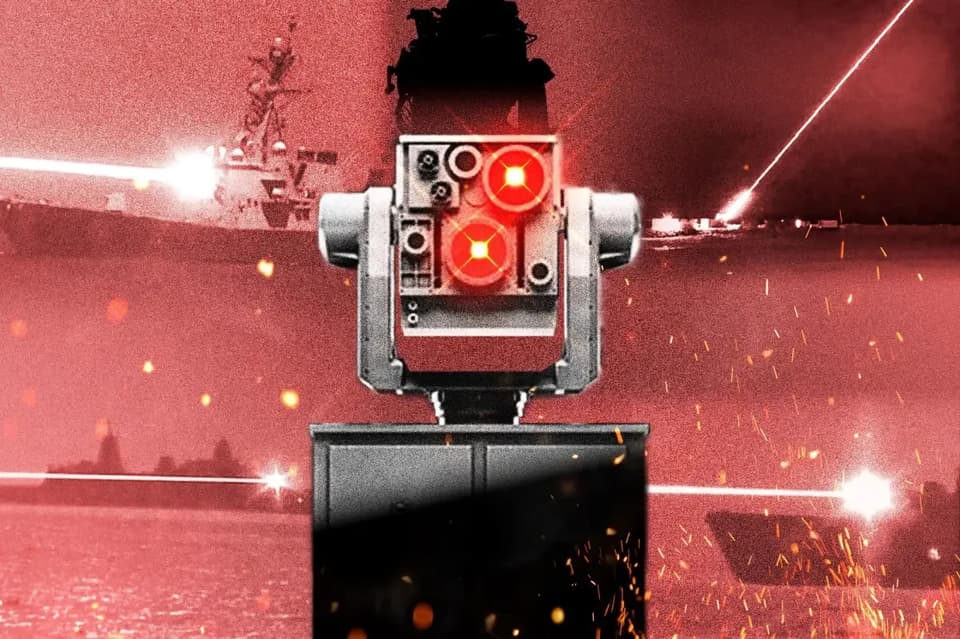
The US military has accelerated the deployment of high-energy laser weapons following significant equipment losses in the Iran conflict. A new $500 million contract with AeroVironment marks the first production order for the Army's Enduring-High Energy Laser system. These weapons are currently active in the Strait of Hormuz and along the southern border, offering a cost-effective alternative to kinetic missiles.
Key points
- The Army awarded AeroVironment a $500 million other-transaction agreement for the Enduring-High Energy Laser (E-HEL) system, its first production contract for a high-energy laser weapon.
- Laser systems, including the HELIOS platform, are being used in the Strait of Hormuz to destroy Iranian drones and cruise missiles at a fraction of the cost of traditional kinetic interceptors.
- The Joint Task Force Southern Border has used laser technology to down at least 11 drug-trafficking drones from Mexico, validating the tech for border security applications.
- Operators use reconfigured Xbox controllers to manage the laser systems, which require clear skies and several seconds of 'dwell time' to destroy targets.
- Boeing has announced a Compact Laser Weapon System capable of destroying Group 3 drones weighing up to 1,300 pounds, expanding the threat envelope beyond small UAVs.
Background
This shift toward directed energy follows the Operation Epic Fury conflict with Iran, which cost the US over $3.3 billion in aircraft and equipment, including heavy losses to the MQ-9 Reaper fleet. The depletion of missile stockpiles during that conflict raised concerns about the US ability to deter China in the Pacific. Additionally, the US recently acknowledged possessing on-orbit space-control weapons, with experts suggesting lasers may play a future role in space defense.
How outlets are covering it
The New York Post emphasizes the operational success of lasers in both the Middle East and along the US-Mexico border, highlighting the cost savings compared to kinetic weapons. Zacks Investment Research frames the development through a financial lens, comparing AeroVironment (AVAV) and RTX as key aerospace-defense stocks benefiting from this shift. While the Post focuses on tactical deployment and border security, Zacks highlights the broader market implications for defense contractors involved in directed energy systems.
Why it matters
The adoption of laser weapons addresses critical readiness strains and missile stockpile depletion revealed by the Iran conflict. By reducing the cost per intercept, the US can sustain higher operational tempos without the logistical burden of traditional ammunition, potentially altering military logistics and deterrence strategies in both the Middle East and the Pacific.
What to watch
The US Space Force is expected to integrate laser technology into its on-orbit weapons systems. Further testing of Boeing's Compact Laser Weapon System against larger drones will determine the next phase of deployment. Military planners may also adjust Middle East force footprints as laser systems provide a more sustainable defensive posture.
Want the full story? Read the original reporting
Read on New York Post