
Bill Gross Warns of Bond Volatility as US Debt Hits 100% of GDP
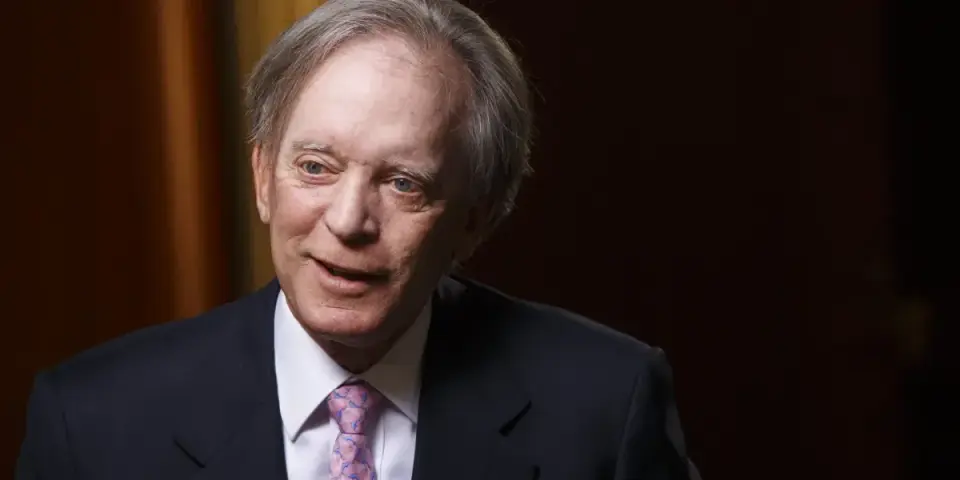
Pimco co-founder Bill Gross has issued a stark warning against holding long-term bonds, citing a new era of volatility driven by unbalanced credit expansion. In a Financial Times op-ed, Gross noted that total US credit—government, mortgage, and corporate—now reaches $84 trillion, with federal debt at 100% of GDP. He advised investors to avoid bonds except for one-year Treasury bills yielding 4.55%, while cautioning that record stock levels face margin pressure from rising yields. Gross highlighted that AI-related debt financing is historically anomalous and that the 2027 AI investment forecast of $1 trillion may rely solely on debt. He also flagged risks for hyperscalers with high price-to-earnings ratios and telecom giants facing competition from SpaceX’s Starlink, urging a 'preserve and protect' strategy as central banks diversify reserves and hedge funds increase market volatility.
Key points
- Bill Gross, known as the 'Bond King,' advised avoiding long-term bonds due to rising volatility and unbalanced credit expansion.
- Total US credit, including government, mortgage, and corporate debt, has reached approximately $84 trillion, with federal debt at 100% of GDP.
- Gross recommended holding only one-year Treasury bills, which currently yield 4.55%, while warning that rising yields will compress stock profit margins.
- The AI sector’s debt boom is described as historically anomalous, with $1 trillion in 2027 investment likely funded by debt rather than cash flow.
- Hedge funds now hold 8.5% of Treasuries, up from 2023, increasing market volatility through the basis trade and reducing safe-haven reliability.
Background
Recent months have seen US Treasury yields surge to multi-year highs, with the 10-year yield exceeding 5% in September 2026. This rise has pressured equities and prompted concerns about a potential debt spiral, especially as the US national debt approaches $40 trillion. Earlier analyses noted that Treasury buyback plans, such as those proposed by Scott Bessent, may only temporarily stabilize markets without addressing underlying fiscal risks. The current environment reflects a shift from complacency to concern among market observers, driven by persistent inflation, geopolitical tensions, and the AI capital expenditure cycle.
How outlets are covering it
Fortune and The Financial Times both highlight Gross’s warning on bond volatility, but Fortune emphasizes the structural shift in the bond market, noting that hedge funds’ increased participation has made Treasuries less reliable as safe-haven assets. The Financial Times focuses on the imbalance between debt and equity, stressing that credit growth must align with economic expansion to sustain asset prices. TheStreet Pro’s coverage, while not directly analyzing Gross’s op-ed, reflects market sentiment through its mention of Goldman Sachs’ warning that the long end of the US Treasury market is 'totally bidless,' underscoring the lack of demand for long-term debt. This divergence in emphasis—Fortune on market structure, The Financial Times on macroeconomic balance, and TheStreet Pro on market liquidity—illustrates the multifaceted nature of the current bond market stress.
Why it matters
Gross’s warning signals a potential shift in the traditional safe-haven status of US Treasuries, which could impact global portfolio allocations. As hedge funds dominate bond markets and central banks diversify reserves, the reliability of bonds as a stabilizing asset is eroding. This volatility may force investors to rethink asset allocation, particularly as rising yields compress corporate profit margins and increase the cost of servicing $40 trillion in US debt. The AI sector’s reliance on debt financing further amplifies risks, as any slowdown in credit growth could trigger a broader market correction. Investors must now navigate a landscape where 'preserve and protect' strategies are prioritized over growth, reflecting a new era of financial caution.
What to watch
Investors should monitor the 10-year Treasury yield, which has recently hit 24-year highs, as a key indicator of market stress. Gross’s advice to avoid long-term bonds suggests that short-term Treasury bills may remain the preferred option for capital preservation. The AI sector’s debt-funded expansion will be critical to watch, as any failure to generate positive cash flow could trigger a debt crisis. Additionally, the impact of SpaceX’s Starlink on telecom giants like Verizon and AT&T may reshape income fund opportunities. As central banks continue to diversify reserves and hedge funds unwind leveraged positions, liquidity in bond markets may dry up during periods of stress, requiring investors to adopt more defensive strategies.
- Even 'Bond King' Bill Gross warns 'don’t own bonds' as long-term debt enters a new ear of volatility Fortune
- Don’t own bonds and be cautious with stocks Financial Times
- Doug's Daily Diary — Friday, October 2, 2026 TheStreet Pro
- Bill Gross Says Avoid Bonds Except One-Year T-Bills as Debt Hits $84 Trillion finance.biggo.com
Want the full story? Read the original reporting
Read on Fortune