Minutes from the Federal Reserve’s September meeting show officials unanimously raised rates by 25 basis points to 3.9%, their first hike in three years, while warning that sector-specific price pressures from energy and AI could spread. Most policymakers expect one more increase by year-end, but recent data and comments suggest no urgency for an October move.
Federal Reserve officials are increasingly concerned that the artificial intelligence boom, combined with tariffs and energy costs, may create persistent inflationary pressures that outlast typical supply shocks. San Francisco Fed President Mary Daly noted that AI-driven demand for chips is spreading beyond data centers, potentially raising prices for broader goods. While the Fed recently hiked rates, Daly suggested further action depends on whether these shocks compound or fade, contrasting with more hawkish colleagues who advocate for immediate adjustments.
New York State Comptroller Thomas DiNapoli’s office reports that Wall Street is on track for a record-breaking $90 billion in annual profits, driven by a surge in artificial intelligence investment and global dealmaking. While the sector has generated significant tax revenue for New York City and State, experts warn that rising interest rates and geopolitical tensions could threaten this momentum.
Pimco co-founder Bill Gross has issued a stark warning against holding long-term bonds, citing a new era of volatility driven by unbalanced credit expansion. In a Financial Times op-ed, Gross noted that total US credit—government, mortgage, and corporate—now reaches $84 trillion, with federal debt at 100% of GDP. He advised investors to avoid bonds except for one-year Treasury bills yielding 4.55%, while cautioning that record stock levels face margin pressure from rising yields. Gross highlighted that AI-related debt financing is historically anomalous and that the 2027 AI investment forecast of $1 trillion may rely solely on debt. He also flagged risks for hyperscalers with high price-to-earnings ratios and telecom giants facing competition from SpaceX’s Starlink, urging a 'preserve and protect' strategy as central banks diversify reserves and hedge funds increase market volatility.
Treasury Secretary Scott Bessent has publicly downplayed concerns regarding rising bond yields and the potential for an artificial intelligence (AI) bubble. This stance contrasts with recent market data showing a 30% surge in 10-year Treasury yields, which has coincided with record highs for the S&P 500. While broad market indicators show weakness in small-cap and utility sectors, large-cap technology stocks continue to drive overall market strength. Bessent’s comments suggest a confidence in the current economic trajectory despite warnings from analysts about valuation risks and tightening monetary conditions.
Penny Pennington, CEO of Edward Jones, maintains a bullish stance on equities despite the 10-year Treasury yield reaching a 25-year high. She argues that strong economic growth and AI-driven demand outweigh rate pressures. The New York Times reports that this bond sell-off is broadening globally, with investors concerned about potential Fed policy shifts and rising debt costs.
AI infrastructure spending is driving US GDP growth, but actual AI service revenue remains negligible. Analysts warn that current investment levels require massive new market creation to be sustainable, while critics argue statistical methods may overstate the sector's true economic contribution.
The US economy expanded by 2.2% in the second quarter, a significant upward revision from the preliminary 1.5% estimate. This growth was driven by robust consumer spending and a surge in AI-related investment. While inflation cooled slightly, core PCE rose 0.2% in August, remaining above the Federal Reserve's 2% target. Analysts describe the data as mixed, with strong growth offsetting persistent price pressures.
Nvidia’s board approved a $150 billion increase to its share repurchase program, bringing the total remaining authorization to $235 billion. CEO Jensen Huang defended the move as a sign of confidence in AI’s long-term potential, while investor Michael Burry criticized Huang’s aggressive media presence, comparing him to Palantir’s Alex Karp.
The US economy is experiencing a sharp divergence between robust macroeconomic indicators and declining consumer confidence. While GDP growth is estimated at 4% and unemployment sits at 4.1%, driven by an AI investment boom, inflation remains high at 3.4%. Gas prices have exceeded $4 per gallon, and consumer sentiment has hit a near-record low. Critics blame tariffs and the Iran conflict for rising costs, while the White House points to resilient private-sector spending and job growth.
US economic data shows resilience driven by AI investment and strong consumer spending, but voter sentiment has collapsed due to high inflation, rising gas prices, and the Iran war. With midterms approaching, Trump’s boast of the 'greatest economy in history' clashes with 73% of Americans rating the economy poorly, creating a significant political vulnerability for the administration.
The Federal Reserve lifts the policy rate to 3.75%–4% to push inflation back toward 2%, a move that raises borrowing costs across households and businesses. Yet AI investment is booming, pushing up long‑term yields and dampening traditional sectors like housing, creating a two‑speed economy as mortgage rates stay high and the government’s debt climbs.
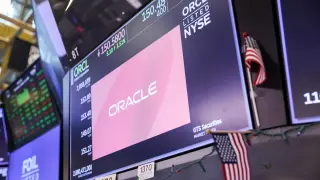
Oracle’s options are pricing in about an 11% post-earnings move (above its ~9.5% three-quarter average), with heavy call activity and higher upside premiums, reflecting optimism around AI investments and Oracle’s history of sharp moves after earnings, even as the stock slides from 52-week highs and weighs funding its AI infrastructure.
AI-driven investments propelled 2025’s billionaire wealth to a record $15.1 trillion and the number of billionaires to 3,795 (up 8.2%), with 29 super-billionaires holding $4.1 trillion (27% of total). North America leads with 1,337 billionaires, aided by AI activity in tech markets; those investing at least $30 million in AI outperformed non-AI peers by about 23% in market-cap growth from 2024–2025, although fortunes remain volatile due to tech stock swings (e.g., Musk, Ellison). Altrata notes 150 top AI-linked companies shaping billionaire wealth.
U.S. factory orders rose 0.9% in July, beating expectations of 0.6%, led by a 12.7% jump in civilian aircraft orders; computers and electronics orders fell 1.1%, non-defence capital goods excluding aircraft were flat, but shipments of core capital goods rose 1.2% on AI-related investment, with orders up 6.5% from a year earlier.