
Hong Kong’s Northern Metropolis: A $46bn Push to Integrate with Mainland China
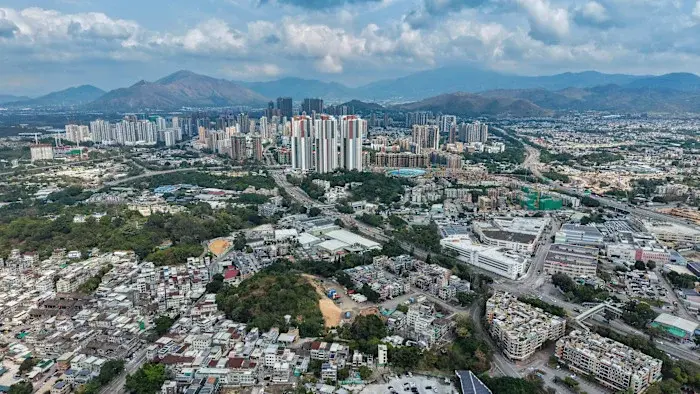
Hong Kong is accelerating its Northern Metropolis project, a massive infrastructure initiative designed to transform 30,000 hectares of the New Territories into industrial and tech hubs. The plan aims to revitalize the local economy and deepen integration with mainland China, particularly Shenzhen, by shifting commercial activity northward. While authorities view the project as essential for diversifying beyond finance and trade, it faces significant costs and social disruption, including the eviction of rural residents.
Key points
- The Northern Metropolis project, first unveiled in 2021, covers 30,000 hectares, roughly one-third of Hong Kong’s landmass, and aims to create four economic hubs for commerce, professional services, technology, and eco-tourism.
- The development is expected to house 2.5 million people, including 1.1 million current residents and new arrivals from urban districts, China, and overseas, addressing the city’s long-standing housing crisis.
- S&P Global Ratings estimates the project will cost over HK$360bn (US$46bn) over five to six years, significantly higher than the government’s estimate of HK$224bn, with HK$140bn borne by government-related entities.
- The initiative aligns with Beijing’s Greater Bay Area strategy, aiming to integrate Hong Kong’s northern region economically and logistically with Shenzhen and other Pearl River Delta cities.
- Evictions are underway in rural villages to make way for construction, with residents facing displacement as the government prioritizes rapid development over traditional civil society opposition.
Background
This development follows a period of economic stagnation in Hong Kong following the 2019 protests and pandemic restrictions, which led to an outflow of people and foreign investment. The project mirrors China’s model of using infrastructure mega-projects to spur growth in priority sectors like technology. It also follows the shelving of the Lantau Tomorrow Vision project in 2024, indicating a shift in strategic priorities toward mainland integration. Recent policy changes, including stricter regulations on offshore trusts and extraterritorial laws, reflect Beijing’s broader effort to tighten control over capital and dissent, creating a political environment where large-scale state-led projects face fewer roadblocks.
Why it matters
The Northern Metropolis represents a fundamental shift in Hong Kong’s economic strategy, moving away from its traditional role as a global financial hub toward a model of deep integration with mainland China. This could reshape the city’s identity, potentially reducing its autonomy in economic policy and aligning it more closely with Beijing’s development goals. The project’s success or failure will determine whether Hong Kong can diversify its economy and compete with lower-cost hubs in Guangdong, while also highlighting the tensions between rapid state-led development and the rights of local residents.
What to watch
The government is expected to accelerate the project, with further land tenders and construction phases planned. Beijing’s top official for Hong Kong, Xia Baolong, has urged officials to speed up development, citing a 'precious window of opportunity.' The first land tender for the Hung Shui Kiu park drew limited interest, with only two bids, suggesting potential challenges in attracting private investment. Future developments will likely include increased pressure on rural communities and continued efforts to integrate the region with the Greater Bay Area.
Want the full story? Read the original reporting
Read on Financial Times