
Treasury Prepares Major Shift in Bond Issuance Strategy Amid Yield Concerns
Treasury Secretary Scott Bessent is expected to announce significant changes to US government debt issuance plans on November 4, potentially reducing long-term bond sales and increasing short-term bill auctions. This move aims to lower borrowing costs amid high yields, though experts debate the long-term risks of relying heavily on short-term debt.
Key points
- Treasury Secretary Scott Bessent is preparing to revise the quarterly policy statement on US Treasury issuance, marking the first major change since early 2024.
- The revision may involve cutting sales of 20- and 30-year bonds while increasing auctions of short-term bills and notes to manage funding needs and lower yields.
- Recent interventions, including expanded buybacks of long-dated securities, have signaled the Treasury's discomfort with current yield levels, which hit a 20-year high in October.
- Analysts from Citigroup predict immediate cuts to long-term bond sales, while JPMorgan expects issuance sizes to remain unchanged through August 2027.
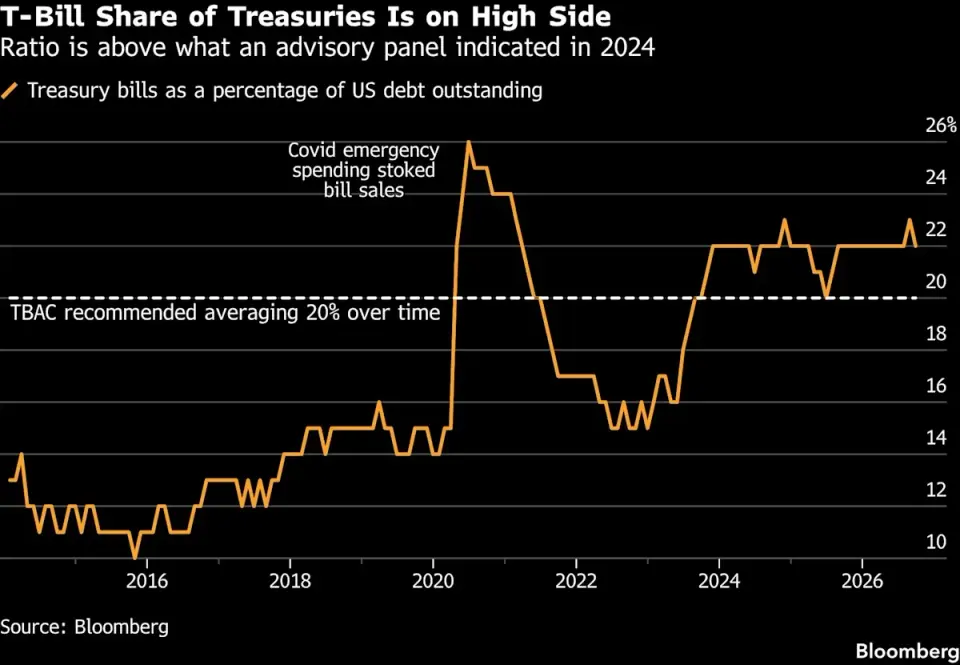
- The shift raises concerns about over-reliance on short-term bills, which currently account for 22% of outstanding debt, exceeding the 20% average recommended by the Treasury Borrowing Advisory Committee.
- The Treasury is also considering formalizing its buyback program as a permanent tool for managing debt maturity composition, potentially reducing its sensitivity to market price fluctuations.
Background
This development follows a period of elevated Treasury yields, with 30-year bond yields exceeding 5.30% in late October, prompting the Treasury to intervene with buybacks. The current issuance guidance, established by former Secretary Janet Yellen, has remained stable since January 2024, but growing deficits and rising borrowing needs have pressured the Treasury to reconsider its strategy. Recent market volatility and geopolitical tensions have also influenced investor sentiment, as noted in earlier coverage of market reactions to Iran strike plans and tech earnings.
Why it matters
The Treasury's shift in issuance strategy could significantly impact global financial markets, as changes in long-term bond supply may affect yield levels and borrowing costs for governments and corporations. A greater reliance on short-term bills could increase market volatility and expose the US to sudden shifts in investor demand, potentially affecting the stability of the broader financial system.
What to watch
Investors will closely monitor the November 4 announcement for any changes in issuance guidance, particularly regarding long-term bond sales and the formalization of the buyback program. The Treasury Borrowing Advisory Committee's feedback on the market's capacity to absorb larger bill sales will also be a key indicator of future policy directions. Additionally, the Treasury's quarterly borrowing needs estimate, released on November 2, will provide insights into the scale of upcoming debt issuance.
Want the full story? Read the original reporting
Read on Yahoo Finance