
California's Grid Withstands Record Heat via Massive Battery Expansion
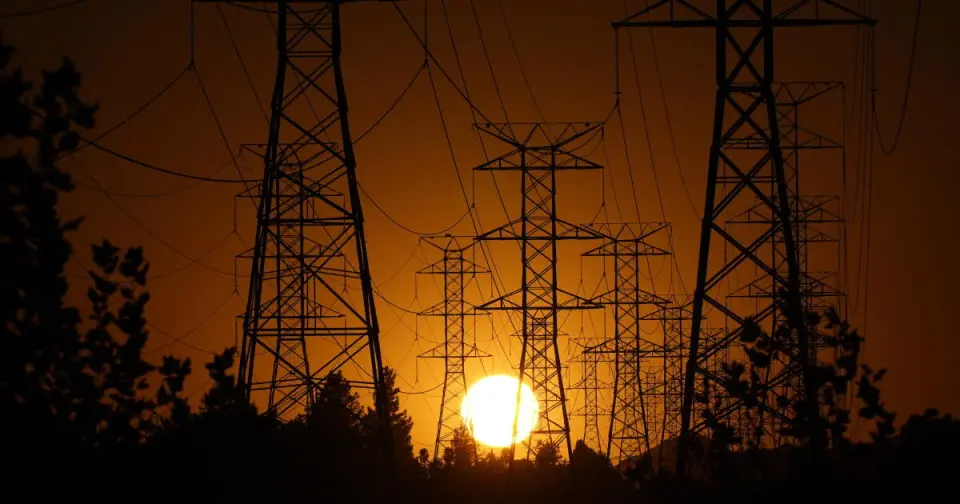
California avoided rolling blackouts during its record-breaking August heat wave, a resilience attributed to a massive expansion in battery energy storage. The state now possesses over 17,000 megawatts of storage capacity, up from less than 100 megawatts in 2020. This infrastructure allows the grid to store daytime solar energy for evening peak demand, stabilizing the system despite record temperatures and humidity. While the grid has proven robust, officials warn that future challenges from AI data centers and potential wildfire-induced equipment failures remain.
Key points
- California experienced its hottest August on record but issued no Flex Alerts or rolling outages, a stark contrast to the 2020 heat wave.
- Battery storage capacity has surged from under 100 megawatts in 2020 to over 17,000 megawatts today, according to CAISO spokesperson Jayme Ackemann.
- The state aims to add 20,000 to 25,000 megawatts of battery capacity by 2045, aligning with its carbon neutrality goals.
- California became the first large-scale power system to rely on over 50% solar power for an entire month in May 2026.
- Grid capacity has increased from approximately 50,000 megawatts five years ago to nearly 70,000 megawatts today, according to Legal Planet.
- Interconnection with the broader Western US grid allows energy import from cooler regions like the Pacific Northwest during local heat spikes.
Background
This resilience follows a period of significant grid stress, including the 2020 rolling outages and the 2022 peak demand record of 52,061 megawatts. Recent climate shifts have also altered local conditions; Southern California’s traditional dry heat has been replaced by record humidity and warmer ocean temperatures, complicating energy demand patterns. Additionally, the broader 2026 summer was the hottest on record for the contiguous United States, with Europe suffering over 35,000 heat-related deaths, highlighting the global severity of the climate crisis against which California’s grid improvements are measured.
How outlets are covering it
The Los Angeles Times emphasizes the technical success of battery storage in preventing outages, framing it as a quiet but dramatic increase in grid resiliency. It highlights the strategic goal of reaching 20,000 to 25,000 megawatts by 2045 and notes the growing demand from AI data centers. Legal Planet, conversely, frames the event as a vindication of renewable energy policies, explicitly criticizing political opponents who claim renewables cannot handle base loads. It also notes the lack of media coverage for successful prevention, describing it as a 'dog that didn't bark' scenario where public policy success goes unacknowledged. Both sources agree on the central role of battery expansion but differ in their framing of the political and social implications of this success.
Why it matters
The success of California’s grid strategy offers a real-world model for how battery storage and renewable integration can mitigate the impacts of extreme weather events. It demonstrates that significant infrastructure investment can decouple energy reliability from climate volatility, potentially influencing energy policy in other regions facing similar heat and demand challenges. The ability to handle peak demand without outages suggests a shift in the energy transition from theoretical potential to practical, large-scale implementation.
What to watch
California plans to continue expanding battery storage to meet its 2045 carbon neutrality goals. The state must also manage rising demand from AI data centers and maintain grid resilience against unforeseen events like wildfires that could destroy generation facilities. While rolling outages are unlikely, local utilities will continue using public safety power shutoffs during high fire risk conditions, and Flex Alerts may still be issued in limited areas if unexpected capacity losses occur.
- The surprising reason California survived record summer heat without blackouts Los Angeles Times
- California hasn't issued a Flex Alert in nearly 4 years. Here's why ABC7 Los Angeles
- California — The Resilient State. Really. Legal Planet
Want the full story? Read the original reporting
Read on Los Angeles Times