
California’s SB 868 Legalizes Balcony Solar, but HOA Rules and Limited Hardware Hinder Adoption
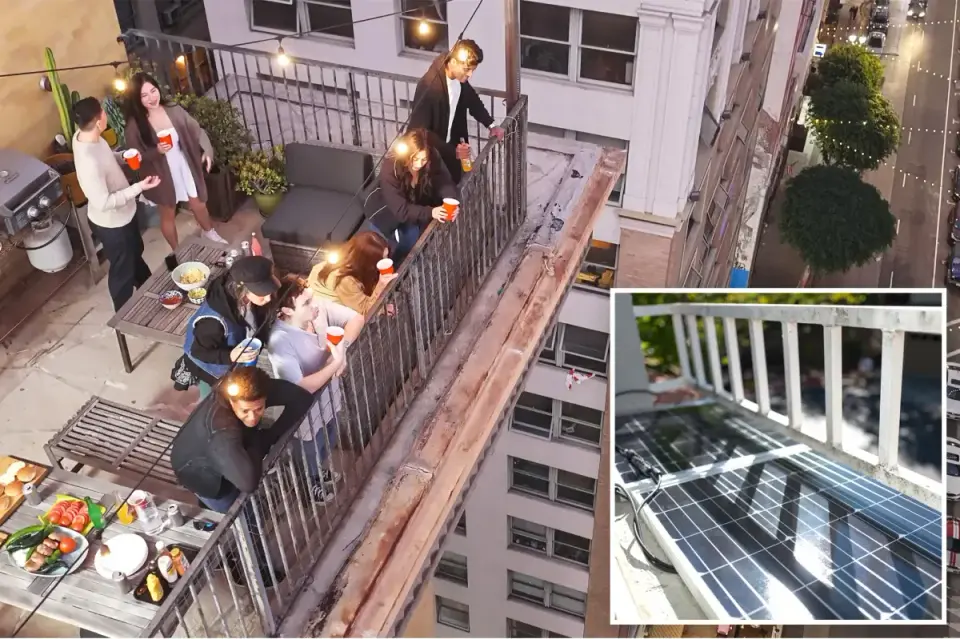
California Governor Gavin Newsom signed SB 868, the 'Plug and Play Solar Act,' in September 2026, allowing residents to install small solar systems on balconies starting January 2027. The law exempts these devices from standard interconnection requirements, aiming to lower energy costs for renters and homeowners. However, strict technical limits, including a 1,200-watt cap and mandatory certification, restrict current options to only two market devices. Critics note that high costs and landlord or HOA restrictions may limit the law's practical impact.
Key points
- SB 868, signed by Governor Newsom, takes effect January 1, 2027, permitting plug-in solar systems on balconies, patios, or ground stands.
- The law exempts these systems from state interconnection requirements but mandates compliance with the National and California Electrical Codes and Underwriters Laboratories certification.
- Systems are capped at 1,200 watts of AC output per dwelling and must consist of one or two panels with a microinverter.
- The legislation does not override lease agreements or HOA rules, meaning residents must still obtain written permission from landlords or associations.
- Only two certified devices are currently available, with fully compliant models expected to arrive in early 2027, according to industry experts.
- The interconnection exemption expires on January 1, 2030, after which standard utility regulations will likely apply again.
Background
California becomes the tenth state to legalize plug-in solar, joining Utah, Colorado, Maine, Vermont, New Hampshire, Connecticut, New Jersey, Virginia, and Maryland. While Utah implemented its policy in 2025, California’s law follows a trend of states addressing energy affordability and utility rate increases. The move aligns with broader national efforts to democratize access to renewable energy for renters and multi-unit housing residents who cannot install traditional rooftop systems.
How outlets are covering it
The California Post emphasizes the regulatory hurdles, noting that while the law is signed, practical adoption is hampered by the lack of certified hardware and the need for HOA approval. It highlights resident concerns that the potential savings of $250 to $400 annually may not justify the upfront cost. ZDNET provides a broader national context, confirming California as the tenth state to legalize such systems and noting that 24 other states are still working on legislation. It points out that while the law prevents utility companies from blocking these projects, it does not preempt bans by landlords or HOAs. ColoradoBoulevard.net focuses on the local impact in Pasadena and the San Gabriel Valley, highlighting that the law could help mitigate scheduled rate increases by Pasadena Water and Power. It notes that while current manufacturers like Bright Saver and Craftstrom do not yet offer compliant models, fully certified systems are expected in early 2027. The sources agree on the technical limits and the effective date but differ in emphasis: California Post focuses on consumer skepticism, ZDNET on the legislative landscape, and ColoradoBoulevard.net on local utility impacts and future hardware availability.
Why it matters
SB 868 represents a significant shift in California’s energy policy by allowing decentralized, small-scale solar generation without traditional utility interconnection. This could reduce energy costs for vulnerable populations, including renters, who are often excluded from rooftop solar incentives. However, the law’s effectiveness depends on the availability of certified hardware and the willingness of HOAs and landlords to permit installations. If adoption remains low due to these barriers, the law may fail to achieve its goal of broadening access to renewable energy and reducing reliance on utility grids.
What to watch
The law takes effect on January 1, 2027. Residents should expect the release of fully certified solar systems in early 2027. HOAs and landlords may update their rules to accommodate or restrict these installations. The interconnection exemption expires on January 1, 2030, after which standard utility regulations will likely apply. Advocates in Pasadena and other areas plan to educate the public about the rollout of compliant systems.
- New California law changes balconies forever, while saving you money — but HOAs are watching New York Post
- Plug-in solar is legal in these 10 states now – how it could save you money ZDNET
- Balcony Solar: A New Option for Renters and Homeowners in Pasadena and the San Gabriel Valley ColoradoBoulevard.net
Want the full story? Read the original reporting
Read on New York Post