
New Jersey legalizes plug-in balcony solar for renters and apartment dwellers
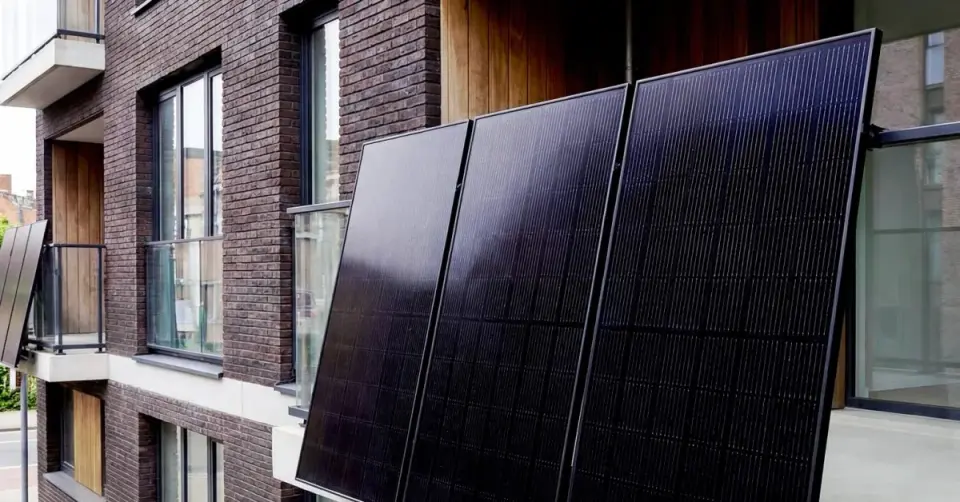
New Jersey Governor Mikie Sherrill signed the Garden State Balcony Solar Act on September 1, 2026, legalizing portable solar panels that plug into standard 120-volt outlets. The law allows systems up to 1,200 watts without utility approval or permits, specifically targeting renters and apartment residents who cannot install rooftop solar. It takes effect on March 1, 2027.
Key points
- The Garden State Balcony Solar Act (S2368/A4836) was signed into law by Governor Mikie Sherrill on September 1, 2026, with an effective date of March 1, 2027.
- The law permits plug-in solar systems with a maximum output of 1,200 watts, roughly equivalent to two or three modern panels, to connect directly to home electrical systems via standard outlets.
- Systems of 400 watts or less are exempt from certain building code provisions and UL 3700 certification requirements, while larger systems up to 1,200 watts must meet safety standards and installation rules.
- Landlords, homeowner associations, and municipalities are prohibited from banning these devices or requiring permits, though they may impose reasonable rules regarding size and placement.
- Tenants must provide 14 days' written notice and documentation to landlords before installation, and the systems are exempt from net metering, meaning no credits are given for excess electricity sent to the grid.
Background
This legislation follows similar moves in other states; California recently passed a plug-in solar bill with a similar 1,200-watt cap, though it awaits gubernatorial action. New Jersey becomes the ninth state to enact such a law, joining a growing trend toward portable solar solutions for urban and rental housing.
How outlets are covering it
Electrek and pv magazine USA emphasize the technical specifications and safety standards, noting the UL 3700 certification requirement for systems over 400 watts. The New Jersey Globe and Insider NJ highlight the political support from Governor Sherrill and legislators like Sen. John McKeon, framing the law as a key part of the state's broader energy affordability agenda. Advocates like Doug O'Malley of Environment New Jersey stress the equity benefits for renters, while industry representatives like Stephan Scherer of CraftStrom highlight the practical ease of installation for dense urban areas.
Why it matters
This law expands access to renewable energy for approximately 40% of New Jerseyans who rent or live in apartments, potentially lowering electricity bills and reducing reliance on the grid without the high upfront costs or structural changes required for traditional rooftop solar.
What to watch
The law takes effect on March 1, 2027, allowing the state Board of Public Utilities time to implement necessary provisions. Consumers can expect to purchase these devices from online retailers and home improvement stores, with installation requiring no professional electrician for systems under 400 watts.
- New Jersey just made plug-in solar panels legal electrek.co
- Sherrill Signs Balcony Solar Law to Expand Access to Clean Energy New Jersey Globe
- N.J. just made it easier for renters to slash their energy bills with plug-in solar panels nj.com
- New Jersey legalizes plug-in solar up to 1,200 W pv magazine USA
- Governor Sherrill Signs Legislation Giving New Jerseyans Cleaner, More Affordable Energy at Their Fingertips Insider NJ
Want the full story? Read the original reporting
Read on electrek.co