
BloombergNEF Warns Trump Grid Order Will Trigger US Battery Project Delays and Cancellations
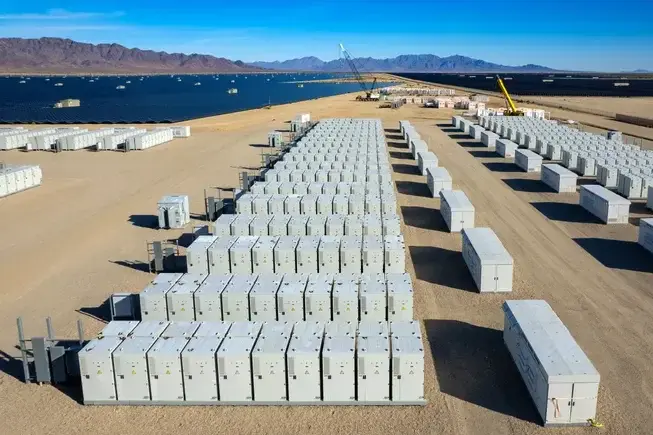
President Trump’s Aug. 26 executive order banning certain foreign-made grid equipment is expected to cause significant delays and cancellations for US battery energy storage projects, according to BloombergNEF. The order, which declares a national emergency, restricts the purchase and installation of foreign-produced transformers, inverters, and batteries connected to the bulk power system. While the Department of Energy has 120 days to implement specific rules, developers are already pausing projects to assess regulatory risks and supply chain alternatives. The move compounds existing restrictions from the Treasury Department’s Foreign Entity of Concern rules, potentially shutting out Chinese manufacturers from the US market entirely.
Key points
- The Aug. 26 executive order, titled 'Declaring a National Energy Emergency to Secure the United States Bulk-Power System,' blocks the purchase, importation, and installation of foreign-produced bulk-power equipment, including batteries, inverters, and transformers.
- BloombergNEF analysts warn that the order will cause near-term deployment delays for grid-scale battery projects as developers await guidance, seek alternative suppliers, or redesign projects.
- The order applies to equipment operating at 69 kV or higher and targets entities tied to 24 countries under US arms embargoes or sanctions, with a primary focus on China, which accounts for 80% of global lithium-ion battery production capacity.
- The Department of Energy has 120 days to publish rules implementing the order, including potential white lists of pre-qualified equipment or licenses for sensitive equipment.
- The executive order compounds the impact of the Treasury Department’s Foreign Entity of Concern rules, which restrict reliance on Chinese-tied firms for qualifying for federal tax credits.
Background
This executive order follows a series of recent actions to secure the US power grid against foreign threats. In July 2026, the Federal Communications Commission banned new foreign-made power inverters with remote communication capabilities. Additionally, the Treasury Department finalized Foreign Entity of Concern rules in February 2026, restricting supply chain reliance on Chinese-tied firms for tax credit eligibility. The current order expands these restrictions to a broader range of bulk-power system equipment, including batteries and transformers, and introduces a national emergency declaration under the International Emergency Economic Powers Act.
How outlets are covering it
Utility Dive and BloombergNEF emphasize the immediate financial and operational risks to the battery storage sector, noting that developers may cancel projects that become uneconomical due to the prohibition on lower-cost Chinese imports. Energy-Storage.News highlights the legal and regulatory uncertainty, noting that the order is not yet in effect and that the Department of Energy has 120 days to implement specific rules, including potential white lists or licenses. Daily Energy Insider provides a detailed breakdown of the executive order’s scope, listing the 24 countries under US arms embargoes or sanctions and the specific types of equipment affected. Al Jazeera focuses on the cybersecurity and compliance challenges, noting that utilities face a 'live compliance clock' to inventory and assess foreign-sourced grid equipment, with experts warning that the difficult next step will be providing operators with scalable visibility into asset risks without disrupting grid reliability.
Why it matters
The executive order could significantly disrupt the US energy storage market, which relies heavily on Chinese-made batteries and inverters. Delays and cancellations could slow the deployment of grid-scale storage, which is critical for integrating renewable energy and ensuring grid reliability. The order also raises concerns about the long-term viability of Chinese manufacturers in the US market, potentially accelerating the shift towards domestic and allied-country production. However, the regulatory uncertainty and potential for costly compliance measures could increase the overall cost of energy projects and delay the transition to a cleaner energy system.
What to watch
The Department of Energy is expected to publish rules implementing the executive order within 120 days. These rules may include white lists of pre-qualified equipment and vendors, as well as processes for issuing licenses to power companies that want to use sensitive equipment. Developers are likely to continue pausing projects until the administration provides clarity on how the order applies to existing and planned assets. The long-term impact may be mitigated by new manufacturing capacity coming online in the US and other countries not covered by the order, but the near-term effects are expected to be significant.
- Trump grid order likely to cause energy storage delays, cancellations: BloombergNEF Utility Dive
- Trump cites 'unusual and extraordinary threat' in executive order banning inverter, BESS & transformer imports Energy-Storage.News
- White House declares national emergency to secure America’s power grid Daily Energy Insider
- Trump executive order bans some foreign equipment in US energy grid Al Jazeera
- Bulk-Power System Executive Order Adds a New Grid Supply Chain Compliance Layer JD Supra
Want the full story? Read the original reporting
Read on Utility Dive