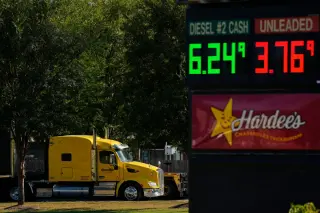
US diesel prices surged to a record $6.53 per gallon in September due to the Iran war, severely straining small trucking firms. With operating margins near zero, operators like Kevin Otto are adding fuel surcharges to survive. While freight rates have risen, they lag behind fuel costs, and non-fuel expenses continue to climb, leaving many carriers breaking even or losing money.
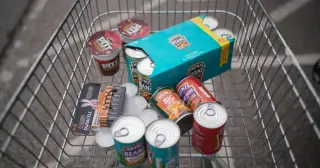
European governments are urging citizens to stockpile 72 hours of food, water, and supplies in response to recent cyberattacks, extreme weather, and geopolitical instability. While the EU issued non-binding guidelines in November, national campaigns in the UK, France, and others have driven significant sales of emergency goods. Public response remains mixed, with some citizens skeptical and others preparing for potential disruptions to critical infrastructure.
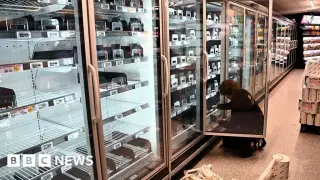
A wave of cyberattacks targeting refrigeration systems across Europe has exposed critical vulnerabilities in industrial internet of things devices, leading to massive food spoilage and prompting urgent security overhauls. While no group has formally claimed responsibility, the incidents highlight the risks of legacy hardware with default passwords.
Dummy unit images shared by tipster Sonny Dickson confirm the upcoming iPhone Air 2 will feature a dual rear camera system, addressing a major criticism of the original model. The standard iPhone 18 retains its predecessor's design. Supply chain reports indicate Apple will reuse the original 6.5-inch OLED display for the Air 2 to clear inventory, while the device is expected to include an A20 Pro chip and launch in March 2027.
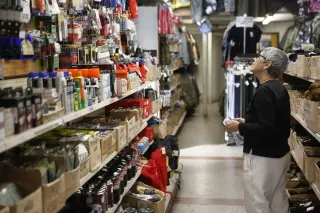
A wave of unrelated technology outages, including failures at Microsoft, the FAA, and JPMorgan Chase, has triggered a surge in emergency preparedness shopping across the US. Retailers report significant spikes in sales for generators, bottled water, and non-perishable food, with some high-ticket items selling out. While officials insist the incidents are technical malfunctions and not cyberattacks, social media misinformation regarding a potential 90-day power outage has fueled consumer anxiety and panic buying.
Leaked dummy units confirm the iPhone Air 2 will feature a dual rear camera system, addressing previous criticisms of the single-lens design. Suppliers are aligning production for a March 2027 launch, while the standard iPhone 18 retains its predecessor's design. The Air 2 is also expected to be thinner and include a larger battery.
Leaked dummy models confirm the iPhone Air 2 will feature a dual rear camera system, addressing previous criticisms of the single-lens design. Suppliers are aligning production for a March 2027 launch, while the standard iPhone 18 retains its predecessor's design. The Air 2 is also expected to be thinner and include a larger battery.
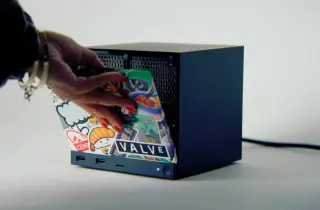
Valve has ended the reservation system for its 512GB Steam Machine, allowing immediate purchase while stock lasts. However, the 2TB model remains out of stock, and Valve warns that rising memory costs may force future price increases.
Leaked dummy models confirm the iPhone Air 2 will feature a dual rear camera system, while the standard iPhone 18 retains its predecessor's design. Suppliers are preparing for a March 2027 launch, with Samsung and LG aligning production schedules. The Air 2 is expected to address previous shortcomings with a larger battery and thinner body, though pricing remains a concern for consumers.
A series of unrelated technology outages, including disruptions to Microsoft, the FAA, and banking systems, has sparked a surge in emergency preparedness shopping. Retailers report sold-out generators and increased sales of canned goods and water, with analysts noting a shift from fringe prepping to mainstream consumer behavior.
New US export controls introduced on November 19, 2026, are causing wider disruptions to the global semiconductor supply chain than initially anticipated. While the measures target advanced AI chips, industry executives report that restrictions now affect components used in mobile and consumer devices, impacting developers beyond China. Concurrently, leaked documents reveal the Commerce Department approved over 800,000 AI chip sales to Chinese firms, including entities linked to the military and the former partner of Nvidia’s CEO.
A wave of unrelated technological outages, including disruptions to major airlines, Microsoft, and financial services, has triggered a surge in emergency preparedness purchases across the United States. Retailers report significant spikes in sales for generators, bottled water, and long-shelf-life food kits. While officials attribute the outages to technical malfunctions rather than coordinated cyberattacks, consumer anxiety has driven stockpiling behavior similar to previous crises.
Micron’s CTO Scott DeBoer stated that memory supply will remain tighter in 2027 than in 2026, with no clear timeline for balance. AI-driven demand for DRAM is outpacing capacity, even as Micron invests over $250 billion in US expansion. Despite record margins and a $150 billion backlog, shares fell 18% in November amid concerns over peak pricing and cyclical risks.
Valve has ended the waitlist for its 512GB Steam Machine, allowing immediate purchase while stock lasts. However, the 2TB model remains unavailable due to severe component shortages, with Valve warning that rising memory costs may limit future production and increase prices.
A coordinated, secretive operation by UK authorities has secured tens of thousands of refrigeration units across supermarkets, warehouses, and stadiums after researchers identified a critical vulnerability in controllers made by British firm Resource Data Management (RDM). The flaw, discovered in late October, posed a risk similar to recent European attacks that spoiled food and caused millions in damages. While RDM disputes the severity, citing hardware-based access requirements, security experts argue the risk was imminent. The National Cyber Security Centre (NCSC), Defra, and the Food Standards Agency led the response, forcing companies to take devices offline or remove internet connections. This move follows three waves of cyber-attacks on European refrigeration systems this year, including incidents in France, Belgium, and Luxembourg, where hackers manipulated temperatures to spoil food. The UK operation remains undisclosed to prevent exploitation, with RDM having already deployed patches and mitigations.