
US Solar Fleet Crosses 50 Million Home Equivalent as Red States Lead Expansion
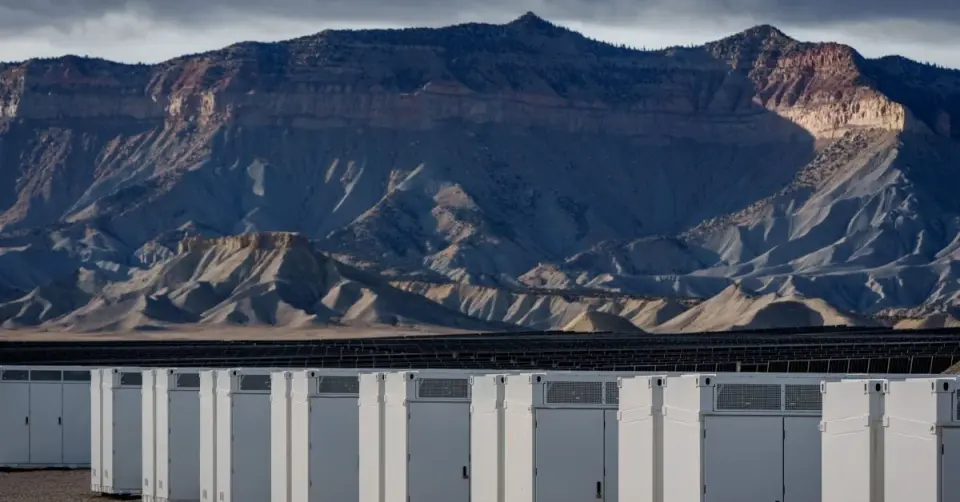
The United States has reached a solar capacity milestone equivalent to powering 50 million homes, driven by a 45% year-over-year surge in Q2 2026 installations. Utility-scale projects dominate the growth, fueled by a rush to meet tax credit deadlines, while red states account for 71% of new capacity. Battery storage also hit record highs, though residential adoption faces a temporary dip due to expired subsidies.
Key points
- US solar capacity now matches the electricity usage of over 50 million households, representing more than one-third of all US homes.
- Q2 2026 saw 11.4 GWdc of new solar capacity installed, a 45% increase from the same period last year.
- Utility-scale solar added 9.6 GWdc, up 61% year-over-year, as developers rushed to secure federal tax credits before a July 2026 deadline.
- States that voted for the 2024 presidential candidate accounted for 71% of all solar capacity installed in the first half of 2026.
- Battery storage installations hit a record 20.2 GWh in Q2 2026, with seven new gigascale systems coming online.
- Residential solar and battery growth slowed due to the expiration of the federal Residential Clean Energy Credit in late 2025.
Background
This milestone follows a period of significant policy shifts in US energy infrastructure. Previous coverage noted regulatory uncertainties in other energy sectors, but the current solar boom highlights a divergence between federal policy and state-level investment. The expiration of certain tax credits in late 2025 created a deadline-driven rush for utility-scale projects, while residential markets faced a temporary contraction. The archive does not contain specific prior solar data, but the current surge indicates a rapid acceleration in clean energy adoption despite changing federal incentives.
How outlets are covering it
Electrek emphasizes the political irony that red states led the solar boom, with 71% of new capacity in states that voted for the 2024 presidential candidate. They highlight the resilience of utility-scale projects despite the removal of federal incentives. MIT Technology Review focuses on the battery storage surge, noting that while utility-scale batteries are booming, residential installations dropped 16% in 2026 due to expired tax credits. They also point to a shift toward US-made battery technology, though domestic manufacturing capacity may not meet demand until 2030. Yahoo’s coverage was largely inaccessible due to technical errors, but its title aligns with the 50 million home milestone reported by Electrek. The outlets agree on the strong performance of utility-scale solar and storage but differ in emphasis: Electrek highlights the political and geographic distribution of growth, while MIT Technology Review focuses on the technical and market dynamics of battery storage and residential slowdowns.
Why it matters
The 50 million home equivalent milestone signals a structural shift in US energy infrastructure, with solar and storage now accounting for 70% of new power capacity in the first half of 2026. This growth is critical for meeting rising electricity demand and reducing reliance on fossil fuels. The dominance of red states in solar adoption suggests that market forces and local incentives are driving clean energy expansion, even in the absence of federal support. However, the slowdown in residential solar and the reliance on Chinese-made batteries highlight vulnerabilities in the supply chain and the need for domestic manufacturing to sustain long-term growth. The upcoming expiration of tax credits and the transition to new policies will determine whether this momentum continues or stalls.
What to watch
The US is expected to add around 44 GWdc of solar annually through 2031, nearly doubling total capacity. Wood Mackenzie anticipates residential solar and storage will resume growth in 2027 as homeowners seek cost savings and resilience. However, permitting challenges and the post-ITC transition remain significant headwinds. The battery storage sector is expected to reach 71 GWh in 2026, a 20% increase over 2025, but domestic manufacturing capacity may not meet demand until 2030, potentially leading to price increases. The future of residential solar will depend on the introduction of new incentives or market-driven adoption despite the loss of federal subsidies.
- US solar can now power 50M homes – and red states led the boom Electrek
- States Backing Trump Make Up 71% of New US Solar, Report Says Bloomberg.com
- Batteries just broke another record in the US MIT Technology Review
- Solar Can Power 50 Million American Homes Yahoo
- US adds 17.1 GW of clean power in Q2 - ACP Renewables Now
Want the full story? Read the original reporting
Read on Electrek