
Vermont Yankee Decommissioning Completes 45 Years Early as Reactor Building Demolished
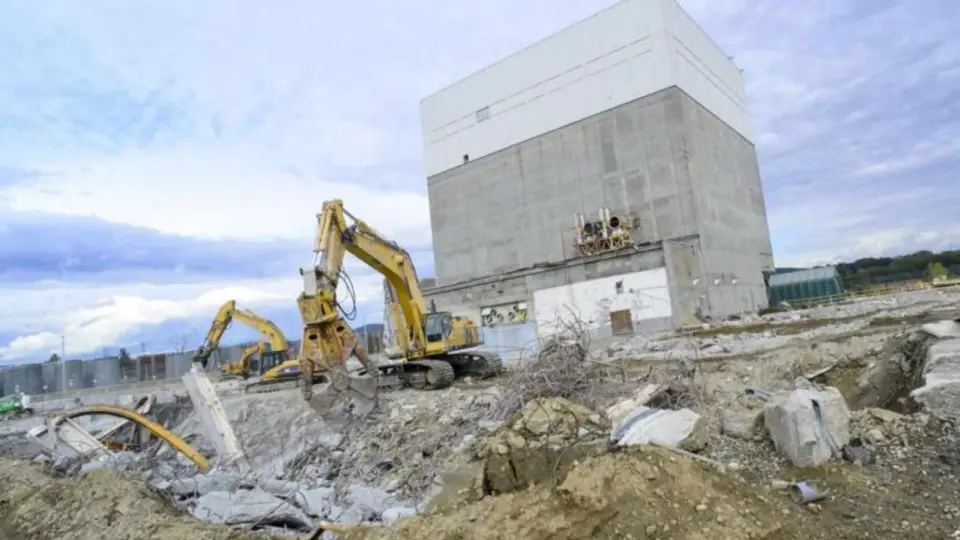
NorthStar Group Services has completed the physical demolition of the Vermont Yankee nuclear plant, finishing the process 45 years ahead of the original schedule. The five-story reactor building was dismantled, and 28,000 cubic yards of radioactive concrete were shipped to a disposal site in Texas. The site is now filled with clean crushed rock, with only spent fuel casks remaining on-site.
Key points
- NorthStar Group Services, which acquired the plant in 2019, has completed 99% of the physical decommissioning work, finishing the project 45 years ahead of the original schedule.
- The five-story reactor building was demolished, and 28,000 cubic yards of radioactive concrete were shipped to Waste Control Specialists in Andrews, Texas.
- The hole left by the reactor building was filled with 28,000 cubic yards of clean crushed rock from a local Vermont quarry.
- The decommissioning trust fund, which started at $602 million, has $8.5 million remaining to cover the final months of work.
- 58 casks containing 2,996 spent fuel assemblies remain on-site, as there is no federal repository for them.
- The physical work is expected to be completed in 2027, with regulatory review and site restoration finished by 2030.
Background
Vermont Yankee was shut down in 2014 by Entergy due to economic reasons, despite having an operating license until 2032. The plant was originally planned for SAFSTOR, a process of leaving the plant in place for decades while radiation decays. NorthStar Group Services bought the plant in 2019 with a promise to decommission it quickly. The plant's reactor vessel was cut apart underwater by Orano's crews between 2019 and 2022, with the segments shipped to Texas. The spent fuel was sealed into Holtec HI-STORM storage modules by August 2018.
Why it matters
The rapid decommissioning of Vermont Yankee challenges the traditional SAFSTOR approach, which involves leaving nuclear plants in place for decades. The project demonstrates that nuclear plants can be decommissioned much faster, potentially changing the industry's approach to decommissioning. The remaining spent fuel casks highlight the ongoing issue of nuclear waste storage in the United States, as there is no federal repository for them.
What to watch
The water discharge structure will be demolished early next year, and the physical work is expected to be completed in 2027. The Nuclear Regulatory Commission will then review the site, with the process expected to take a couple of years. The site is expected to be released for reuse by 2030, with potential uses including battery storage, a data center, or a small modular reactor.
Want the full story? Read the original reporting
Read on Autonocion.com