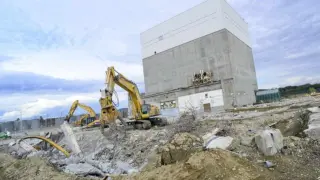
NorthStar Group Services has completed the physical demolition of the Vermont Yankee nuclear plant, finishing the process 45 years ahead of the original schedule. The five-story reactor building was dismantled, and 28,000 cubic yards of radioactive concrete were shipped to a disposal site in Texas. The site is now filled with clean crushed rock, with only spent fuel casks remaining on-site.
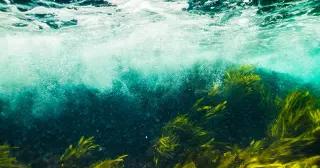
Between 1946 and 1970, the United States dumped approximately 47,800 containers of radioactive waste into the Pacific Ocean west of San Francisco. These steel drums, weighted with concrete, were not designed for long-term containment but merely to survive the descent to the seafloor. Due to poor navigation and lack of detailed record-keeping, many containers missed their designated sites, scattering across 1,400 square kilometers of seabed, much of which now lies within the Greater Farallones National Marine Sanctuary. While a 1981 review suggested the radioactivity had decayed to negligible levels, later studies found isotope signatures in local fish that differed from weapons fallout. Despite the ban on ocean dumping in 1994, no agency has proposed retrieving the drums, as the cost outweighs the measured hazard.
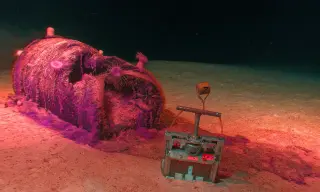
A French expedition under the NODSSUM program found that more than 200,000 barrels of mid-20th-century radioactive waste dumped in the Northeast Atlantic have leaked, with cobalt-60, niobium-94, cesium-137 and americium-241 detected in sediments; several barrels are corroded and now host marine life, and researchers will analyze samples to determine the extent of leakage.
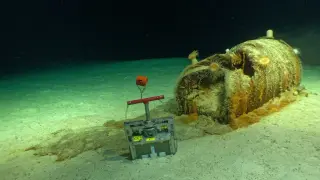
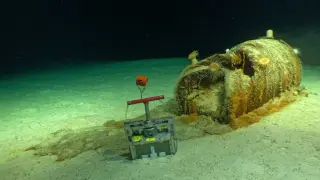
A French expedition using the Nautile deep-sea submersible confirmed that more than 200,000 barrels dumped in the Northeast Atlantic in the 1960s–70s have leaked radioactive material, with radionuclides such as cobalt-60, niobium-94, cesium-137, and americium-241 detected above background levels near corroded containers on the seabed. Marine life now grows on some barrels, while researchers collected sediment, water, and biota samples to assess contamination. The waste was not designed for containment and may have dispersed over time; ongoing lab analyses and prior mapping are helping OSPAR evaluate the dumping legacy.
An international, French-led expedition descended about 15,400 feet into the Northeast Atlantic to directly observe more than 200,000 barrels of largely corroded, low‑level radioactive waste dumped in the latter half of the 20th century, with material spilling onto the seafloor. On-site measurements detected radionuclides such as cobalt-60, niobium-94, cesium-137 and americium-241 above background levels, though scientists caution this is not yet a final ecological verdict. A 2025 mission mapped thousands of barrels with the Ulyx robot to guide 2026 close‑range dives, which also noted deep‑sea life colonizing the waste sites. Researchers say more laboratory work is needed to determine exact concentrations, how radionuclides move through sediment and water, and whether deep‑sea organisms are absorbing them, while international efforts (OSPAR) continue to study historic dumping practices and their ecological implications.
Twenty years into fracking in Pennsylvania, the state has yet to effectively address the radioactive waste generated, with frequent alarms at landfills indicating ongoing risks to public health and the environment, despite regulatory efforts and new research showing higher levels of radioactivity than previously understood.
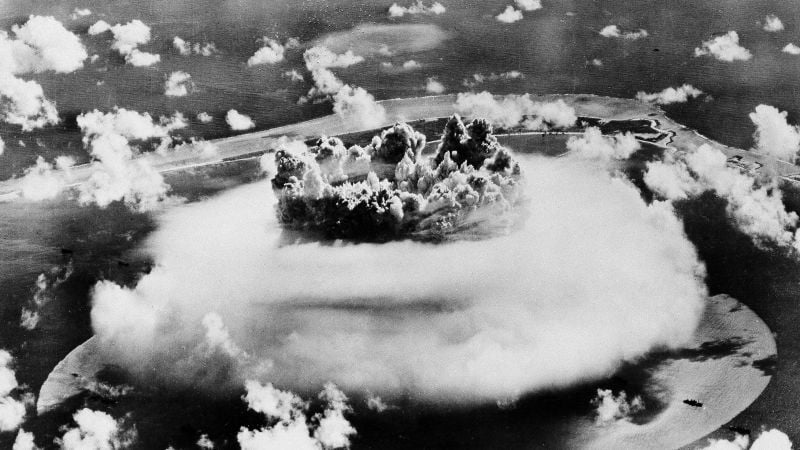
The article discusses the devastating long-term effects of US nuclear testing in the Marshall Islands, highlighting environmental contamination, health issues, and cultural disconnection, and warns against resuming nuclear tests due to their catastrophic consequences for both local populations and global health.
A study confirms that residents near Coldwater Creek in Missouri, contaminated with WWII-era nuclear waste, have a higher risk of cancer, especially those who lived closer to the creek during the 1940s-1960s, highlighting ongoing environmental health concerns and the need for remediation.
Children living near Coldwater Creek in St. Louis, contaminated with atomic waste from WWII, have a significantly higher risk of cancer, with risk increasing the closer they lived to the creek, raising concerns about long-term health impacts of radioactive pollution.
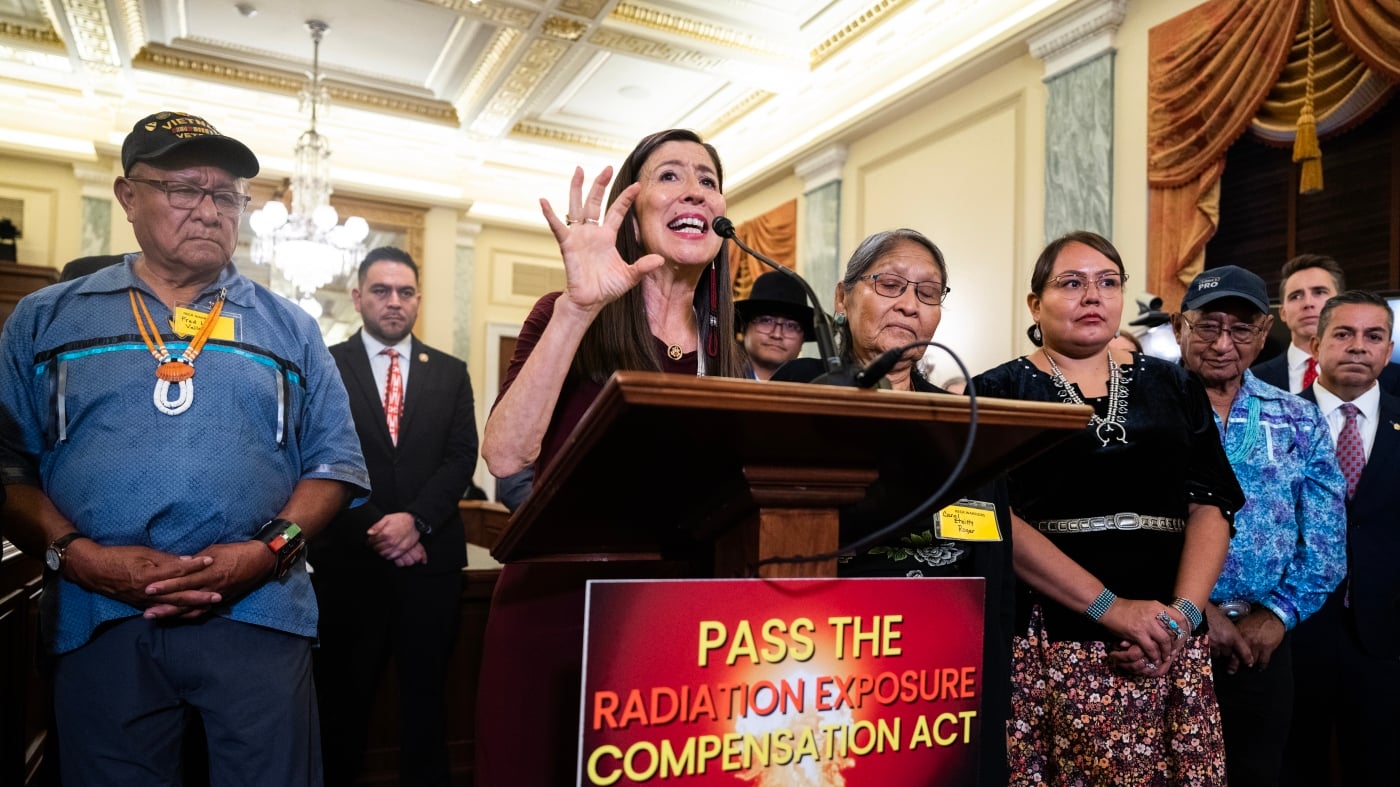
A study links childhood exposure to radioactive waste from Coldwater Creek near St. Louis to increased cancer risk, leading to legislative efforts to aid affected individuals, highlighting ongoing concerns about radiation safety and environmental cleanup.
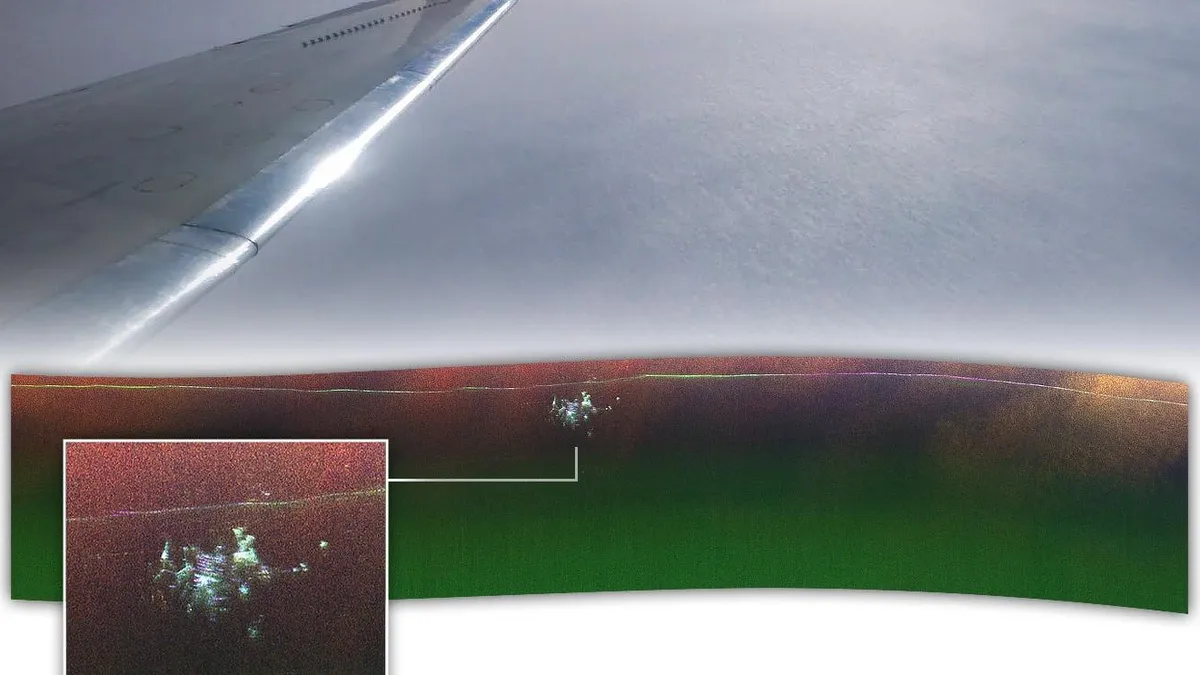
NASA's recent radar scans of the Greenland Ice Sheet have revealed the Cold War-era Camp Century, a secret military base built by the U.S. Army in 1959 and abandoned in 1967, still buried 100 feet under the ice. Originally intended as a nuclear missile launch site, the base contains radioactive waste that poses environmental risks due to climate change, which could expose or move the waste unpredictably. The discovery highlights the need for better modeling of climate impacts on such hidden hazards.
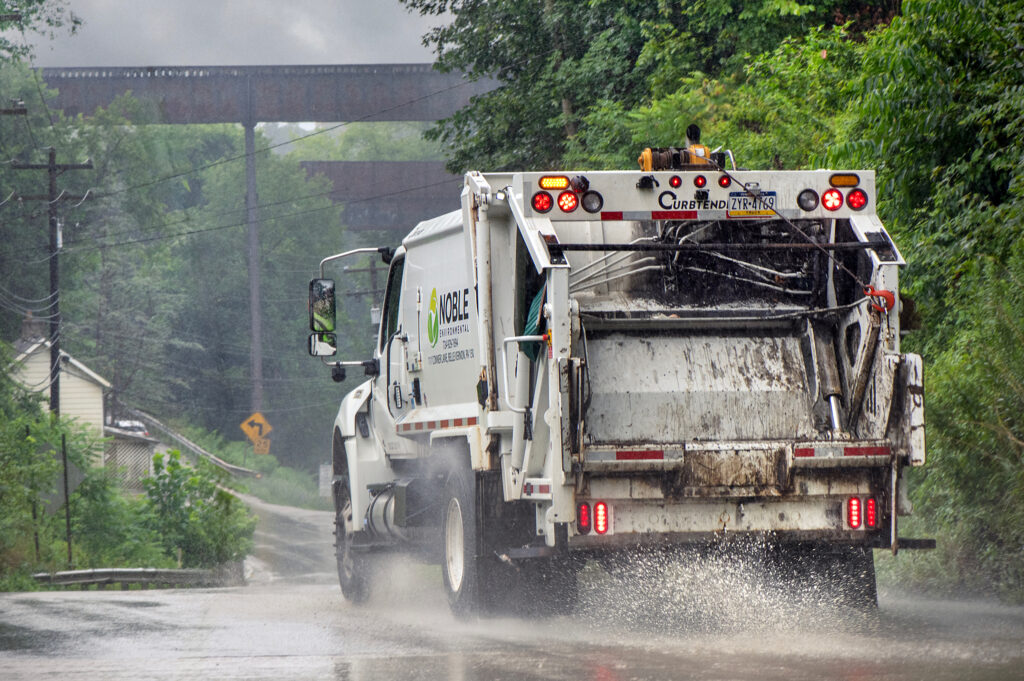
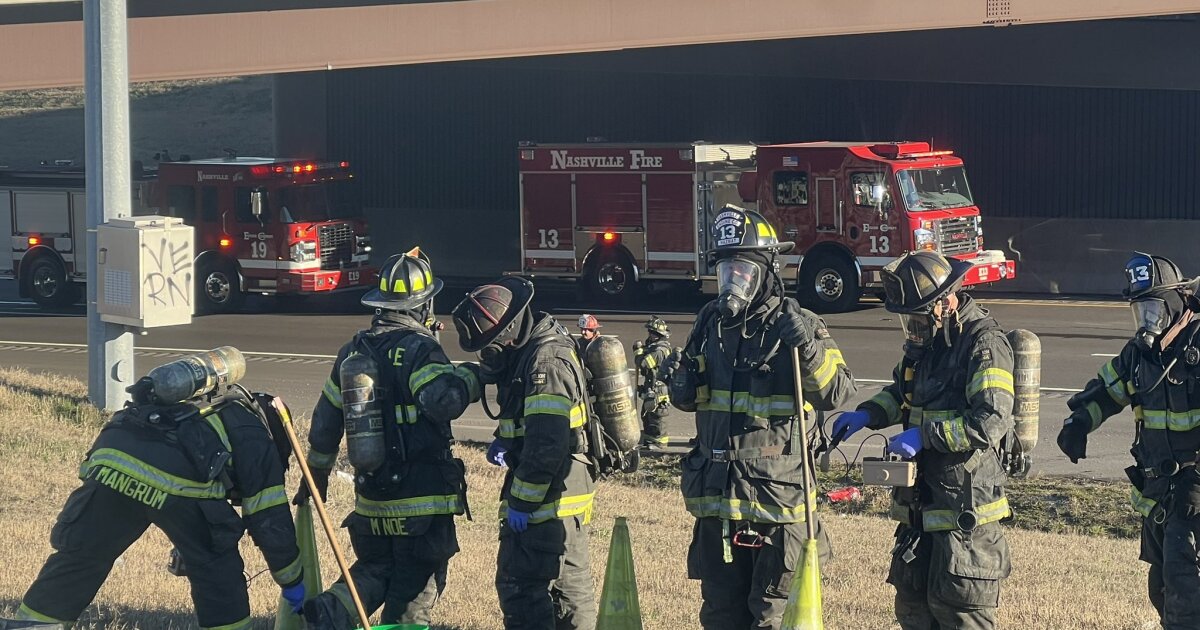
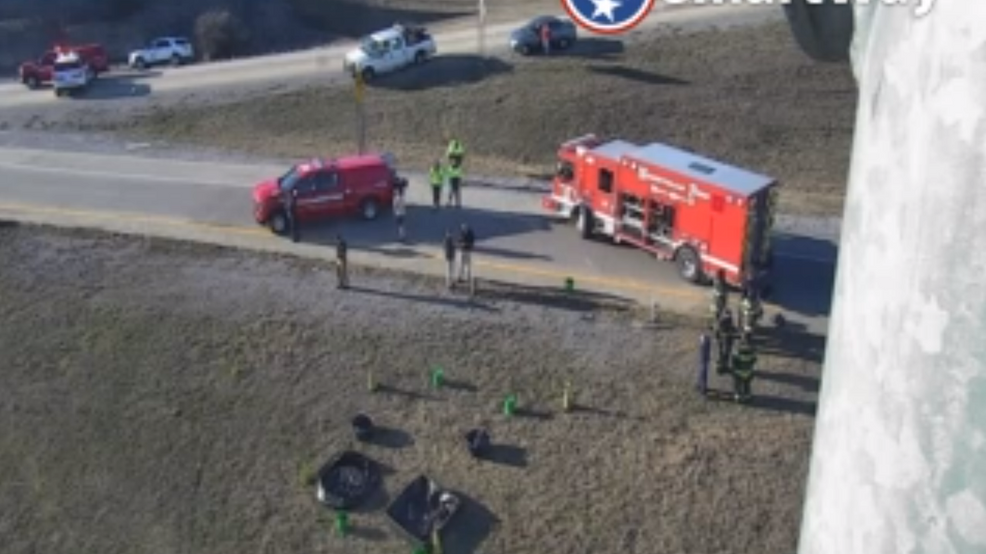
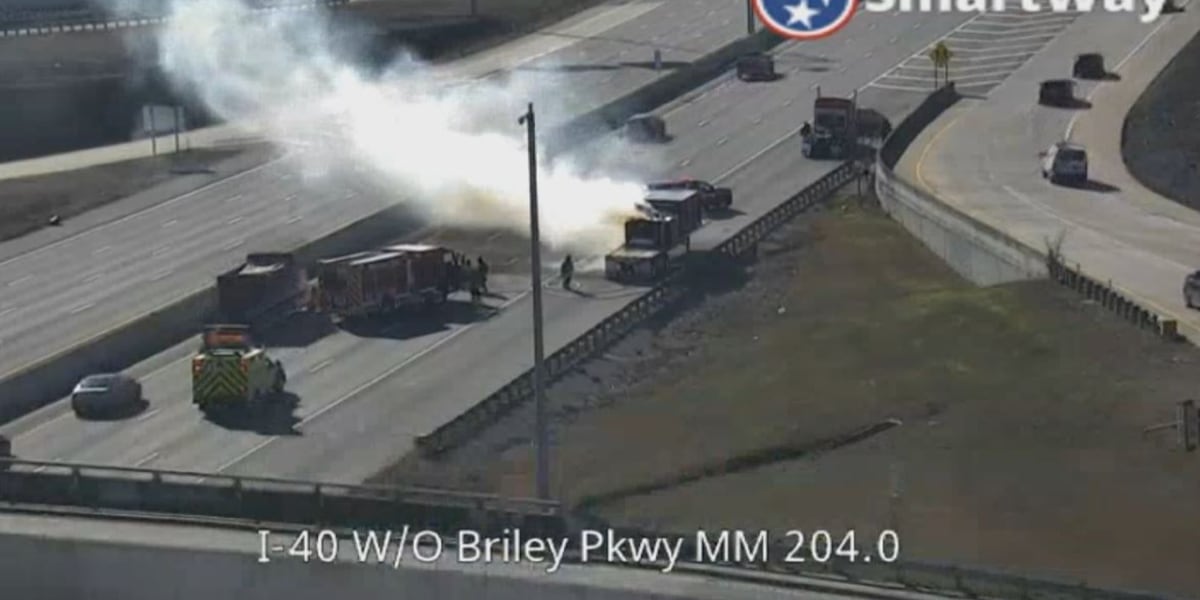
A semi-truck carrying radioactive waste caught fire near exit 240A and I-40 W in Nashville, causing the closure of I-40 West for several hours. The Tennessee Department of Transportation has since reopened both eastbound and westbound traffic. The Nashville Fire Department worked to cover the truck with tarp and move it to clear the lane, and inspections were conducted to ensure the truck's safety for continued travel.
A semi fire carrying low grade radioactive waste shut down westbound lanes of I-40 near White Bridge Road in Nashville. The Nashville Fire Department responded to the scene and reported that the hazardous material was isolated to its packaging, with no injuries reported. After the decontamination process, the lanes have been reopened and the scene is being turned over to Tennessee Department of Transportation, Tennessee Highway Patrol, and Tennessee EMA for further inspections.
Interstate 40 in Nashville was closed in both directions after a semi-truck carrying low-grade radioactive waste caught fire, causing traffic backups for miles. The Nashville Fire Department reported that no hazardous levels were detected, and the waste was isolated to its packaging. Eastbound lanes have since reopened, but westbound lanes remained closed for an extended period, with the Tennessee Emergency Management Agency setting up a command post to investigate.
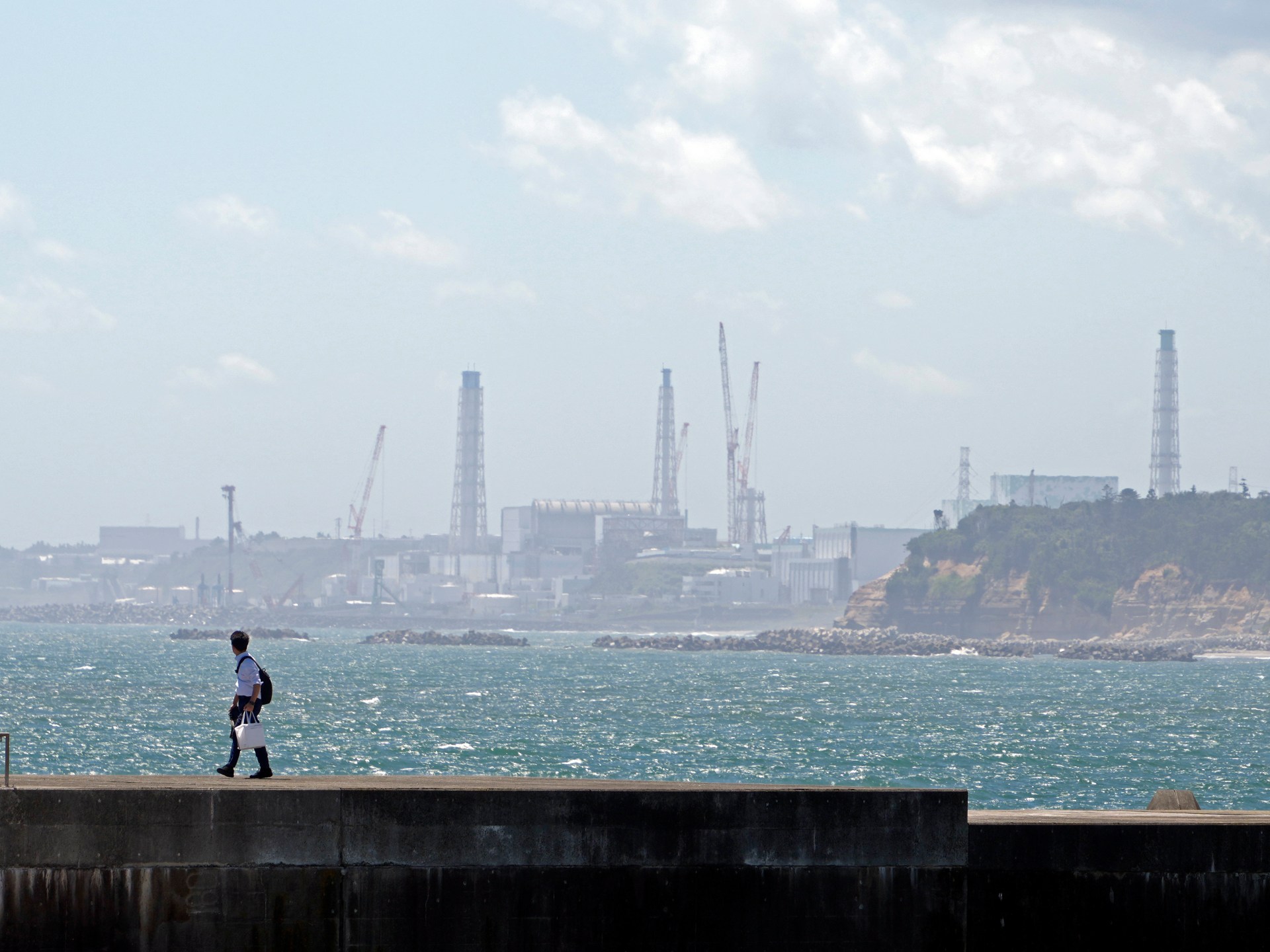
Japan faces a complex and lengthy challenge in decommissioning the Fukushima Daiichi nuclear plant, which was severely damaged in the 2011 tsunami and subsequent nuclear disaster. The process is expected to take between 30 and 40 years, much longer than usual due to unique challenges such as widely dispersed fuel and high radiation levels. The accumulation of treated radioactive wastewater has hindered progress, and Japan has faced criticism for its plan to discharge the water into the ocean. The full extent of the damage inside the reactors is still unknown, and financial considerations, including compensation and specialized equipment, contribute to the estimated final cost of $141 billion. Despite the challenges, there is hope that the decommissioning process will eventually make the area safe for people to return.