
Citadel Unwinds Majority of Situational Awareness Portfolio via $4bn Block Trades
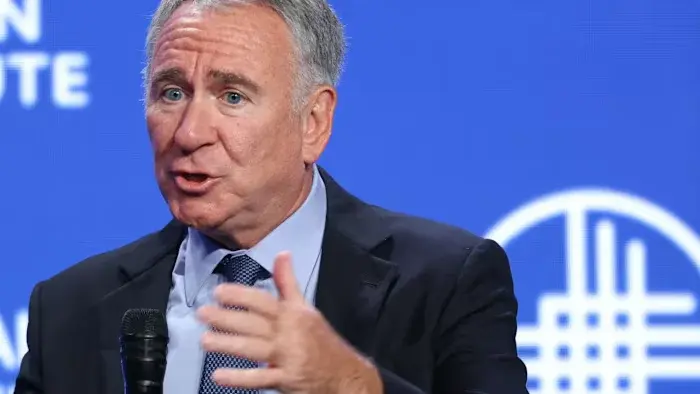
Citadel has offloaded over 80% of the portfolio it acquired from Situational Awareness, executing more than 100 block trades worth $4bn. Ken Griffin stated this rapid exit minimized risk during market volatility, while the firm's flagship fund posted its best monthly performance since 2022.
Key points
- Citadel sold over 80% of the 'aggregate risk' from the Situational Awareness portfolio it purchased last month.
- The fund executed nearly 100 block trades totaling $4bn in recent weeks, described by Ken Griffin as some of the largest of the year.
- Citadel’s flagship Wellington fund returned 5.94% in July, its best monthly performance since 2022.
- The acquisition occurred after Situational Awareness faced steep losses and forced sales due to a tech sell-off.
- Griffin credited prime brokerage teams for facilitating the rapid transfer of the portfolio.
Background
In late July 2026, Citadel acquired the public stock holdings of Situational Awareness, a hedge fund founded by Leopold Aschenbrenner, after the latter faced severe losses and margin calls. The purchase was executed at a discount and helped stabilize a broader AI-stock selloff. Citadel’s Wellington fund subsequently posted strong gains in July, marking its best performance since 2022, while the firm managed approximately $71 billion in assets.
How outlets are covering it
The Financial Times and CNBC both confirm that Citadel has unwound more than 80% of the risk from the Situational Awareness portfolio through over 100 block trades valued at $4bn. Both outlets highlight Ken Griffin’s letter to investors, which emphasizes the firm’s proactive approach to market dislocation. CNBC provides additional detail on the timeline, noting that Citadel began discussions with Situational Awareness on July 29, one day before the latter was forced to sell all public positions. Both sources agree that the Citadel purchase helped stem a broader AI rout, with the AI trade rebounding after the asset transfer. The Financial Times notes that Citadel’s flagship fund was up 6% in July, while CNBC specifies a 5.94% return, both indicating strong performance relative to rivals.
Why it matters
The rapid unwinding of the Situational Awareness portfolio by Citadel demonstrates the significant market impact of large hedge fund transactions and the role of prime brokerage in facilitating such moves. The strong performance of Citadel’s Wellington fund following the acquisition highlights the potential for profit in distressed asset purchases, while the rebound in AI stocks suggests that the forced sales may have marked a bottom for the sector.
What to watch
Citadel will likely continue to monitor the remaining 20% of the portfolio for any residual risk. The performance of the AI sector will be watched closely to determine if the rebound is sustained or if further volatility is expected. Investors may also look for further insights from Ken Griffin on the firm’s strategy for managing the remaining positions.
- Citadel offloads 80% of portfolio scooped up from Situational Awareness Financial Times
- Ken Griffin says Citadel unwound more than 80% of risk tied to Situational Awareness portfolio CNBC
- Citadel shed more than 80% of aggregate risk from Situational Awareness portfolio - CNBC (AIQ:NASDAQ) Seeking Alpha
- Citadel Sold More Than $4 Billion of Situational Awareness Bets Bloomberg.com
- Citadel Sells Over 80% of Situational Awareness Portfolio WSJ
Want the full story? Read the original reporting
Read on Financial Times