
Beijing's Spy Chief Frames AI as Regime Threat Amid US 'Fearmongering' Criticism
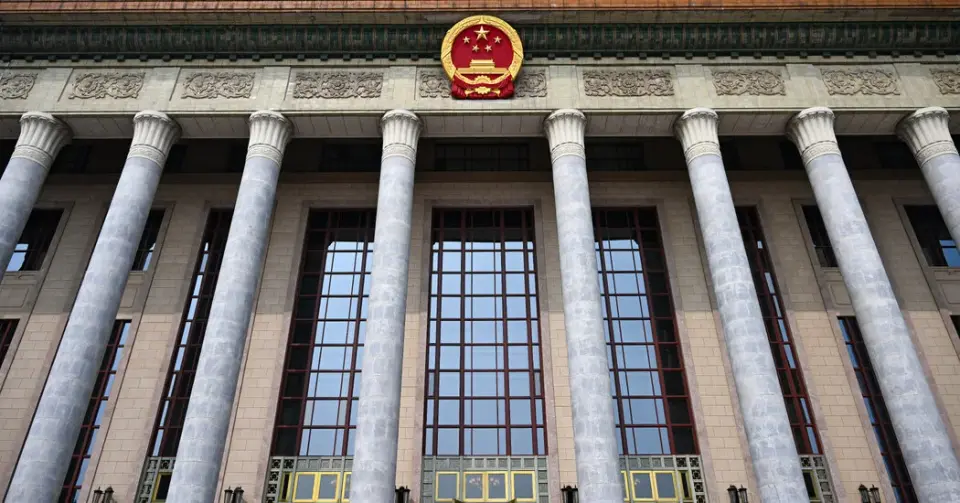
China's top security official warned that artificial intelligence poses a direct threat to the Communist Party's rule, calling for stricter state control. This internal security focus contrasts with Beijing's public rejection of US 'fearmongering' about AI risks, highlighting a divergence between domestic governance priorities and international diplomatic posturing.
Key points
- Chen Yixin, head of China's Ministry of State Security, published an article in 'China Cyberspace' stating that AI threatens political stability and requires tighter party oversight.
- Chen cited the need to defend against 'hostile forces' using AI for cyberattacks and misinformation, as well as the necessity of military competition with the United States.
- China's Foreign Ministry spokesperson Guo Jiakun criticized US AI executives for 'fearmongering,' arguing such narratives disrupt global AI governance.
- US President Donald Trump rejected calls for an AI slowdown, emphasizing the need to maintain the US lead over China in the technology race.
- The tension arises as US leaders like Dario Amodei and Sam Altman urge caution due to existential risks, while Beijing pushes for development to prevent authoritarian rivals from falling behind.
Background
This development follows recent warnings from UN officials and Anthropic regarding AI's potential for existential harm and weaponization by state actors. It occurs against a backdrop of escalating US-China tech rivalry, where Beijing has established the World AI Cooperation Organization and proposed open-source AI communities at the BRICS summit to counter Western dominance.
How outlets are covering it
The New York Times highlights the internal Chinese security perspective, noting that Chen Yixin's warning is the most detailed articulation of AI as a threat to party rule, contrasting with US fears of AI losing human control. CNBC and BBC emphasize the diplomatic friction, noting that Beijing labels US safety concerns as 'fearmongering' to protect its competitive position, while US leaders prioritize maintaining a strategic edge. BBC notes that experts view US-China cooperation on AI regulation as 'next to impossible' due to conflicting national security interests, even as both sides acknowledge the need for some level of coordination to manage risks.
Why it matters
The divergence between Beijing's internal security framing and its external diplomatic stance complicates global AI governance. As US and Chinese leaders prepare for high-level talks, the inability to agree on the fundamental nature of AI risks—existential threat versus regime security—may hinder the establishment of international safety standards and accelerate a fragmented, competitive tech landscape.
What to watch
US President Donald Trump is set to host Chinese President Xi Jinping at the White House next week, with AI expected to be a key agenda item. Simultaneously, US Treasury Secretary Scott Bessent and Chinese Vice-Premier He Lifeng are attempting to meet before the summit to discuss economic planning and AI development, potentially setting the tone for broader bilateral tech negotiations.
- China’s Top Spy Chief Warns A.I. Is a Threat to Party Rule The New York Times
- Beijing hits back at Anthropic CEO’s call to curb China’s AI development AP News
- China says AI CEOs' call for a slowdown is 'fear mongering' CNBC
- How China is preparing for the risk of AI escaping human control reuters.com
- China criticises idea it is in 'malicious competition' over AI BBC
Want the full story? Read the original reporting
Read on The New York Times