
China’s State-Sponsored Chip Espionage Campaign Pre-Dates Nvidia Scandal
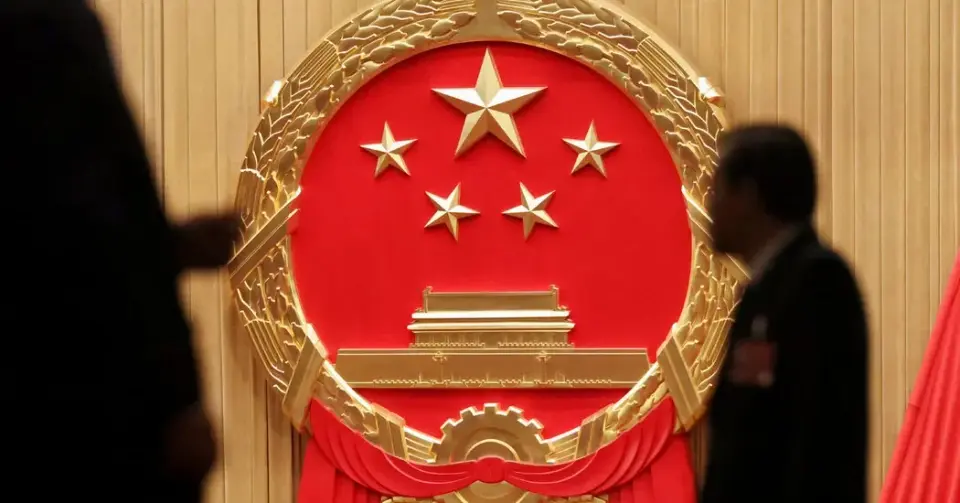
China’s Ministry of State Security has run a secret, multi-year campaign to help domestic firms acquire advanced AI chips and gather intelligence on the sector, according to The New York Times. This effort predates the recent scandal involving Nvidia CEO Jensen Huang and aligns with Beijing’s goal to overcome Western export barriers. While US officials frame AI as an existential race for Artificial General Intelligence, Chinese experts view it as a practical tool for economic integration, driving a strategy to bypass restrictions through loopholes and espionage.
Key points
- The New York Times reports that China’s top espionage agency added overcoming Western tech barriers to its priorities this year, with a focus on acquiring advanced semiconductors for AI.
- Xi Jinping instructed the Politburo in January to adopt 'extraordinary measures' to solve 'chokehold' problems in core technologies, signaling a high-level state push.
- The campaign has been underway for at least two years, involving secret efforts to help Chinese companies access chips barred from export by the US.
- Rolling Stone highlights a strategic divergence: US officials view AI as a winner-take-all race for AGI, while China focuses on integrating AI into its economy and society for practical gains.
- US export controls have created a 'bridge' strategy for China, using loopholes like Singaporean front companies to access Nvidia chips while developing domestic alternatives.
- Despite Pentagon warnings, the US Commerce Department approved nearly 880,000 AI chip sales to Chinese firms, including those linked to military entities, according to earlier archive reports.
Background
This development follows the resignation of Nvidia CEO Jensen Huang, who stepped down after US intelligence alleged his relationship with a suspected Chinese spy facilitated illegal chip exports. The scandal triggered new US export restrictions and a rift between Treasury Secretary Scott Bessent and Commerce Secretary Howard Lutnick. Recent archive coverage notes that the US approved massive chip sales to Chinese firms like Alibaba and Tencent despite security concerns, while Beijing dismissed the allegations as a smear. The current reporting reveals that the espionage campaign is not a reaction to the Huang scandal but a pre-existing, state-directed strategy.
How outlets are covering it
The New York Times emphasizes the state-directed nature of the espionage campaign, framing it as a direct response to US export controls and a priority for Xi Jinping. Rolling Stone, conversely, focuses on the philosophical and strategic differences between the US and China, arguing that China’s goal is not necessarily to achieve AGI first but to maximize the economic utility of AI within its existing constraints. While The New York Times highlights the secrecy and duration of the espionage effort, Rolling Stone points to the paradox of US officials, including Commerce Secretary Howard Lutnik, potentially facilitating the very access China seeks through lax enforcement and approved sales. Both sources agree that the US-China AI race is defined by a struggle over access to advanced computing power, but they differ on the primary motivation: national security dominance versus economic integration.
Why it matters
The revelation that China’s chip espionage is a long-standing, state-sponsored campaign rather than an ad-hoc response to recent scandals underscores the depth of the US-China technological rivalry. It suggests that current export controls may be insufficient to prevent China from accessing critical technology, as Beijing is willing to use espionage and loopholes to maintain its competitive edge. This has significant implications for US national security, as it highlights the difficulty of enforcing export controls against a determined adversary with state-backed resources. Furthermore, it raises questions about the consistency of US policy, given the recent approvals of chip sales to Chinese firms despite security warnings.
What to watch
Expect increased scrutiny from the US Congress and intelligence community regarding the enforcement of export controls on AI chips. The revelation of a long-standing espionage campaign may lead to calls for stricter regulations and investigations into US officials who have facilitated chip sales to Chinese entities. China may continue to pursue its 'bridge' strategy, using loopholes and espionage to access US technology while accelerating the development of domestic alternatives. The US government may face pressure to reconcile its conflicting policies, such as the approval of chip sales with the need to prevent technology transfer to China. The ongoing tension may also impact US-China trade relations, potentially disrupting the fragile détente established in September.
- China’s Spies Set Sights on A.I. Chips Years Before Nvidia Scandal The New York Times
- The chip war’s next battleground Financial Times
- American and Chinese approaches to AI will converge The Economist
- What China Gets From Its AI Honeypots and Smuggled Chips Rolling Stone
- EXCLUSIVE: China taps US AI models to train homegrown rivals as chip curbs bite Reuters
Want the full story? Read the original reporting
Read on The New York Times