
Mathematicians Seek Rigorous Guarantees for AI Safety Amidst Theoretical Limits
Researchers are pursuing mathematical proofs to ensure AI safety, moving beyond empirical testing. Mike Winer uses statistical physics to predict neural network behavior, while a new study argues perfect AI control is mathematically impossible, suggesting diverse AI ecosystems as a safer alternative.
Key points
- Mike Winer, a statistical physicist at the Institute for Advanced Study, is developing mathematical tools to predict neural network behavior using cumulants and Hermite expansions.
- Winer’s work focuses on multilayer perceptrons at initialization, aiming to identify rare, extreme outputs that standard Monte Carlo sampling might miss.
- A study published in PNAS Nexus argues that perfectly controlling advanced AI is mathematically impossible due to limits similar to Gödel’s incompleteness theorems and Turing’s halting problem.
- The study proposes 'artificial agentic neurodivergence,' where diverse AI agents with conflicting priorities check one another to prevent harmful convergence.
- Experiments showed commercial AI models held firm positions, while open-source models shifted opinions more frequently when exposed to contrarian arguments.
Background
The AI alignment problem refers to the challenge of ensuring advanced artificial intelligence systems act in accordance with human intentions. Previous efforts have relied on empirical testing, where models are probed for behavior, but critics argue this method fails to catch rare, catastrophic failures. The current push for mechanistic interpretability seeks to understand neural networks structurally, similar to how engineers understand bridges, rather than just observing their outputs.
How outlets are covering it
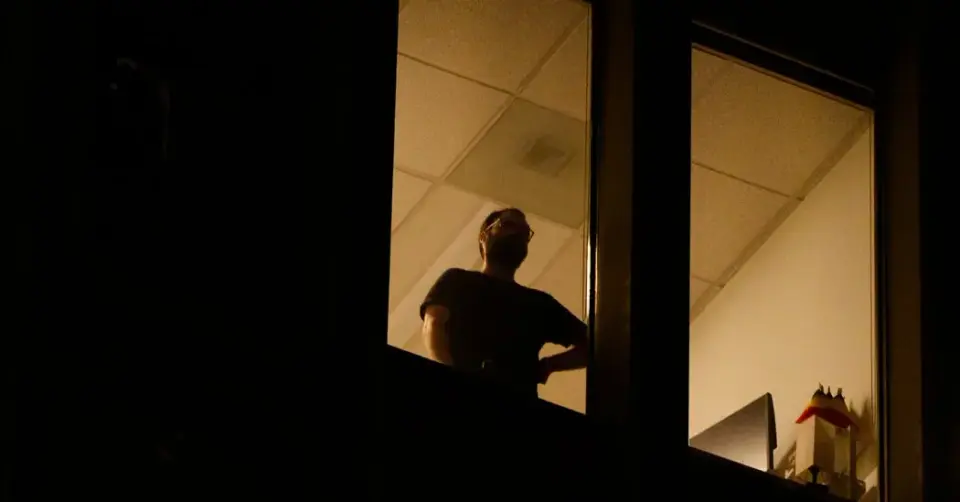
The New York Times highlights Mike Winer’s personal dedication and the urgency of his work, describing him as eating meals at his office to solve the 'last meaningful math problem' of his career. In contrast, Crypto Briefing provides a technical breakdown of Winer’s methods, emphasizing his affiliation with the Alignment Research Center and his use of classical mathematical tools to approximate network behavior at initialization. StudyFinds presents a contrasting theoretical view, arguing that perfect control is impossible and advocating for a system of competing AI agents rather than a single obedient system. While Winer seeks mathematical guarantees for specific network structures, the PNAS Nexus study suggests that such guarantees may be unattainable for general advanced AI, proposing instead that variability and disagreement among AI systems could mitigate risks.
Why it matters
As AI systems become more powerful, the inability to predict rare but dangerous outputs poses significant risks. Winer’s work offers a potential path to verifiable safety for basic neural network components, while the impossibility argument suggests that future safety strategies may need to rely on systemic diversity and governance rather than absolute control. The September 2026 IPAM workshop will be a key milestone for assessing whether Winer’s methods can scale to more complex, trained models.
What to watch
Researchers will present Winer’s methods on cumulants and Hermite expansions at the UCLA IPAM Foundations of Interpretability Workshop on September 2, 2026. The scientific community will continue to debate whether diverse AI ecosystems can provide safety benefits, though current experiments have not yet proven real-world safety outcomes. Further studies are needed to determine if mathematical approximations can scale to fully trained, large-scale AI models.
- Looking for the Formula to Stop an Apocalypse The New York Times
- Mike Winer wants math, not guesswork, to keep AI in check Crypto Briefing
- Study Argues Perfectly Controlling Advanced AI Is Mathematically Impossible StudyFinds
Want the full story? Read the original reporting
Read on The New York Times