
Xi Leverages Rare Earth Chokehold in High-Stakes Washington Summit
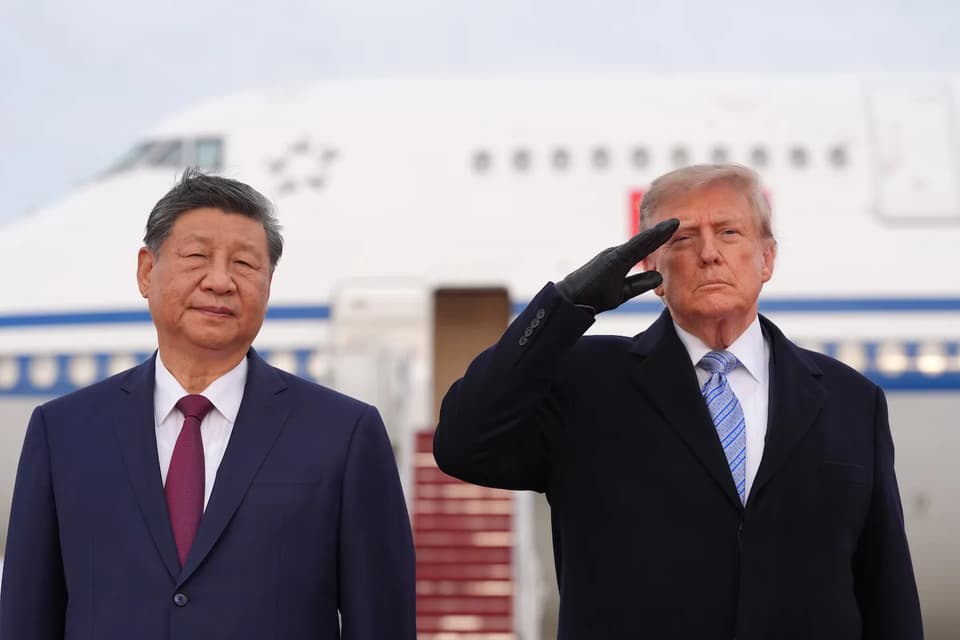
Chinese President Xi Jinping arrives in Washington for a summit with President Donald Trump, entering negotiations with significant leverage derived from China’s dominance in rare earth mineral processing. While the U.S. has invested billions to rebuild domestic supply chains, it remains heavily dependent on Chinese refining capabilities. Analysts suggest this dependency has softened the White House’s stance, as Beijing uses export controls to influence trade outcomes and military supply lines.
Key points
- Xi Jinping meets Trump in Washington, leveraging China’s control over rare earth processing to influence negotiations.
- The U.S. imports over two-thirds of its rare earth elements from China, despite domestic mining efforts.
- China suspended six export controls until November 10, 2026, in exchange for a U.S. pause on its 'affiliates rule.'
- U.S. efforts to rebuild supply chains face a 15-year timeline and billions in costs, with key facilities not operational until 2028.
- Beijing recently added 10 U.S. companies, including MP Materials and USA Rare Earth, to its export control list.
Background
Recent months have seen heightened tensions over critical minerals, with China reducing rare-earth magnet shipments to the U.S. by 13% in August 2026. Prior to this summit, Xi engaged in a global diplomacy sprint to position China as a stable alternative to the U.S., while the White House signaled a shift toward less confrontational diplomacy. The current meeting follows a temporary truce on export restrictions agreed upon in late 2025.
How outlets are covering it
The Washington Post emphasizes that China’s rare earth dominance has directly influenced the White House’s less confrontational approach, giving Xi a 'powerful hand' in the rivalry. The Conversation highlights the structural weakness of the U.S., noting that while domestic mining has restarted, the lack of processing expertise and technology bans make rebuilding the supply chain a 15-year endeavor. Yahoo Finance frames the issue as a market risk, suggesting that China’s dominance will overshadow the political talks due to the critical nature of these minerals for defense and technology sectors. All sources agree on the strategic leverage Beijing holds, but differ on the immediate impact: The Post focuses on diplomatic softening, while The Conversation stresses the long-term industrial vulnerability.
Why it matters
The outcome of these talks could determine the stability of global supply chains for critical minerals used in military hardware, electric vehicles, and electronics. If the November 10, 2026, deadline passes without an extension, U.S. industries face immediate production halts, as seen previously with Ford. The summit tests whether diplomatic engagement can mitigate the structural risks posed by China’s control over rare earth processing, with significant implications for U.S. national security and economic resilience.
What to watch
The U.S. and China must decide whether to extend the pause on export controls before November 10, 2026. The Pentagon and Commerce Department will continue funding domestic rare earth projects, with MP Materials expected to test its next magnet plant in 2028. Investors should monitor the stock performance of U.S. rare earth companies, particularly MP Materials and USA Rare Earth, which remain on China’s export control list. Any failure to reach an agreement could trigger immediate supply disruptions for U.S. defense and automotive sectors.
- As Trump meets Xi, rare earths give China a powerful hand The Washington Post
- Analysis-China's rare earths dominance to overshadow Trump's talks with Xi Yahoo Finance
- US, Japanese officials discussed China's yttrium curbs ahead of Trump-Xi meeting, document shows Reuters
- Xi Comes to Washington Armed With a Rare-Earth Card Foreign Policy
- How the US gave up its edge to China in processing vital rare earth minerals – and what that’s costing The Conversation
Want the full story? Read the original reporting
Read on The Washington Post