
Indonesia’s Central Bank Chief Resigns Amid Rupiah Crisis and Policy Uncertainty
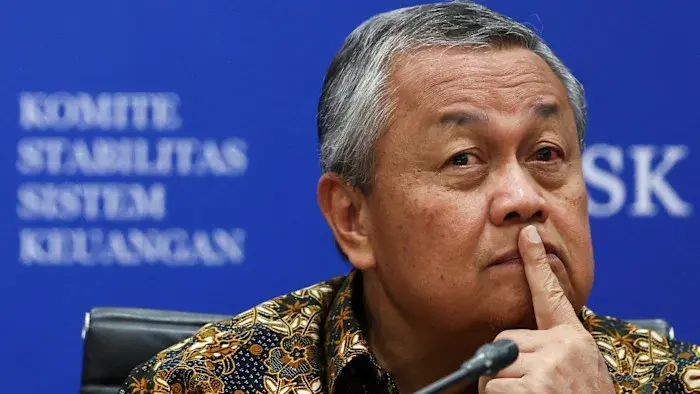
Perry Warjiyo, the long-serving governor of Bank Indonesia, has resigned, citing personal reasons. His departure follows significant pressure on the rupiah, which has been one of the worst-performing emerging market currencies this year. Deputy governor Destry Damayanti has been appointed as acting governor. The resignation adds to economic uncertainty in Indonesia, where policymakers have recently lost key figures, including finance minister Sri Mulyani Indrawati, and where concerns over central bank independence and fiscal deficits are rising.
Key points
- Perry Warjiyo, who led Bank Indonesia since 2018 and was serving his second term, resigned on Monday, with state secretary Prasetyo Hadi citing personal reasons.
- Destry Damayanti, the deputy governor, has been appointed as acting governor of Bank Indonesia.
- The rupiah has faced significant pressure, prompting three interest rate hikes since May and heavy foreign exchange intervention, with reserves falling to a near two-year low of $144.9bn last month.
- Warjiyo faced parliamentary scrutiny in May over the weakening currency, with one lawmaker calling for his resignation.
- Indonesia’s fiscal deficit reached 2.92% last year, nearing a legal cap of 3%, exacerbated by rising oil prices from the Middle East conflict and the weakening rupiah.
- Analysts warn that the leadership change could increase currency volatility and uncertainty regarding future monetary policy.
Background
This resignation follows a period of significant economic and political turbulence in Indonesia. In September 2025, finance minister Sri Mulyani Indrawati was dismissed by President Prabowo Subianto following violent protests against government economic policies. Additionally, concerns have been raised regarding central bank independence after Prabowo nominated his nephew for a deputy governor position. Last month, Indonesia’s parliament passed a law expanding the central bank’s mandate to include job creation and economic growth, alongside its traditional role in currency stability. The current fiscal strain is compounded by expensive welfare programs, such as the $12.7bn free school meals scheme, which has faced corruption allegations and implementation criticisms.
Why it matters
The resignation of a long-serving central bank chief during a period of currency weakness and fiscal stress signals heightened economic uncertainty in Southeast Asia’s largest economy. It may impact investor confidence, currency stability, and the effectiveness of monetary policy in addressing inflation and external pressures. The departure also raises questions about the independence of Bank Indonesia and the broader trajectory of Indonesia’s economic governance under President Prabowo Subianto.
What to watch
Investors and economists will closely monitor the rupiah’s performance and Bank Indonesia’s future monetary policy decisions under acting governor Destry Damayanti. There may be increased scrutiny on fiscal policies, particularly the implementation of welfare programs and the management of the fiscal deficit. The appointment of a permanent central bank governor and the resolution of concerns regarding central bank independence will be key developments to watch.
- Indonesia central bank chief resigns Financial Times
- Indonesia central bank governor Perry Warjiyo steps down in surprise move Reuters
- Acting Bank Indonesia Chief Damayanti Seen as Safe Pair of Hands Bloomberg.com
- Rupiah Slides as BI Governor Steps Down TradingView
- Presidential Decree on the Dismissal of Perry Warjiyo Will Soon Be Issued, BI is Guaranteed to Continue to Run VOI.ID
Want the full story? Read the original reporting
Read on Financial Times