global-economy4.325 min read
France's Student Truce Masks Deepening Bond Crisis
2 days ago•Source: CNBC

The latest global economy stories, each synthesized from multiple sources with added background and context.

IMF Managing Director Kristalina Georgieva has urged governments to implement immediate fiscal consolidation to address soaring bond yields and record public debt levels. Speaking in Singapore ahead of the IMF and World Bank annual meetings in Bangkok, Georgieva warned that global debt-to-GDP ratios are approaching 100%, a level not seen since World War II. She attributed the recent surge in borrowing costs to a combination of the ongoing Middle East conflict, which has kept oil prices near $100 per barrel, and the rapid expansion of artificial intelligence (AI) infrastructure. While AI could boost global growth by 0.5 percentage points, Georgieva cautioned that its benefits are unevenly distributed and may exacerbate inequality. She emphasized that the era of low interest rates supporting high debt is over, requiring 'very tough political choices' to restore fiscal stability.

Financial Times•3 days ago
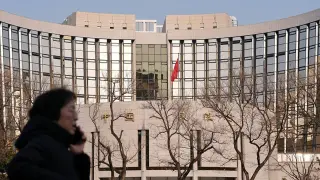
Beijing closed 670 banks in 2025, a record one-quarter of the national total, to stabilize its financial system. This move coincides with warnings from Saudi Aramco on oil stockpile recovery and renewed debate over AI safety risks versus China's development pace.

Beijing has shut 670 banks in 2025, roughly one-quarter of the national total, to stabilize the financial sector amid slowing growth. Fitch Ratings identifies rural lenders as the system's weakest link due to poor asset quality and thin capital. While the consolidation aims to improve oversight and prevent contagion, structural weaknesses in these institutions may persist despite the rapid mergers and dissolutions.

The euro dropped to its lowest level against the US dollar in 17 months, touching $1.1161, driven by fiscal instability in France and political uncertainty in Spain. French 10-year bond yields hit a 24-year high, widening the spread with German bonds to 146 basis points, its largest jump in 17 years. Prime Minister Pedro Sánchez called a snap election for November 29 after his housing decrees were rejected. While the ECB maintains its focus on price stability, contagion fears have spread to Italian and Belgian bonds, prompting analysts to warn of further risk premiums.

The euro fell to its lowest point against the U.S. dollar in 17 months on October 5, 2026, driven by political instability in Spain and fiscal concerns in France. Spanish Prime Minister Pedro Sánchez called a snap election for November amid housing protests, while France’s 2027 budget plan is viewed as insufficient to resolve structural debt issues. Investors are worried about the eurozone’s combination of rising inflation, high borrowing costs, and weak growth.

Uruguay has replaced Portugal as the top destination for international retirees in the 2026 Global Retirement Index, though Europe still dominates the list with six of the top ten spots. The ranking, which evaluates 46 residency programs, highlights a close competition where fewer than four points separate the first and tenth places. While European nations excel in quality of life and mobility, they often lag in tax optimization compared to destinations in the Americas and Africa. The report emphasizes that the ideal choice depends heavily on individual priorities, such as cost, tax rates, or citizenship timelines, rather than a single definitive winner.
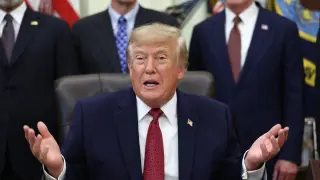
G7 nations agreed to release 100 million barrels of oil and diesel over four months to curb soaring fuel prices, a move prompted by US threats to ban diesel exports. While European leaders criticized the pressure tactics as 'blackmail,' the coordinated release aims to stabilize markets ahead of US midterm elections.

The G7 has agreed to release 100 million barrels of oil and diesel from strategic reserves over four months to stabilize soaring fuel prices. This coordinated action, led by the International Energy Agency, averts a threatened US export ban on diesel. While the move aims to lower costs for consumers and businesses, experts warn that depleting emergency stocks without clear replenishment plans poses long-term risks, especially amid ongoing geopolitical conflicts.

G7 leaders agreed to release 100 million barrels of oil and diesel from strategic reserves over four months to combat record-high fuel prices. The decision followed intense pressure from the US administration, which threatened to ban diesel exports unless Europe acted. While the US framed the move as a cooperative solution, European officials privately described the negotiations as coercive and 'blackmail.'
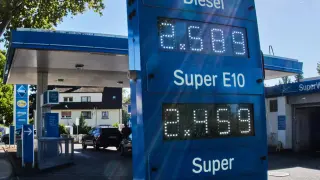
G7 leaders agreed on October 2 to release 100 million barrels of diesel and crude oil from strategic reserves over four months, coordinated through the International Energy Agency (IEA). This decision followed intense pressure from the US administration, which threatened to ban diesel exports to lower domestic fuel prices. The agreement includes a front-loaded release of substantial diesel volumes within the first 20 days to address record-high prices in both the US and Europe. While the US framed the move as a success, European leaders rejected the export ban threat, warning it would damage trust and economic performance. The release aims to stabilize markets amid ongoing geopolitical tensions, including the US-Israeli war on Iran and Ukrainian attacks on Russian energy infrastructure.
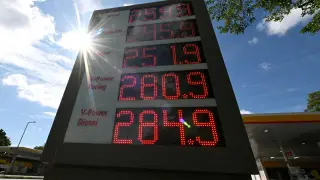
The US government is pressuring European allies to release strategic diesel reserves immediately to curb soaring fuel prices, while President Donald Trump considers a potential ban on US diesel exports. This move aims to lower domestic costs ahead of November midterm elections, but European officials warn that an export ban would cause dramatic economic consequences and price spikes globally. EU member states are set to discuss a coordinated response on Friday, with France and Germany targeted for immediate action.