Tag

Global Economy

All articles tagged with #global economy

US widens Iran sanctions to choke oil lifelines and international partners
world4 hours ago

US widens Iran sanctions to choke oil lifelines and international partners

The US announced sweeping new sanctions on Iran and nearly 60 affiliated entities worldwide to sever Tehran’s oil-revenue networks and isolate Tehran, targeting a multinational procurement web linked to Iran’s nuclear, missile and cyber programs and five sustaining sectors—digital assets, technology, gold, aviation, and shipping. Iran denounced the move; China urged restraint, and Washington signaled it will give partners time to cut ties rather than blow up the global financial system.

Black Sea disruptions push global grain prices to multi-year highs
world5 days ago

Black Sea disruptions push global grain prices to multi-year highs

Grain prices jumped to near three-year highs as Russia and Ukraine’s strikes on Black Sea ports and shipping disrupt exports, threatening a large global supply shortfall (up to about 86 million tonnes, ~17% of world cereal exports). Ukraine’s exports are down about 75% year-on-year this month, with Russia’s also slipping; alternative routes via rail and the Danube can only partly compensate. Analysts warn global food prices could rise around 11.8% this year and 4.8% in 2027, and some say the market underprices sustained disruption.

Global Rate Hikes Put Bond Diversification at Risk
markets7 days ago

Global Rate Hikes Put Bond Diversification at Risk

Bloomberg reports that rate hikes are expected across major economies beyond the U.S., with about two-thirds of tracked swap markets pricing higher policy next year. Fueled by energy costs, fiscal stimulus, and an AI-driven growth boom, inflation pressures could force central banks to tighten further, potentially turning bonds from portfolio ballast into a drag as yields rise and financing conditions tighten, weighing on both bonds and equities.

US sells euros to back the yen, catching the ECB by surprise
global-economy18 days ago

US sells euros to back the yen, catching the ECB by surprise

Washington’s move to sell euros to buy yen blindsided the ECB, marking a rare, less-coordinated Western currency intervention. The action used the Exchange Stabilization Fund without formal coordination with foreign authorities, highlighting a break with decades of mutual trust among central banks and prompting questions about future cooperation in currency markets.

Global trade warned: Hormuz tolls could upend energy prices and livelihoods
world19 days ago

Global trade warned: Hormuz tolls could upend energy prices and livelihoods

Eight of the world’s largest shipping associations urged the UN and IMO to oppose any compulsory tolls in the Strait of Hormuz, warning such charges would breach international navigation rights, set a dangerous precedent, and raise energy prices and inflation, harming global trade and livelihoods amid ongoing Gulf turmoil and Iran’s toll regime.

Yen intervention signals a shift in the dollar’s reserve dominance
economy20 days ago

Yen intervention signals a shift in the dollar’s reserve dominance

Barry Eichengreen argues that the joint yen intervention by the US Treasury and Japan’s Finance Ministry sends a message beyond market noise: the dollar’s status as a reserve currency is weakening, and the modest ¥14 trillion effort will be short-lived unless it is backed by stronger fundamentals, such as faster BoJ rate hikes. The use of euros to fund part of the operation and Washington’s cautious approach via facilities like FIMA suggest the US wants currency stability without triggering heavy dollar sales, implying central banks may diversify reserves more in the future.

The Renminbi Gap: Why a Stronger Yuan Is a Global Priority
world22 days ago

The Renminbi Gap: Why a Stronger Yuan Is a Global Priority

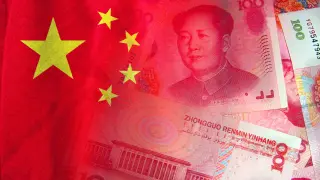
Brad Setser argues that China’s large current-account surplus and the yuan’s managed undervaluation indicate a substantial undervaluation, with the PBOC’s FX interventions sustaining an export-led model that fuels global imbalances. He contends that allowing modest yuan appreciation could help rebalance growth, though some economists urge waiting for domestic-demand reforms; inaction risks larger global disruption as reliance on China’s exports persists.

Japan’s comeback on a dangerous debt tightrope
global-economy29 days ago

Japan’s comeback on a dangerous debt tightrope

Japan’s long deflationary era is fading as growth and pricing power return, but the country’s debt burden (over 200% of GDP) and ongoing fiscal support raise long‑term yields and put pressure on policy. The BoJ’s yield management, a plunging yen, and rising import costs complicate stability, and while Tokyo can likely weather pressures for now through domestic holders and reserves, higher rates abroad could spill over to other governments’ borrowing costs in a more synchronized global move.

Black Sea grain lifeline at risk as Russia escalates strikes
world1 month ago

Black Sea grain lifeline at risk as Russia escalates strikes

Russian drone and missile strikes on Ukraine’s Black Sea ports, notably Odesa, have reduced storage capacity, deterred ships, and disrupted grain shipments, threatening Ukraine’s export revenue and tightening global wheat supply as traders eye Danube routes and higher war-risk insurance costs; wheat futures surged as market expectations shift to a longer disruption of Black Sea exports.

India taps global labor mobility to absorb its burgeoning workforce
business1 month ago

India taps global labor mobility to absorb its burgeoning workforce

India is formalizing labour mobility pacts to send skilled workers overseas as domestic job growth lags and remittances help fund the economy, contrasting with China’s brain-gain. The plan faces backlash from anti-immigration sentiment abroad as countries tighten visas, but proponents say treaties provide durable access to foreign labor markets and help manage a large working-age population.

IMF warns inflation risk could derail global recovery
world1 month ago

IMF warns inflation risk could derail global recovery

The IMF’s latest World Economic Outlook warns that renewed Middle East tensions could push inflation higher and disrupt supply chains, with global inflation projected to rise to about 4.7% this year before easing to 3.9% in 2027, while global growth slows to around 3% before rebounding to 3.4% in 2027. The euro area is expected to keep inflation above the ECB’s 2% target until 2028, suggesting more rate hikes could be on the horizon for major central banks, even as AI-driven gains support some economies. The report also highlights risks to energy and food security if disruptions persist, underscoring that inflation remains the primary threat to a smoother global recovery.

Japan’s Services Pulse Points to Growth Amid a Patchwork Global Data
businesseconomy1 month ago

Japan’s Services Pulse Points to Growth Amid a Patchwork Global Data

Japan's services PMI rose to 52.2 in June, signaling expansion; the PBOC is expected to set the USD/CNY reference rate around 6.7808 amid FX considerations; Australia’s services PMI returned to growth at 50.5 but new orders fell, while inflation expectations remain in focus; ECB officials defend the rate rise despite inflation and currency tensions; New Zealand consumer confidence climbed to 91.3 in June with easing inflation expectations; market chatter also covers NFT gains and a drop in AI chip stocks.

World Bank to end China lending by 2031, signaling Beijing’s graduation
world1 month ago

World Bank to end China lending by 2031, signaling Beijing’s graduation

The World Bank plans to phase out lending to China by 2031, capping new financing at up to $2 billion before Beijing graduates from the institution. The move, driven by bipartisan U.S. pressure and reflecting China’s growing economy, follows a decline in lending from about $2.4 billion in 2017 to roughly $750 million in 2025 and will end China’s borrower status with the Bank. Unlike Poland’s transition, the Chinese plan has no carve-outs for Ukraine or nuclear-energy financing, and it signals broader scrutiny of multilateral lending to rising economies.

BIS warns AI hype could trigger a protracted investment bust
economy1 month ago

BIS warns AI hype could trigger a protracted investment bust

The Bank for International Settlements warns that current AI exuberance could morph into a prolonged investment bust, risking a sharp pullback in funding for AI companies and broader financial and economic instability. While AI could lift productivity, past tech booms ended in overinvestment and reversals; the surge in debt and equity issuance—including SpaceX’s IPO and a massive $25bn bond sale—raises the risk of a market correction if returns disappoint.