
Indonesia’s Market Hits 1998 Lows as MSCI Downgrade Threat Triggers $5B State Fund Response
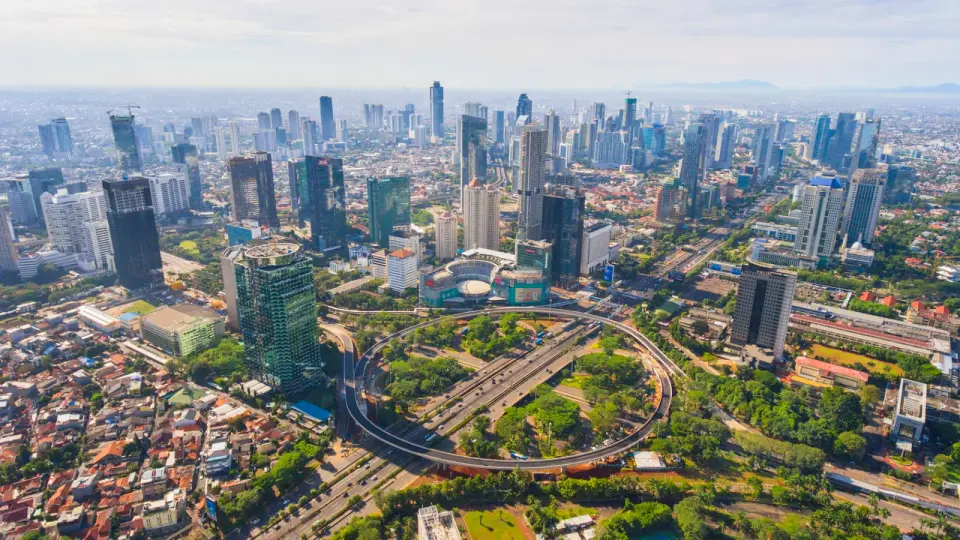
Indonesia’s benchmark stock index fell over 11% to its lowest level since 1998 after MSCI proposed reclassifying the country from an emerging market to standalone status. This move threatens to remove Indonesian assets from major global indexes, potentially triggering billions in passive fund outflows. In response, the state-backed Danantara fund pledged $5 billion to support domestic companies, while Goldman Sachs warned of further declines due to weak earnings and macroeconomic headwinds.
Key points
- The Jakarta Composite Index dropped more than 11% on Friday, reaching its lowest point since the 1998 Asian financial crisis, and fell over 5% again on Monday.
- MSCI proposed reclassifying Indonesia from an emerging market to standalone status, which would exclude it from major global equity benchmarks; a final decision is expected by June.
- Goldman Sachs estimates a full removal could trigger approximately $5.6 billion in passive fund outflows, equivalent to 18 days of average trading volume for MSCI Indonesia constituents.
- Foreign ownership of Indonesian stocks has declined to 25% from 27% in January, with foreign holdings nearly halving to approximately $130 billion from $250 billion.
- Danantara, Indonesia’s sovereign wealth fund, pledged to invest $5 billion in domestic businesses over the next six to nine months to stabilize the market and support fundamentals.
Background
Indonesia’s stock market has been the world’s worst performer this year, falling nearly 40% year-to-date. Earlier this month, the country abolished its Rp50 stock floor to combat liquidity issues and address MSCI concerns. The current crisis follows a broader trend of investor distrust in President Prabowo Subianto’s economic policies, which have included rapid turnover of senior officials and populist reforms that strained national finances. The rupiah has also weakened past 18,000 per dollar, prompting central bank intervention.
How outlets are covering it
CNBC and The New York Times emphasize the severity of the market crash, with the latter noting it was the biggest one-day plunge since 1998. CNBC highlights Goldman Sachs’ warning that valuations, while compressed, remain above historical troughs, and that the central bank may raise interest rates twice more in 2026-2027, adding pressure. Fortune focuses on the government’s response, detailing Danantara’s $5 billion pledge and its chief investment officer’s assertion that consumer stocks are cheap and that the fund prioritizes 'economic value' over immediate commercial returns. Fortune also notes concerns from analysts about increased state control over strategic assets, which could further erode investor confidence. All sources agree that the MSCI downgrade threat is a critical driver of the sell-off, but they differ in emphasis: CNBC and NYT focus on the financial impact and risks, while Fortune highlights the state’s attempt to stabilize the market through direct investment.
Why it matters
The potential MSCI downgrade could trigger significant foreign capital outflows, exacerbating Indonesia’s economic challenges and potentially affecting regional market stability. The response from Danantara signals a shift in the government’s approach to market stabilization, but it also raises concerns about increased state control over the economy. The outcome of the MSCI review and the effectiveness of Danantara’s investments will be crucial in determining whether Indonesia can restore investor confidence and prevent further market declines.
What to watch
MSCI is expected to make a final decision on Indonesia’s market classification by June. If the downgrade proceeds, it could lead to further passive fund outflows and potentially trigger similar actions by FTSE Russell. The Indonesian central bank is expected to raise interest rates twice more in 2026-2027, which could add pressure to economic growth and equity valuations. Danantara is set to launch its fourth unit, Danantara Resources Indonesia, in January, which will centralize the exports of coal, palm oil, and ferroalloys. The government must also demonstrate meaningful improvements in market governance and transparency to avoid the downgrade.
- Indonesian stocks plunge to six-year low as MSCI downgrade fears mount CNBC
- Indonesia's $5 billion bet on its own stock market Fortune
- Indonesian stocks slide to six-year low as MSCI warning weighs Reuters
- Indonesian Stocks Plunge on Threat to Drop Market From Major Indexes The New York Times
- Indonesia Stocks Log Worst Day Since 1998 on MSCI Downgrade Warning WSJ
Want the full story? Read the original reporting
Read on CNBC