
Indonesia's Stock Market Hits 1998 Lows as MSCI Threatens Standalone Downgrade
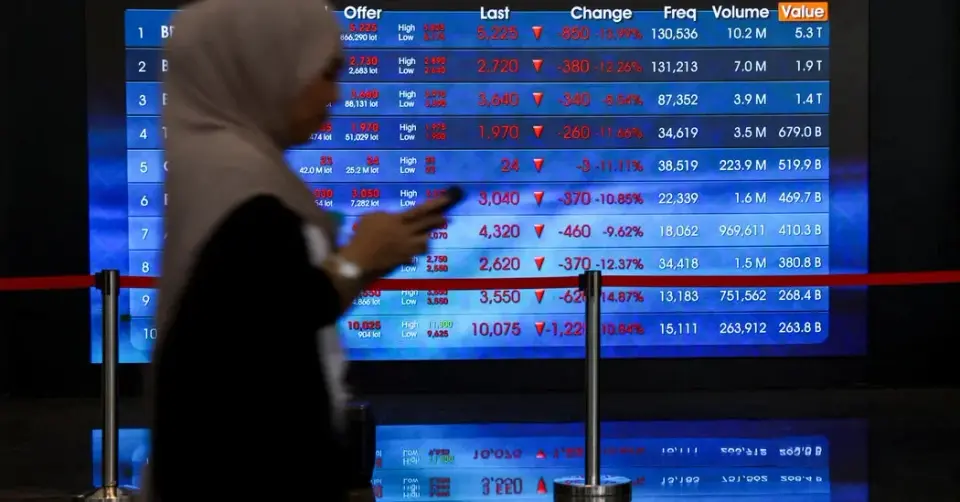
Indonesia's stock market suffered its worst one-day crash since 1998, falling over 11 percent, after MSCI announced a potential downgrade of the country from 'emerging market' to 'stand-alone' status. The move threatens to remove Indonesia from major global indexes, potentially forcing billions of dollars in foreign fund sales. The crisis highlights deepening investor distrust in President Prabowo Subianto's economic policies and populist reforms, which have strained national finances and led to the rapid turnover of senior officials. While the rupiah weakened past 18,000 per dollar, the central bank intervened to support the currency, and officials emphasized that the country's economic fundamentals remain strong despite the market turmoil.
Key points
- The Jakarta stock exchange dropped more than 11 percent on Friday, triggering a trading halt due to extreme volatility, marking the steepest decline since the 1998 Asian financial crisis.
- MSCI launched a consultation on Thursday to potentially downgrade Indonesia by two rungs to 'stand-alone' status, a category reserved for markets isolated by sanctions or severe turmoil, such as Ukraine and Zimbabwe.
- The index provider cited 'market dysfunction' and concerns over transparency, escalating its threat from a previous consideration of a single-level drop to 'frontier market' status earlier in the year.
- President Prabowo Subianto faces a major challenge as his populist policies and abrupt removal of economic officials have eroded investor confidence, leading to a nearly 40 percent loss in market value this year.
- The rupiah breached the 18,000-to-dollar threshold, prompting central bank intervention, though officials noted that bond and currency markets remained relatively stable compared to the stock market crash.
Background
This crisis follows a series of recent market interventions, including the abolition of a minimum share price floor in September to combat liquidity issues and prevent a downgrade. The current turmoil is part of a broader pattern of investor alarm regarding the administration's economic direction, which has seen three finance ministers in two years. While Asian tech and semiconductor stocks rebounded on Friday, Indonesia's market remained isolated in its decline, reflecting specific domestic policy risks rather than broader regional trends.
Why it matters
A downgrade to 'stand-alone' status would remove Indonesia from MSCI indexes tracked by trillions of dollars globally, forcing passive funds to sell billions of dollars in Indonesian stocks. This could drain liquidity from an already fragile market and further weaken the rupiah, potentially triggering a broader financial crisis in Southeast Asia's largest economy. The event underscores the severe consequences of policy unpredictability and the critical role of international index classifications in global capital flows.
What to watch
MSCI is expected to reach a final decision on the classification by the end of June 2027. In the interim, Indonesian officials, including Finance Minister Suahasil Nazara and Financial Services Authority head Friderica Widyasari Dewi, are focusing on fundamental reforms to reassure investors. The central bank will continue to monitor the rupiah and intervene if necessary to maintain stability, while the government seeks to demonstrate that the market remains attractive despite the current volatility.
- Indonesian Stocks Plunge on Threat to Drop Market From Major Indexes The New York Times
- Indonesia gets 'wake-up call' as MSCI prepares to expel it from global indexes Reuters
- Indonesia Stocks Log Worst Day Since 1998 on MSCI Downgrade Warning WSJ
- Indonesia stocks plunge after MSCI says market could be cut from indices Financial Times
- What Happens If Indonesia Is Removed From MSCI’s Global Indexes? Bloomberg.com
Want the full story? Read the original reporting
Read on The New York Times