
Swanson's 1953 Turkey Surplus Sparks TV Dinner Boom
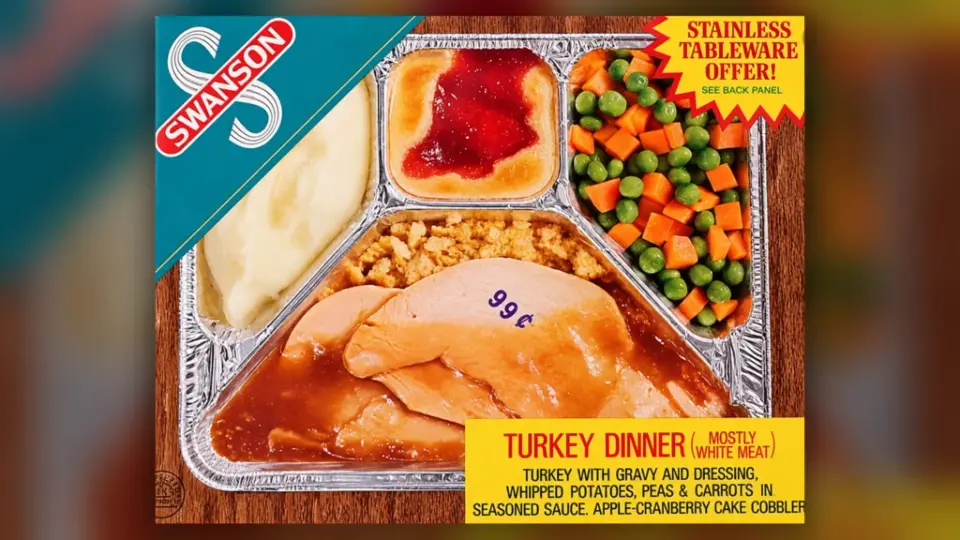
In 1953, C.A. Swanson & Sons faced a crisis after overestimating Thanksgiving turkey demand, leaving them with 260 tons of frozen birds. Salesman Gerry Thomas reportedly proposed packaging the surplus in compartmented trays inspired by airline meals, leading to the 1954 launch of the TV dinner. The product sold 10 million units in its first year, aligning with the rapid adoption of television in American homes. While Thomas is widely credited, historians note the invention involved a team effort, including food scientists and home economists, and preceded similar attempts by other brands.
Key points
- Swanson held approximately 520,000 pounds (260 tons) of frozen turkey in 1953 due to a miscalculation of holiday demand, requiring storage in 10 refrigerated railcars.
- Gerry Thomas, a Swanson salesman, is credited with the TV dinner concept, allegedly inspired by airline tray meals and the need to utilize the surplus turkey.
- The first TV dinner, sold for 98 cents in 1954, included turkey, cornbread dressing, peas, and sweet potatoes in a three-compartment aluminum tray.
- Swanson sold 10 million TV dinners in 1954, coinciding with a surge in household television ownership, which reached 64% by 1955 and 87% by 1960.
- The product's success was driven by convenience, as it required only 25 minutes of oven time and minimal cleanup, appealing to households with new TV sets.
Background
The TV dinner emerged from a broader shift in American food culture following World War II, when frozen food technology advanced and women entered the workforce in greater numbers. Clarence Birdseye's earlier development of quick-freezing methods laid the groundwork for the industry. Prior to Swanson, other companies attempted frozen meals under names like 'FridgiDinners' and 'Strato-Plates,' but none achieved the same cultural impact. The TV dinner's branding leveraged the novelty of television, which was becoming a central part of family life in the 1950s. Recent coverage of Thanksgiving costs highlights how prepared meals remain a practical option for consumers facing rising grocery prices, though the original TV dinner's cultural significance stems from its mid-20th-century innovation.
How outlets are covering it
Open Culture and Yahoo present the Gerry Thomas origin story as the primary narrative, emphasizing the 260-ton turkey surplus and the airline tray inspiration. NPR, however, highlights skepticism from Smithsonian curator Megan Elias and culinary historian Laura Shapiro, who argue the invention was a team effort involving home economists and food scientists like Betty Cronin, rather than a single individual's idea. While Open Culture notes the role of women in food science, it does not dispute Thomas's credit as prominently as NPR does. Yahoo also mentions that the Nebraska State Historical Society attributes the idea to the Swanson brothers and other team members, reinforcing the collaborative nature of the product's development. All sources agree on the 1954 launch and 10 million unit sales, but differ on the degree of individual credit given to Thomas.
Why it matters
The TV dinner's success marked a pivotal shift in American dining habits, moving meals from the dining table to the living room and aligning food consumption with television viewing. It demonstrated the power of convenience in food marketing and influenced the development of the frozen food industry. The product's cultural impact is evident in its presence in the Smithsonian National Museum of American History and its enduring legacy in American food culture. Understanding this history provides insight into how technological and social changes, such as the rise of television and post-war labor shifts, shape consumer behavior and product development.
What to watch
No future developments are reported in the sources, as the TV dinner's launch and initial success are historical events. The sources focus on the 1953-1954 period and its cultural impact, with no mention of current or future Swanson products or related industry trends.
Want the full story? Read the original reporting
Read on Open Culture