
How a Fence Removal and Wood Glue Defined the Mosquito's Rapid Rise
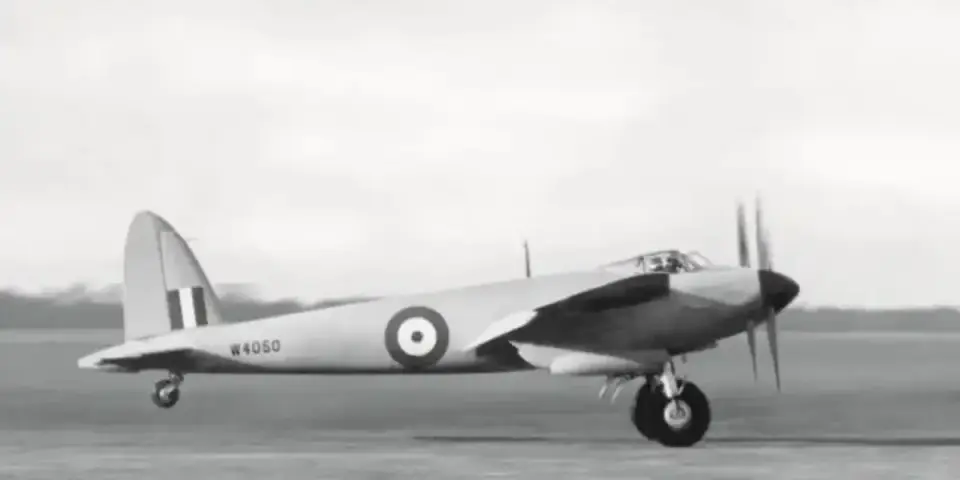
The de Havilland DH.98 Mosquito, a plywood-built British aircraft, achieved rapid development and production success by leveraging innovative manufacturing techniques and unconventional testing methods, including moving prototypes through farm fences.
Key points
- The Mosquito was constructed primarily from laminated plywood, spruce, and balsa wood, bonded with milk-based casein glue, earning it the nickname 'The Wooden Wonder'.
- The first prototype flew on 25 November 1940, just 11 months after design began, and outpaced the Spitfire in January 1941, validating its unconventional design.
- On 15 May 1941, Geoffrey de Havilland persuaded a local farmer to remove a fence to allow the second prototype to be flown directly from Salisbury Hall to Hatfield aerodrome.
- Manufacturing was decentralized, utilizing cabinet makers and carpenters, particularly in High Wycombe, to meet ambitious production targets.
- The Air Ministry shifted orders from reconnaissance to fighter variants as the aircraft's performance exceeded expectations.
Background
The Mosquito emerged during a period of intense British military innovation following the Battle of Britain. Its development was accelerated by the need to replace older aircraft like the Blenheim. The use of wood was a strategic choice to bypass metal shortages and leverage existing furniture industry infrastructure. This approach allowed de Havilland to meet aggressive production deadlines, such as the promise to deliver 50 aircraft by December 1941, despite the challenges of wartime resource constraints.
Why it matters
The Mosquito's success demonstrated that unconventional materials and decentralized manufacturing could produce high-performance military aircraft rapidly. Its versatility in multiple roles, from bombing to reconnaissance, made it a critical asset for the Royal Air Force. The story highlights how logistical ingenuity, such as using farm fences for testing, contributed to the aircraft's legendary status and operational impact during World War II.
What to watch
The Mosquito continued to see service in various roles post-war, including with BOAC as a transport. Its design principles influenced later aircraft like the de Havilland Hornet. The legacy of the Mosquito remains a case study in efficient wartime manufacturing and the importance of rapid prototyping in military aviation.
Want the full story? Read the original reporting
Read on The Aviation Geek Club