
Utah escalates Kalshi dispute with felony charges as CFTC sues to block state enforcement
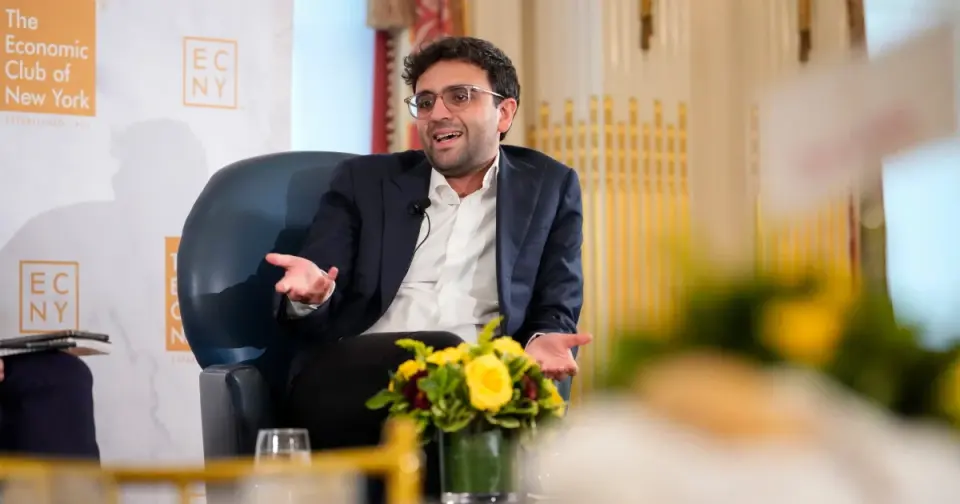
Utah Attorney General Derek Brown filed 13 felony and one misdemeanor charge against prediction market Kalshi and its co-founders, Tarek Mansour and Luana Lopes Lara, alleging illegal gambling promotion. This criminal escalation follows a federal court ruling that Utah’s anti-gambling laws apply to Kalshi. Simultaneously, the Commodity Futures Trading Commission (CFTC) sued Utah to block the state’s civil enforcement, arguing federal jurisdiction preempts state law. The conflict highlights a deepening national dispute over whether prediction markets are regulated by states or exclusively by federal agencies, with the Supreme Court likely to resolve the resulting circuit split.
Key points
- Utah filed 13 felony counts, including 'pattern of unlawful criminal activity,' and one misdemeanor against Kalshi and its founders, seeking to halt operations and recover profits.
- The CFTC sued Utah in the same federal court that previously ruled in the state’s favor, arguing that the Commodity Exchange Act grants the agency sole authority over event contracts.
- Kalshi’s co-founders face potential prison time if convicted, while the company called the charges a 'crazy overreach' and a political move.
- Utah’s action follows a September investigation where an AG investigator successfully placed bets on Kalshi using a Utah IP address, despite a prior federal ruling against the site.
- The legal battle has spread to at least 10 states, with conflicting rulings from federal circuits creating a fragmented regulatory landscape.
Background
Utah has long prohibited gambling under its state constitution, a stance that has intensified since 2025 when the state began targeting online betting platforms. In October 2026, Utah filed a civil suit seeking up to $61.2 million in restitution from Kalshi, alleging it operated as an illegal gambling den. This criminal filing represents a significant escalation from previous civil actions, following a federal judge’s August ruling that rejected Kalshi’s attempt to block Utah’s enforcement. The dispute is part of a broader national conflict, with the NFL recently urging the Supreme Court to classify prediction markets as state-regulated gambling to ensure proper safeguards.
How outlets are covering it
Utah Attorney General Derek Brown framed the charges as a necessary enforcement of state law, stating that calling the activity a 'prediction market' does not change its nature as illegal gambling. He emphasized that Utah is one of only two states with a constitutional ban on gambling. Conversely, Kalshi described the charges as a 'crazy overreach' and a political maneuver, arguing that the platform is a CFTC-registered contract market protected from state interference. The CFTC, led by Chairman Michael Selig, supported Kalshi’s position, asserting that Congress entrusted the agency with sole responsibility for these markets and that state efforts obstruct federal jurisdiction. The Salt Lake Tribune highlighted a potential conflict of interest, noting that Brown’s campaign received tens of thousands of dollars from gambling competitors like Las Vegas Sands and DraftKings, though his office denied these donations influenced his decisions. NBC News noted that Utah’s criminal approach may serve as a bellwether for other states, shifting the strategy from civil to criminal enforcement.
Why it matters
The outcome of this legal battle will determine whether states can enforce gambling laws against federally registered prediction markets, impacting the regulatory framework for a fast-growing industry. If Utah succeeds, it could lead to a nationwide ban on such platforms in states with strict gambling prohibitions. If the CFTC prevails, it would establish federal preemption, allowing these markets to operate uniformly across the US. The Supreme Court is likely to intervene to resolve the conflicting rulings from various federal circuits, which will have significant implications for the sports betting industry and consumer protection standards.
What to watch
Kalshi is expected to challenge the criminal charges in court, similar to its successful defense in Arizona. The CFTC’s lawsuit against Utah will proceed in the same federal court that previously ruled in Utah’s favor, potentially leading to a direct confrontation between state and federal authority. The Supreme Court may take up the case to resolve the circuit split, with New Jersey and 39 other states having filed a petition to address the conflicting rulings. Utah may expand its enforcement actions to other prediction market competitors, such as Polymarket, and sweepstakes casinos, as indicated by Brown’s recent declarations.
- Utah ups the ante in Kalshi gambling fight with felony charges NPR Utah | KUER
- Trump admin sues Utah to save Kalshi from the state’s total ban on gambling Ars Technica
- Utah’s attorney general is cracking down on online gambling. His campaign has taken industry money. The Salt Lake Tribune
- Utah charges Kalshi and its founders, escalating a fight over who can regulate prediction markets NBC News
- Kalshi, cofounders hit with criminal charges in US state of Utah Al Jazeera
Want the full story? Read the original reporting
Read on NPR Utah | KUER