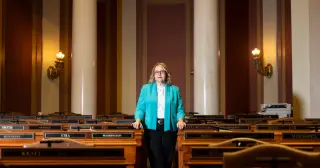
A New York Times investigation claims the Trump administration stacked the CFTC with industry insiders to suppress oversight of online prediction markets like Kalshi and Polymarket, sidelining regulators and prompting state and federal actions as Minnesota bans on these platforms face challenges.
Senators on a Senate Commerce subcommittee signaled interest in federal standards for prediction markets like Kalshi and Polymarket to address risks and consumer protections, despite strong pushback from industry players; the discussions occur as House Republicans explore insider-trading restrictions and other related regulatory steps, signaling potential legislation on prediction markets in the near term.
Prediction-market traders now rate OpenAI as the likely first AI company to IPO, about 83% odds after reports it may confidentially file soon, beating Anthropic. Investors weigh OpenAI’s spending and leadership questions against Anthropic’s rapid enterprise growth and updates to Claude Mythos, with a fast debut potentially setting valuations and shifting sentiment.
A 60 Minutes Overtime investigation found nine connected Polymarket accounts profiting roughly $2.4 million on Iran-war related bets with a 98% win rate across more than 80 bets, suggesting possible insider trading in a growing class of prediction markets. Bubblemaps analysts say luck can’t explain the pattern, and the report notes ongoing investigations and enforcement efforts while Polymarket says it flags and acts on suspicious activity and cooperates with authorities. The piece also highlights broader concerns about nonpublic information affecting bets on military outcomes and potential national security implications.
Polymarket circulated a post about a suspected hantavirus case in New York, but U.S. hantavirus is not typically spread person-to-person and the NY case appears mild; a sample is at the CDC for confirmation, and experts note the Andes virus on the cruise ship was rare and not linked to the NY case. The article criticizes Polymarket for sensationalism and warns that prediction markets generally mislead and many bettors lose money, urging readers not to panic over this report.
Reuters analysis finds about $7 billion in four large bets on Brent, WTI, diesel and gasoline futures placed roughly 15–20 minutes before major Iran–U.S. announcements, triggering sharp price moves and fueling insider-trading concerns; many accounts were newly created with win rates up to 93%, prompting DOJ and CFTC probes that face enforcement hurdles as online prediction markets proliferate.
Traders on Kalshi are pricing in about a 73% odds that the SEC will end mandatory quarterly earnings reporting in favor of semiannual reporting by April 2027, with earlier bets fluctuating around January 2027; the proposal opens a 60-day public comment period and, while historically the rulemaking takes at least a year, markets are still betting on a faster outcome.
Prediction-market traders see a larger wave of tech layoffs in 2026 than in 2025 (the information sector logged 447,000 layoffs in 2025). Kalshi assigns a 92% probability of more layoffs in 2026, and Polymarket puts the odds at 87%. Through March 2026, information-sector layoffs reached 178,000. Coinbase announced a 14% workforce reduction, citing AI and crypto weakness; other major tech layoffs followed (Meta, Block, Amazon). Overall information-sector employment has fallen from a pandemic peak of about 3.1 million to just under 2.8 million in March. Disclosure: CNBC and Kalshi have a commercial relationship.
Prediction platforms like Kalshi and Polymarket don’t offer Kentucky Derby bets because track owners (Churchill Downs) require explicit permission and licensing to wager on races, a process rooted in the Interstate Horseracing Act. Regulators and states debate licensing for prediction markets, while Kentucky considers bans and a tax on prediction-market activity; traditional Derby betting remains robust.
Traders on Kalshi think U.S. WTI crude could reach around $120–$127 per barrel in 2026, with more than a 50% chance of testing roughly $127 and about a 63% chance to cross $120, even as prices hover above $113 and Brent hits post‑war highs. Sentiment has narrowed from earlier bets on prices above $150, reflecting ongoing geopolitical uncertainties and supply dynamics amid the Iran ceasefire, but a price surge remains a focal point for market participants.
Texas Lt. Gov. Dan Patrick directed lawmakers to explore closing so-called gambling loopholes that allow online prediction markets (Kalshi, Polymarket) to operate in Texas, amid fears of manipulation of elections and sports outcomes. However, any state move faces federal resistance since the CFTC claims exclusive authority and has sued states attempting to regulate these markets. The story details a growing clash between state efforts and federal preemption, with Kalshi enforcing penalties on candidates who bet on their own races and opponents warning of gambling harms, while supporters push for robust federal regulation and consumer protections. Texas has been slow to act, and Patrick’s push for 2027 recommendations leaves the issue in limbo as courts and Congress weigh tighter controls over prediction markets. Meanwhile, traditional sportsbooks like DraftKings and FanDuel have rolled out related prediction-market features in Texas, underscoring a broader national debate over governance and oversight.
The Senate unanimously voted to ban its members and Senate staff from participating in prediction markets amid scrutiny of insider-trading concerns tied to bets on elections and other events. Introduced by Sen. Bernie Moreno, the ban targets platforms like Kalshi and Polymarket and aims to address ethics in Congress; the House is not included in the ban.
AP News examines the debate over prediction markets and traditional sportsbooks, noting that gambling addicts view both as similarly risky and discussing regulatory and industry perspectives on how these markets differ in design, oversight, and potential harm.
Senators Kirsten Gillibrand and Dave McCormick introduced a bipartisan bill to bar members of Congress, the president, vice president, and senior executives from trading on prediction markets, require the CFTC to review and update rules to curb insider trading, and sanction platforms with age verification and case-by-case bans on bets tied to war or other sensitive events.
The Senate unanimously approved a resolution barring senators and staff from trading on prediction markets, effective immediately. Led by Sen. Bernie Moreno, the move aims to curb conflicts of interest amid scrutiny of lawmakers' market activity; Schumer urged the House and administration to follow suit, while some lawmakers floated broader restrictions on all federal officials.