
Pennsylvania Act 57 Enforcement Begins, Closing Vape Shops Amid Limited Product Approvals
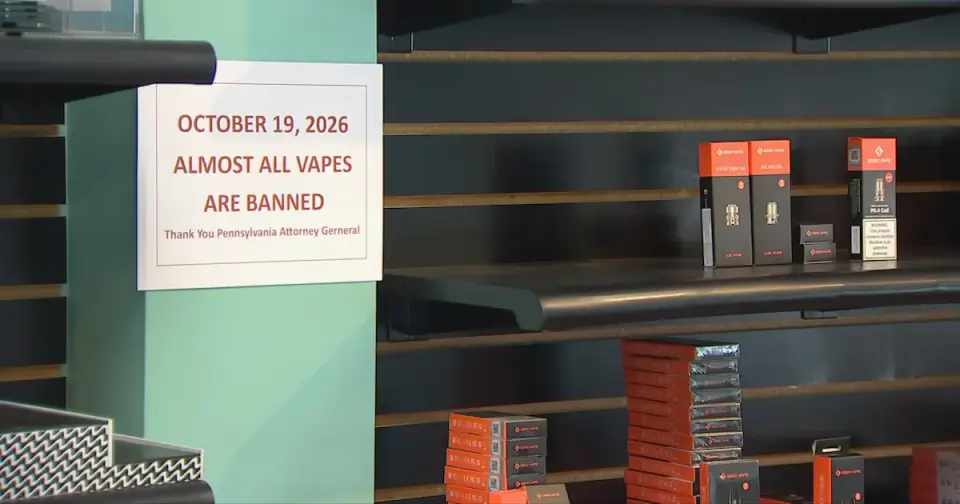
As of midnight on October 19, 2026, Pennsylvania’s Act 57 took effect, prohibiting the sale of electronic nicotine delivery systems not listed on a state registry. Only 159 products from six manufacturers are currently approved, forcing many vape shops to close or drastically reduce inventory. Attorney General Dave Sunday stated the law aims to protect children, while shop owners and customers criticized the limited options and lack of notice, warning that the ban may drive consumers back to smoking or out-of-state purchases.
Key points
- Act 57 enforcement began at midnight on October 19, 2026, making unlisted vape products illegal to sell in Pennsylvania.
- Only 159 products from six manufacturers (including Juul Labs and R.J. Reynolds) are currently approved on the state registry.
- Cool Vapes in Ross Township closed after 12 years, laying off nine employees, as 95% of its inventory became illegal.
- Attorney General Dave Sunday stated the law targets unapproved products that may harm children, with enforcement coordinated by local police and state agencies.
- Shop owners and customers criticized the limited approved list, with some noting they will purchase vapes from other states or resume smoking.
Background
This development follows earlier concerns about vape safety, including a September 2026 alert in Colorado regarding contaminated products. Pennsylvania’s Act 57 was passed in 2025, but enforcement delays and incomplete applications have led to a sudden crackdown in October 2026.
How outlets are covering it
WPXI and CBS News highlighted the immediate impact on businesses, noting closures and job losses, while emphasizing customer frustration over the lack of notice. Butler Eagle focused on the economic harm to shop owners, with one owner noting that 95% of sales were from vapes. Attorney General Dave Sunday, cited across all sources, maintained that the law is necessary to protect children and ensure product safety, despite criticism that the approved list is too restrictive compared to other states like North Carolina.
Why it matters
The enforcement of Act 57 marks a significant shift in Pennsylvania’s approach to vaping, potentially reducing access to nicotine products but also causing economic hardship for businesses and employees. It raises questions about the balance between public health protection and consumer choice, as well as the effectiveness of state-level regulations in addressing youth vaping.
What to watch
Attorney General Dave Sunday’s office plans to conduct targeted enforcement across the state, working with local police and district attorneys. Penalties for repeat offenders will increase, and businesses may face fines of up to $500 per illegal product remaining on shelves. Shop owners are expected to adapt by expanding into other tobacco products or closing entirely.
- Most vape products will become illegal in Pennsylvania after midnight deadline WPXI
- New vape shop law takes effect in Pennsylvania 6abc Philadelphia
- Certain vape products banned starting Monday in Pennsylvania WNEP
- Butler County vape shops brace for ban of products Butler Eagle
- Pennsylvania's attorney general talks about new vape law that goes into effect Monday CBS News
Want the full story? Read the original reporting
Read on WPXI