
AI Stocks Plunge as Anthropic IPO Fails to Halt Nasdaq’s Worst Week Since 2020
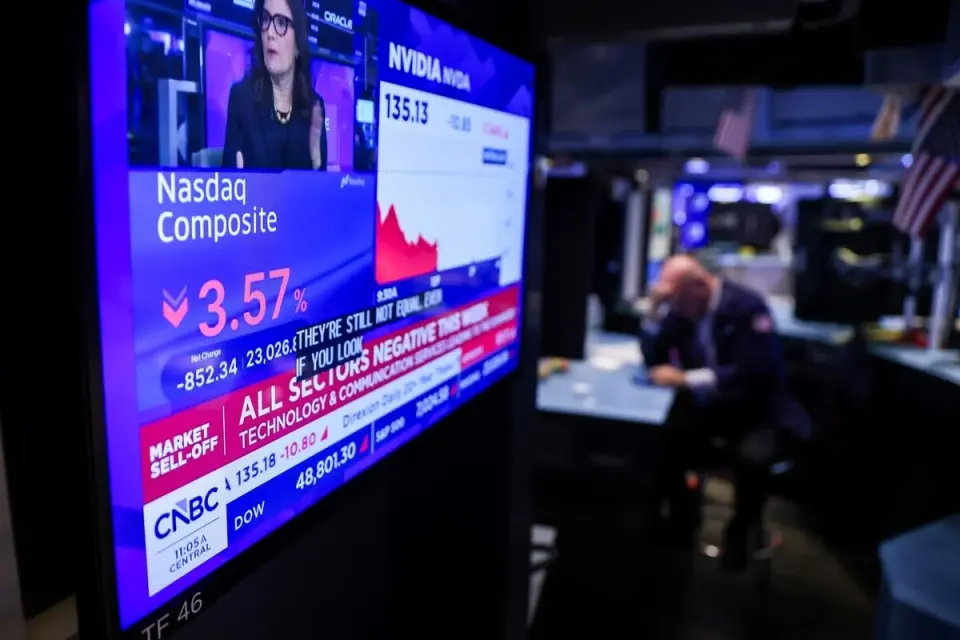
The artificial intelligence sector faced a severe correction this week, with the Nasdaq 100 dropping 10%, its worst performance since March 2020. Despite Anthropic’s record-breaking IPO, which raised $81 billion, tech stocks continued to sell off. Nvidia shares fell nearly 23% for the week, extending a 47% decline from its October peak. The downturn was driven by fears of a bursting bubble, rising interest rates, and regulatory threats from the new Democratic Congress. While some analysts argue the AI trade is merely repricing, others warn of a potential systemic crisis due to interconnected corporate financing and unsustainable revenue projections.
Key points
- Nasdaq 100 fell 10% this week, its worst weekly performance since the 2020 pandemic onset.
- Anthropic’s IPO raised $81.3 billion but its stock fell 9% on Friday, failing to stabilize the sector.
- Nvidia shares dropped 47.5% from their October high, with CoreWeave and Oracle also seeing steep declines.
- The Federal Reserve’s recent rate hikes and expected December increases raise borrowing costs for data centers.
- Democrats’ midterm victory signals tougher regulation on AI infrastructure and data center construction.
Background
This week’s volatility follows a month of instability. In early November, a $5 trillion market wipeout occurred amid midterm elections and Apple earnings. On November 19, Anthropic priced its IPO at $83 per share, aiming for a $1.4 trillion valuation. Prior to this week, Nvidia had already lost $2 trillion in market value due to CEO Jensen Huang’s resignation and new US export controls on AI chips.
How outlets are covering it
Bloomberg and NPR emphasize the market’s failure to recover, noting that Anthropic’s debut did not halt the sell-off. Yahoo Finance highlights the severity of the drop, comparing it to the dot-com bust, and notes that Polymarket traders assign a 65% probability of a defined AI downturn by mid-2027. CEPR offers a fundamental economic critique, arguing that cheap Chinese AI models make the high valuations of US frontier models unsustainable. While Bank of America’s survey shows investors reducing tech exposure, some strategists like Lawrence Gillum argue this is a 'repricing' rather than a bubble burst, citing strong earnings from Nvidia.
Why it matters
The AI sector accounts for a substantial portion of the S&P 500, meaning a collapse could ripple through pensions and 401(k)s. The US economy grew 3.4% last quarter, partly driven by AI data center construction. If the AI trade unravels, it could trigger a broader financial crisis due to the interconnected financing between chipmakers, cloud providers, and AI developers.
What to watch
Investors are watching for the Federal Reserve’s December decision on interest rates. The market will also monitor whether AI companies can convert computing power into profits. Polymarket contracts suggest a high probability of a downturn by 2027, while analysts debate if the current decline is a temporary correction or the start of a systemic bust.
- Wall Street Asks What Can Save AI Trade After Anthropic Wipeout Bloomberg.com
- The AI boom had a really bad week — and it's raising loud alarms NPR
- Is the AI Bubble Finally Popping? Nvidia Crashes 48% as Wall Street Experts Sound the Alarm Yahoo Finance
- The Economics Behind the Collapse of the AI Bubble Center for Economic and Policy Research
- AI Is Testing What Economists Know About Bubbles Bloomberg.com
Want the full story? Read the original reporting
Read on Bloomberg.com