
AI Trade Collapse: Analysts Debate Bubble Burst vs. Oversold Rebound
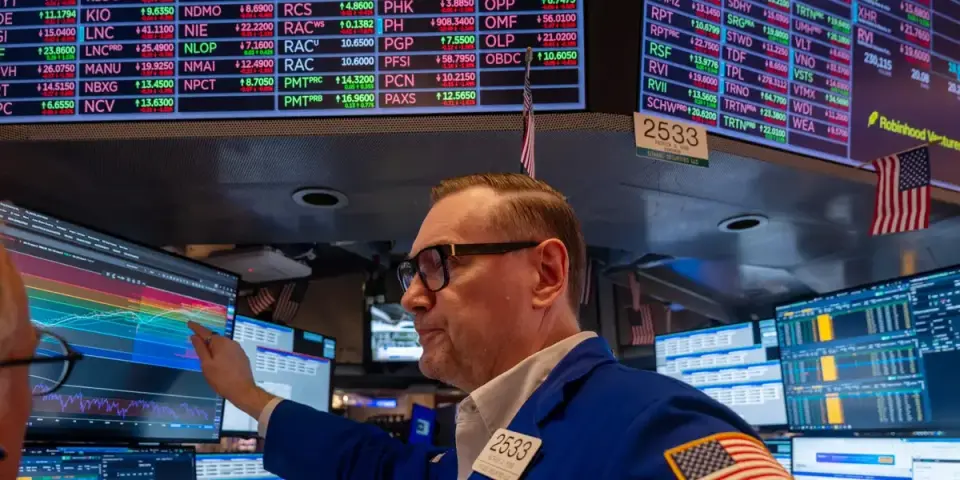
US stock markets entered a correction this week, with the Nasdaq Composite posting its worst weekly performance since 2020. The sell-off was triggered by fears over AI sustainability, the resignation of Nvidia CEO Jensen Huang, and a disappointing post-IPO performance by Anthropic. While some analysts view the drop as a necessary correction, others warn of a bursting bubble driven by circular financing and high valuations.
Key points
- The S&P 500 and Dow Jones entered a correction, dropping 10% from recent highs, while the Nasdaq Composite lost all 2026 gains.
- Anthropic’s IPO debuted with a 17% gain but fell 8% by Friday’s close, failing to lift the broader market.
- Jensen Huang resigned as Nvidia CEO following an affair scandal, which analysts cite as a key trigger for the AI trade’s decline.
- The Federal Reserve raised interest rates in September, increasing borrowing costs for AI companies building data centers.
- Democrats won both chambers of Congress, raising fears of stricter regulations on AI and data center construction.
Background
The current sell-off follows a period of strong AI-driven market growth. Earlier in 2026, AI investments contributed to a 3.4% annual economic growth rate. The market had previously bounced back from AI-related dips, but this week’s decline has been described as more severe, with some analysts comparing it to the 2000 dot-com bust.
How outlets are covering it
Opinions on the sell-off are divided. Ed Yardeni of Yardeni Research views the drop as a necessary rest, arguing that Huang’s resignation has already burst the Nvidia bubble, reducing recession risks. Conversely, Michael Burry, a vocal AI skeptic, warned about circular financing between chipmakers and neoclouds like CoreWeave, suggesting the market is ignoring deeper structural issues. Dan Ives of Yorkville Ives remains bullish, citing a $4 trillion AI buildout and arguing the sell-off is an oversold opportunity. Gene Munster of Deepwater Asset Management sees a buying opportunity, expecting clarity after Q4 earnings. In contrast, Michael A. Arouet criticized the astronomical valuations of AI companies, questioning the logic behind such high prices. Hank Smith of Haverford Trust noted that while AI companies like Meta and Apple are unlikely to fail, the market may take time to heal.
Why it matters
The AI sector is a significant component of the S&P 500, held by many investors through index funds and 401(k)s. A prolonged decline could have ripple effects across the broader economy, as AI investments have driven job creation and economic growth. The interconnectedness of AI companies, through circular financing, raises concerns about a potential chain reaction if one or two firms face financial trouble.
What to watch
Market stability will depend on the S&P 500 holding support near 7,000 and the AI trade showing signs of recovery. Q4 earnings reports in the coming months will provide clarity on the sustainability of AI profits. Investors will also watch for regulatory actions from the new Democratic Congress and any further developments in the Nvidia leadership vacuum.
- What smart people are saying about the market sell-off ripping through tech and AI Business Insider
- The AI boom had a really bad week — and it's raising loud alarms NPR
- 7 reasons why tech stocks are getting hammered again Yahoo Finance
- Wall Street Asks What Can Save AI Trade After Anthropic Wipeout Bloomberg.com
- The Economics Behind the Collapse of the AI Bubble Center for Economic and Policy Research
Want the full story? Read the original reporting
Read on Business Insider