
Anthropic Staffer Claims AI-Assisted Proof of Riemann Hypothesis Amid Record IPO
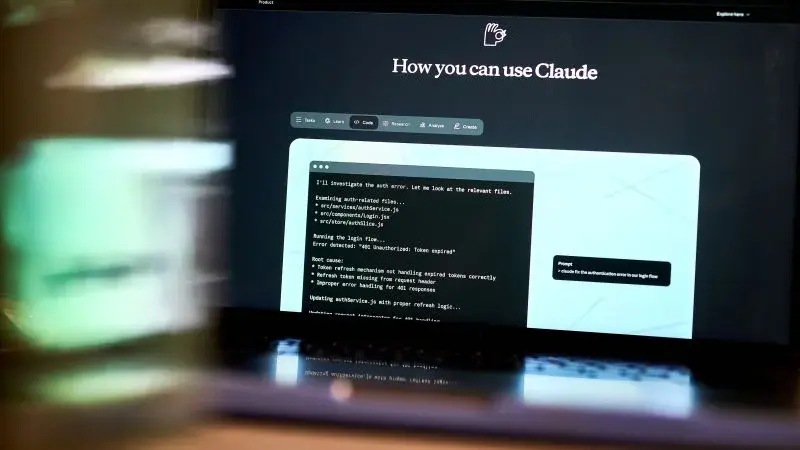
Levent Alpöge, a technical staff member at AI firm Anthropic, claims he has solved the Riemann Hypothesis using the company's Claude model. The announcement, made via a four-page explanation and 17 million lines of Lean code, coincided with Anthropic's record-breaking initial public offering. While the Clay Mathematics Institute acknowledges the announcement's significance, it notes that verification will take time, and the problem remains listed as unsolved.
Key points
- Levent Alpöge of Anthropic claims to have proven the Riemann Hypothesis, a 150-year-old unsolved problem regarding prime number distribution, with the assistance of the Claude AI model.
- The proof was released as 17 million lines of Lean code, a programming language used for mathematical theorem verification, rather than a traditional formal paper.
- The announcement occurred one day after Anthropic's initial public offering, which raised $81 billion at a $1.5 trillion valuation, setting a new record for the largest IPO in history.
- Alex Kontorovich, a mathematics professor at Rutgers University, stated that while the computer-verified code suggests the proof is likely correct, human understanding of the solution is still required for full acceptance.
- Martin Bridson, president of the Clay Mathematics Institute, described the announcement as historically significant but emphasized that the journey to full mathematical understanding will be long and difficult.
- The Riemann Hypothesis remains listed as unsolved on the Clay Mathematics Institute's website, which offers a $1 million reward for its solution as part of the Millennium Prize Problems.
Background
This development follows a series of AI-assisted mathematical breakthroughs in 2026. In September, OpenAI claimed its technology helped solve the Navier-Stokes equation, a fluid dynamics problem. In October, OpenAI released 722 AI-generated mathematical papers, some of which were retracted for errors, sparking debate over the validity of AI-generated proofs. Additionally, Vanderbilt mathematician Dan Margalit argued in November that while AI acts as a 'finisher' in mathematics, human insight remains essential for understanding and originating solutions. The current claim by Anthropic staff is the second major AI-linked claim to crack a famed unsolved math problem in recent months.
Why it matters
The claim challenges the traditional boundaries of mathematical proof and highlights the growing integration of AI in solving complex, long-standing scientific problems. It also underscores the rapid commercialization of AI companies, as Anthropic achieved a record-breaking valuation shortly after the announcement. The incident raises questions about the verification process for AI-generated proofs and the future role of human mathematicians in understanding machine-derived solutions.
What to watch
The Clay Mathematics Institute will begin the assessment process to determine if the proof is valid, a process that may take considerable time. Mathematicians, including Alex Kontorovich, will need to review the 17 million lines of Lean code to verify the logic and gain a deep understanding of the proof. Anthropic has not yet responded to requests for comment regarding the claim.
Want the full story? Read the original reporting
Read on CNN