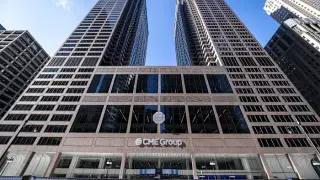
CME Group is introducing futures contracts for AI compute, aiming to standardize the trading of GPU rental rates. The move targets a market projected to reach $2.3tn by 2030, allowing firms to hedge against volatile pricing for Nvidia H100 and B200 chips.
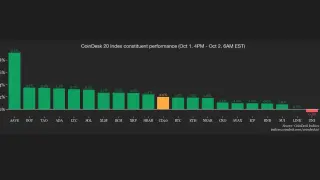
Bitcoin traded above $86,000 on Oct. 2, 2026, rising 3.4% as its market dominance approached 60%. This shift from stablecoins to tokens signaled a risk-on sentiment among traders. While the broader crypto market saw gains, smaller assets like AAVE and APT outperformed. Rising open interest and funding rates indicated increased leveraged bullish positions, though $344 million in liquidations highlighted volatility risks. The market awaited the U.S. jobs report, with economists expecting 90,000 new jobs in September. A stronger report could raise Treasury yields and pressure bitcoin, while a weaker one might support risk assets. Analysts noted that a 10-year real yield above 3% could trigger a retest of the $80,000 to $82,000 range. Lower odds of a Federal Reserve rate hike, currently at 30%, supported the rally. However, profit-taking hit some tokens like Quant, which fell 15%. The jobs report, due at 8:30 a.m. ET, was seen as a key catalyst for the next move in crypto prices.
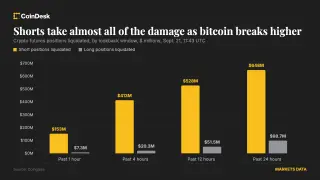
Bitcoin traded near $85,000 as a sharp short squeeze liquidated about $648 million in shorts (out of $746.6 million in 24‑hour liquidations), with open interest rising about 7.6% to $156 billion as traders replaced positions rather than winding them down. The move reflects forced buying and bullish derivatives flow, supported by higher volumes and broad crypto gains, though elevated funding costs suggest renewed volatility ahead.
CME Group will launch more than 50 single-stock futures contracts tied to large US equities, cash-settled at the closing price, in two sizes (standard 100-share and micro 10-share) and trade five days a week nearly 23 hours a day, aiming to give traders leveraged exposure without options and attract retail participation amid IPOs and stock shortages; the move requires SEC and CFTC approvals and carries typical futures risks like choppiness after hours and trading commissions.
The article describes an unusual derivatives opportunity tied to SpaceX's IPO success, centered on a company that manufactures space-grade gases and reflecting investor interest in the broader aerospace supply chain.
Kalshi has filed with the U.S. CFTC to self-certify perpetual futures tied to roughly 12 major altcoins (including XRP, Solana and Dogecoin), following the regulator’s Bitcoin perps approval. Listing of these products will be considered case-by-case and is not yet approved. The move signals growing regulatory traction for onshore crypto derivatives in the U.S., even as competition from offshore platforms and 24/7 CME trading expands the landscape.
Coinbase reported a $394.1 million net loss in Q1 2026 as revenue declined 31% to $1.41 billion, driven by a drop in crypto prices and a $482 million hit from assets held for investment. CEO Brian Armstrong framed the results as a step toward a broader, on-chain, multi-asset strategy—moving beyond purely spot trading toward derivatives, commodities, futures, AI payments, and regulated stablecoins—while the company’s EBITDA also fell year-over-year as it diversifies revenue sources.
Bank of America derivatives strategists warn the U.S. stock market is edging toward bubble-like conditions, with Nasdaq-100 realized volatility at dot-com-era highs and froth building in pockets such as semiconductors; while the overall market isn’t yet in a bubble, other assets like the Kospi and the Bloomberg Commodity Index show extreme bubble-like dynamics. They suggest momentum plays via QQQ call spreads and hedges like VIX call spreads to navigate the risk amid a momentum-driven rally in megacap tech.
A surge in stock-linked options—especially one-day 0DTE calls—has helped propel the April rally via delta-hedging that requires dealers to buy futures, potentially creating a self-reinforcing bid. But April’s options expiry cleared much of that upside and SpotGamma says hedging is now neutral to negative, implying dealers may need to sell futures and a sharp reversal could follow, even as the rally remains intact.
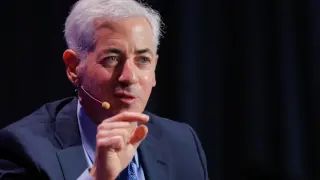
Bill Ackman is in talks to launch a new stand-alone fund that would place asymmetric bets against prevailing market narratives, echoing the pandemic-era doomsday trades that generated huge windfalls for Pershing Square. The strategy would use derivatives and short-term US debt before deploying into large credit and macro bets, potentially via an Amsterdam-listed vehicle, while Ackman also pursues growth ahead of a public listing and broader conglomerate moves amid recent fund-performance headwinds.
Chinese firms are rushing to hedge currency risk using forwards, options and swaps as a stronger yuan squeezes exporters; regulators have urged banks to promote hedging and raise corporate hedging ratios, fueling a record level of dollar sales and a shift that could support yuan strength, even as external factors like the Middle East conflict and policy tweaks temper gains.
Bitcoin's recent record rally has led options traders to bet on a potential rise to $140,000, with open interest around that strike price, amid a surge in demand driven by safe-haven demand during a US government shutdown and increased spot market activity. Despite the rally, traders remain cautious about volatility and potential corrections, with some seeing opportunities in overbought conditions.
Bitcoin's derivatives market is experiencing unprecedented activity, indicating market maturity with increased institutional involvement and potentially steadier price movements. Despite lower volatility, historical patterns suggest a possible rally in 2025, driven by veteran holders and cyclical trends following halving events.
Open interest in WLFI derivatives neared $950 million ahead of a partial token unlock, with trading volume surging over 535%, indicating strong market interest. The token's value could place it among the top 10 cryptocurrencies if prices hold, with significant trading activity on Binance and OKX. The unlock involves 20% of tokens purchased by early supporters, and the token is linked to the Trump family, with US President Donald Trump as a key advocate.
Jane Street Group deposited $564 million in an escrow account to comply with India's SEBI amid ongoing investigations into alleged market manipulation related to its options trading, with the firm denying the allegations and considering legal options while its return to the Indian market remains uncertain.