
Dollar Hits 19-Month High as Hawkish Fed Signals Clash with Commodity Selloff
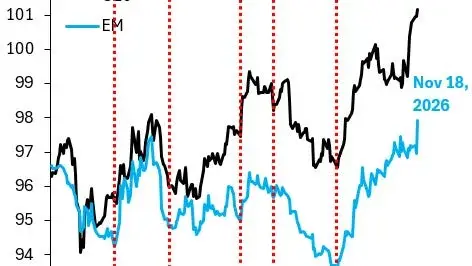
The US dollar reached its highest level since April 2025, driven by hawkish Federal Reserve commentary and strong economic data, despite a sharp drop in commodity prices. While some analysts view the move as a credit event, others attribute it to real yield pressures and risk sentiment.
Key points
- The dollar index rose to 103.97, its peak since April 2025, before easing slightly to 103.65 on Thursday.
- Fed Governor Christopher Waller called for aggressive action, potentially a 50-basis-point hike, to combat inflation.
- Gold fell over 3%, silver dropped 5%, and copper declined similarly, reflecting broader market stress.
- The dollar’s strength decoupled from interest rate differentials, suggesting factors beyond standard monetary policy expectations.
- Investors are watching Anthropic’s IPO as a test of risk appetite, with the dollar’s rally losing momentum ahead of the event.
Background
Recent archive coverage noted the dollar’s persistent strength despite yield drops and Fed hike retreats, often driven by euro weakness and French fiscal concerns. In early November, the dollar had already decoupled from Treasury yields, maintaining gains even as front-end yields fell. The current surge follows a period where the dollar consolidated in a bullish pattern, with key resistance levels previously identified near 102.50.
How outlets are covering it
Robin J Brooks argues the dollar’s sharp rise against emerging markets is unusual and potentially signals a credit event, as it does not align with stable Fed tightening expectations or rate differentials. He notes that while cross-currency basis points do not yet show panic, the decoupling from rate differentials is alarming. Conversely, Vitaly Kurdyumov suggests the move is driven by real yield pressures from falling oil prices and stable nominal rates, not a credit crisis. He points to high-yield bond stability and minimal moves in USD/JPY as evidence against a scramble for dollars. Marcel adds that strong US GDP data and inflationary pressures are driving rate expectations, supporting the dollar. Reuters and CNBC emphasize the role of hawkish Fed commentary, particularly from Waller, and strong retail sales data in cementing expectations for a December rate hike. Barclays and Deutsche Bank highlight fiscal stimulus and AI capital spending as factors supporting dollar strength through resilient US economic flows.
Why it matters
The dollar’s strength impacts global trade, commodity prices, and emerging market currencies. A sustained rise could signal tighter global financial conditions, potentially affecting inflation and growth in other economies. The divergence between the dollar and rate differentials may indicate underlying stress in financial markets, while the hawkish Fed stance could lead to further tightening, impacting borrowing costs and asset valuations globally.
What to watch
Investors will monitor the Anthropic IPO for risk sentiment cues, as well as further Fed commentary from officials like John Williams and Michael Barr. The cross-currency basis and high-yield bond performance will be watched for signs of credit stress. Commodity prices, particularly gold and oil, may continue to fall if the dollar remains strong, while emerging market currencies could face further pressure. The Fed’s December meeting and subsequent policy statements will be critical in determining whether the dollar’s rally sustains or reverses.
- Unusual and Alarming Dollar Strength Robin J Brooks | Substack
- Dollar eases after seven-session rally, rates and equities in focus Yahoo Finance
- Dollar takes a breather as investors eye Anthropic IPO Reuters
- Dollar Erases Liberation Day Loss as ‘Sell America’ Fear Fades Bloomberg
- Dollar firmer as hawkish Waller backs aggressive Fed action CNBC
Want the full story? Read the original reporting
Read on Robin J Brooks | Substack