
Global Tech Sell-Off Deepens as AI Investment Doubts Trigger Asian Market Plunge
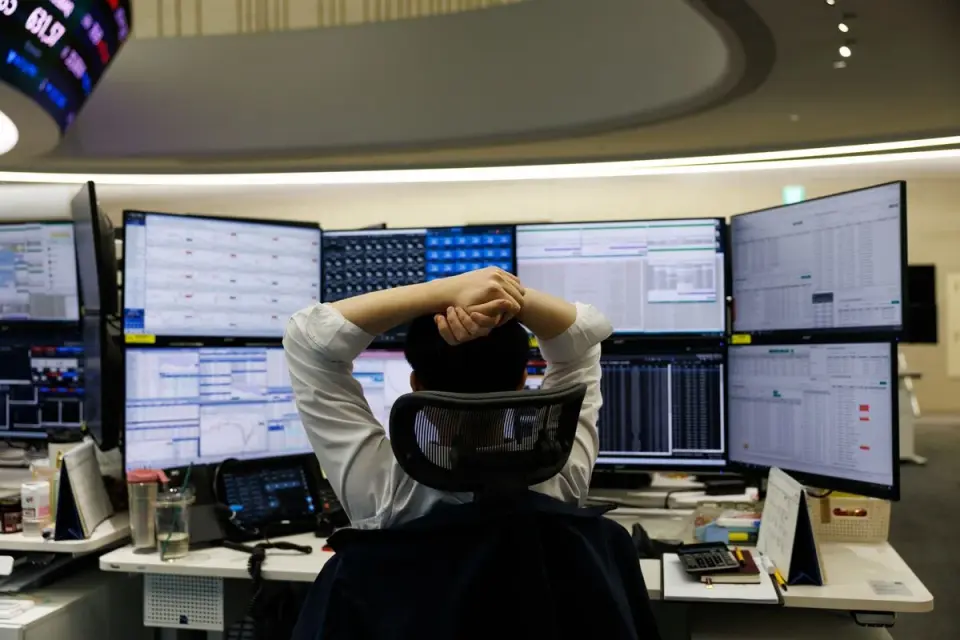
Global equity markets faced renewed pressure on November 24, 2026, as doubts over the sustainability of artificial intelligence investments triggered a sharp retreat from technology shares. Asian markets led the decline, with South Korea and Taiwan experiencing double-digit percentage drops in key chipmakers. The sell-off followed a brief rally sparked by the reinstatement of Jensen Huang as Nvidia CEO, which had previously boosted the chipmaker’s shares by 31.5%. Investors are now questioning whether massive AI infrastructure spending can generate sufficient returns, leading to a broader risk-off sentiment that pushed the MSCI All Country World Index down 0.4%.
Key points
- Asian markets suffered significant losses, with the MSCI Asia Pacific index falling 2.3%, led by a 5% drop in Taiwan and a 6% decline in South Korea.
- Key semiconductor and AI infrastructure stocks plummeted, including TSMC and Foxconn in Taiwan, and Samsung Electronics and SK Hynix in South Korea, which both fell over 9%.
- The sell-off reversed a previous rally caused by the reinstatement of Jensen Huang as Nvidia CEO, a move that had seen Nvidia shares jump 31.5% in a single day, the largest gain in US stock market history.
- Global AI-related investment is forecast to reach $2.7 trillion in 2026 and $3.6 trillion in 2027, raising concerns about the financial viability of such massive debt-fueled spending.
- US markets also weakened, with the S&P 500 falling 0.5% and the Nasdaq composite dropping 1.5% on Tuesday, following a previous day of significant gains.
Background
This latest market volatility follows a period of intense swings in the tech sector. In early November, tech valuations dropped below the broader S&P 500 for the first time since 2017, driven by a 30% decline in the PHLX Semiconductor Index. Additionally, the hedge fund industry faced record losses in October due to an unwind of AI and semiconductor stocks, triggered by profit-taking and fears of regulatory shifts following the Democratic midterm sweep. These events highlight the growing uncertainty surrounding the long-term returns of AI infrastructure investments.
How outlets are covering it
Bloomberg emphasizes the broad retreat from technology shares and the resulting weakness in global equities, noting that the MSCI All Country World Index is on track for its eighth decline in 10 sessions. Al Jazeera highlights the specific impact on Asian markets, detailing the sharp drops in major chipmakers and linking the sell-off to the recent reinstatement of Jensen Huang as Nvidia CEO. The Financial Times focuses on the deepening uncertainty over the 'AI trade' and the financial returns of AI technology, noting that SoftBank, a major backer of OpenAI, fell another 13% as investors question its debt levels and exposure to AI. All three sources agree on the severity of the sell-off but differ in their emphasis: Bloomberg on global equity trends, Al Jazeera on the Asian market specifics, and the Financial Times on the broader AI investment debate.
Why it matters
The current market volatility underscores the fragility of the AI boom and the potential risks associated with massive, debt-fueled investments in AI infrastructure. As global AI-related investment is forecast to reach $3.6 trillion in 2027, the ability of tech firms to sustain these investments and generate sufficient returns is under intense scrutiny. This uncertainty could lead to further market instability and a broader reassessment of tech valuations, potentially impacting the global economy and investor confidence.
What to watch
Investors will closely monitor the performance of major chipmakers and AI infrastructure companies in the coming days to gauge the extent of the sell-off. The reinstatement of Jensen Huang as Nvidia CEO and the subsequent market reaction will be key indicators of investor sentiment. Additionally, the potential for increased regulation of AI following the Democratic midterm sweep could further impact the sector. Analysts will also watch for signs of a broader market recovery or continued decline, as the current volatility suggests a period of heightened uncertainty and risk.
- Asian Stocks to Slide as AI Trade Doubts Resurface: Markets Wrap Bloomberg.com
- Asia’s stock markets dive as doubts to swirl over AI boom Al Jazeera
- Stocks retreat as AI rebound stumbles, tariff threats loom Reuters
- Asian Stocks Mostly Lower on AI Doubts, Tariff Jitters WSJ
- Asian markets lose ground as AI fears return Financial Times
Want the full story? Read the original reporting
Read on Bloomberg.com