
Goldman Flags US Stock Entry Point but Cites Fed and Positioning Risks
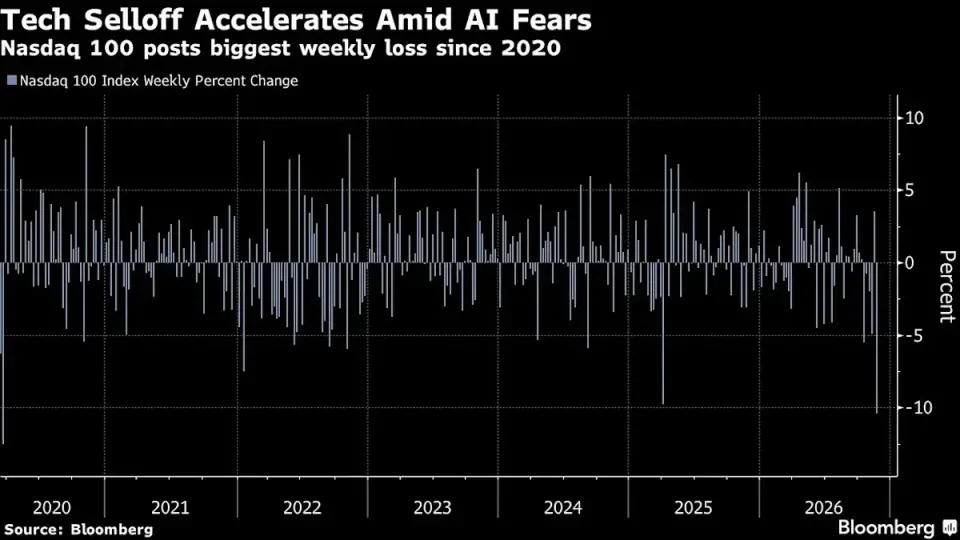
Goldman Sachs traders view the recent US stock selloff as a potential buying opportunity, noting that hedge fund exposure has reached extreme lows. However, they warn that a broad market rally is unlikely because overall investor positioning remains high and the Federal Reserve is expected to continue raising interest rates. The bank’s Volatility Panic Index hit 9.8, near historical extremes, while short selling reached its highest level since June 2022.
Key points
- Goldman Sachs identifies a 'tactical entry' point in US equities after hedge funds reduced exposure for a third consecutive week, with net leverage dropping to 42.3%, the lowest in a year.
- The bank cautions that a meaningful rally is hindered by two factors: the Federal Reserve's expected rate hikes and the fact that broader investor positioning, including mutual funds and retail, remains in the 75th percentile of historical observations.
- Historical data cited by Goldman shows that when the panic index exceeds 9 during a rate-hiking cycle, the S&P 500 has averaged just a 0.4% gain in the following three months, mirroring the 2018 bear market risk.
- The S&P 500 fell 3.7% on Friday, extending its decline from October's high by more than 10%, while the Nasdaq 100 dropped 5.6%, marking its worst week since March 2020.
- Technical risks persist due to thin liquidity and negative dealer gamma, though commodity trading advisers are already short US equities and may turn buyers if prices rebound.
Background
This development follows a severe market sell-off in late November 2026, where Goldman’s Panic Index previously reached 9.0 as systematic traders unwound $57 billion in equities. The current volatility is driven by skepticism over AI infrastructure spending, the failure of Anthropic’s IPO to boost risk appetite, and broader liquidity concerns that have affected safe-haven assets like gold and Bitcoin.
Why it matters
The divergence between hedge fund capitulation and broader investor positioning suggests that the current market bottom may not trigger the strong rebound typically seen after widespread panic. Investors must weigh the attractive entry point against the risk of further declines driven by monetary policy and technical selling pressures.
What to watch
Markets will monitor whether the Federal Reserve’s rate decisions and the behavior of systematic traders, who are currently short, trigger a reversal. A sustained rally requires a broader washout of investor positioning, which has not yet occurred.
Want the full story? Read the original reporting
Read on Yahoo Finance