
Goldman Sachs Panic Index Hits 9/10 as Systematic Traders Unwind $57 Billion in US Stocks
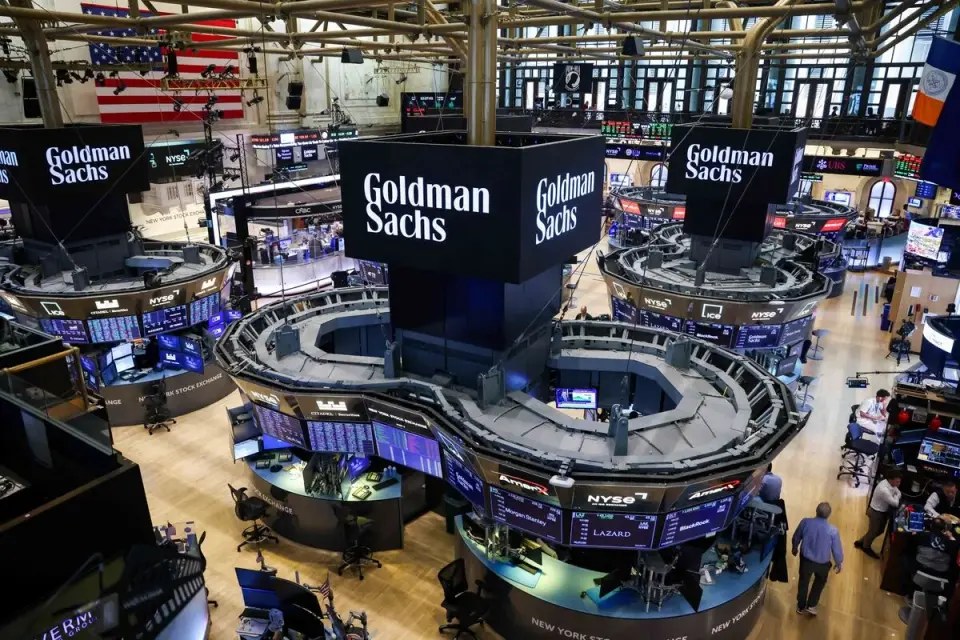
US stock markets faced a severe sell-off on November 20, 2026, as Goldman Sachs’ Panic Index reached 9 out of 10. Momentum traders, including commodity trading advisers, have sold $57 billion in equities over the past month, turning their net positioning short by $19 billion. The VIX volatility index briefly touched 40, its highest level since April 2025. Goldman traders warn that systematic strategies could trigger up to $80.6 billion in additional selling next week if declines continue. The sell-off has spread beyond tech to defensive sectors, with gold falling alongside stocks, signaling a liquidity crunch rather than a simple rotation.
Key points
- Goldman Sachs’ Panic Index rose to 9/10, signaling a high probability of further selling.
- Momentum traders sold $57 billion in US equities over the past month, with net short positioning at $19 billion.
- The VIX index briefly touched 40, its highest level since the April 2025 tariff turmoil.
- Goldman models estimate potential selling of $65.8 billion to $80.6 billion next week depending on market direction.
- The S&P 500 fell 3.6% on Friday, marking its worst weekly performance in seven months.
- Gold prices dropped below $3,600, falling in tandem with stocks, indicating a liquidity-driven sell-off.
Background
This sharp decline follows a six-day losing streak for US equities, which began after the Anthropic IPO failed to reverse market pessimism. Prior to this week, the Dow Jones Industrial Average had approached a 10% correction threshold from its August peak. The current sell-off also follows a period of leadership turmoil at NVIDIA, where co-founder Jensen Huang resigned in early November 2026, causing a 14% plunge in shares that later stabilized. Additionally, the Federal Reserve held rates steady in late October 2026 despite high inflation, while traders had priced in a December rate cut, a view now challenged by hawkish Fed officials.
How outlets are covering it
Bloomberg emphasizes the mechanical nature of the sell-off, highlighting how systematic investors and momentum traders are driving the decline through quantitative models. Moomoo notes that while the VIX spiked to 40, Cboe Global Markets’ Mandy Xu argues this is a mechanical reaction to the S&P 500’s drop rather than a surge in panic buying of put options. Futu’s coverage, citing Goldman Sachs’ Rich Privorotsky, draws a direct parallel to the end of 2018, when the Federal Reserve’s continued rate hikes forced a 20% market plunge before a policy pivot. Privorotsky warns that the current situation involves a 'full-scale liquidation' rather than sector rotation, with gold failing to act as a safe haven, indicating a deeper liquidity crisis. Goldman Sachs economists maintain a hawkish stance, expecting a December rate hike, which contrasts with the bond market’s pricing of a potential cut.
Why it matters
The convergence of high volatility, systematic selling, and a falling safe-haven asset like gold suggests a potential liquidity crisis that could exacerbate market declines. If the Federal Reserve maintains its hawkish stance despite weakening growth, the divergence between policy and market dynamics could lead to a deeper correction. The failure of the Anthropic IPO to stabilize sentiment indicates that AI valuation concerns are a persistent drag on risk assets. Investors should monitor gold prices and systematic trading flows as key indicators of whether the market has reached a tactical bottom or is facing further deleveraging.
What to watch
Markets will focus on upcoming PCE data, non-farm payrolls, and the December FOMC meeting. Goldman Sachs expects a 25-basis-point rate hike in December and another in March 2027, a forecast that diverges from bond market expectations. The behavior of gold and the extent of systematic selling in the coming week will be critical in determining whether the market stabilizes or continues to decline. Privorotsky suggests that a rebound catalyst could trigger a sharp rally if fund positioning is already significantly underweight, but a policy shift remains the key turning point.
- Goldman Says Stock Selloff Has Legs as Panic Index Nears Maximum Bloomberg.com
- Goldman Sachs' Brian Garrett: The 2018 Playbook Returns — And Nobody Knows How It Ends The Dark Side Of The Boom
- The scenario at the end of 2018: The Federal Reserve continued to raise interest rates, leading to a 20% plunge in U.S. stocks from their September highs, which forced the Fed to "pivot" in January. 富途牛牛
- VIX Reaches Highest Since April 2025 Tariff Turmoil as S&P 500 Posts Worst Week in Seven Months TradingView
- The VIX surged to its highest level since the tariff turmoil of last April, while the Goldman Sachs panic index approached its maximum reading. U.S. equities may face another round of selling exceeding $80 billion next week. Moomoo
Want the full story? Read the original reporting
Read on Bloomberg.com