
Nasdaq 100 Plunges Over $1 Trillion as AI Spending Fears Deepen
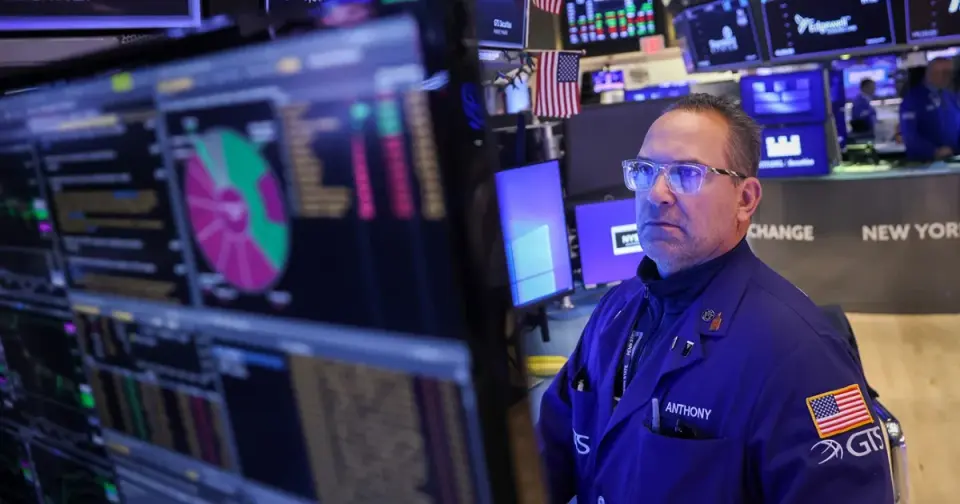
US tech stocks suffered a severe sell-off on Friday, October 30, 2026, with the Nasdaq 100 on track to lose over $1 trillion in value. The decline was triggered by disappointing earnings from Amazon and Intel, which raised concerns about the return on massive artificial intelligence infrastructure spending. Intel shares dropped approximately 30% after issuing weak fourth-quarter guidance, while Amazon fell 3% to 4% following a report of record negative free cash flow. The broader market also reacted to Alphabet’s previous day crash, with the S&P 500 dropping 1.2% and the Dow Jones falling 0.3%. Investors are increasingly skeptical that the hundreds of billions of dollars being spent on AI data centers will generate sufficient profits, leading to a flight to safety in US Treasuries.
Key points
- The Nasdaq 100 index fell 3% in early trading, marking its worst one-day drop since mid-June and putting it on course for a $1 trillion loss.
- Intel shares plunged 30% after CEO Lip-Bu Tan cited supply chain issues and a memory chip crunch that led to weaker fourth-quarter profit and sales guidance.
- Amazon shares fell 3% to 4% after reporting a record negative free cash flow of $42.4 billion over the past 12 months, driven by $77 billion in capital expenditures for AI infrastructure.
- Amazon CEO Andy Jassy confirmed 2026 capital expenditures of approximately $220 billion, with expectations for even higher spending in 2027, despite investor concerns.
- The S&P 500 dropped 1.2% and the Dow Jones fell 0.3%, while the Philadelphia semiconductor index sank 6% and the 'DRAM' ETF tumbled 5%.
- US Treasury yields fell as investors fled tech stocks; the 10-year yield dropped from just under 5% to around 4.89% amid a flight to safety.
Background
This sell-off follows a series of tech corrections in October 2026. On October 16, global AI stocks wiped out over $1 trillion due to financing fears and rising Treasury yields. On October 15, hot inflation data and AI debt sustainability concerns triggered a broad sell-off, including a 7.6% drop in South Korea’s Kospi index. On October 30, Alphabet erased $500 billion in market value in its worst single-day performance after missing earnings estimates and reporting its first negative free cash flow in 22 years. These events reflect a growing investor scrutiny of the profitability of massive AI infrastructure investments.
How outlets are covering it
NBC News emphasizes the $1 trillion Nasdaq 100 loss and the specific earnings failures of Amazon and Intel as the primary drivers. CNBC highlights the global ripple effects, noting that Asian tech stocks like SoftBank and SK Hynix also fell, and details a separate $5.7 billion crypto hack at Binance that rattled digital asset markets. Yahoo Finance focuses on the 'Magnificent 7' stocks, noting that Meta and Alphabet are in bear markets, and contrasts Intel’s view of a memory chip shortage with Sandisk’s optimistic outlook. CNN frames the sell-off as a broader questioning of the 'monster AI splurge,' citing negative free cash flow across Google, Meta, and Amazon, and notes that Microsoft remains a relative outlier with positive cash flow. All sources agree on the severity of the tech decline but differ in emphasis: NBC and CNN focus on AI spending returns, CNBC on global and crypto impacts, and Yahoo on the divergence within major tech firms.
Why it matters
The sell-off signals a shift in investor sentiment from growth at all costs to a demand for proven returns on AI investments. The record negative free cash flow at Amazon and the weak guidance from Intel suggest that the massive capital expenditures required for AI infrastructure may not yield immediate profits, potentially leading to a reassessment of valuations across the tech sector. The flight to US Treasuries indicates that investors are seeking safety, which could impact borrowing costs for tech companies and broader economic conditions. This event may mark a turning point in the AI boom, where sustainability and profitability become more critical than expansion.
What to watch
Investors will closely watch the midterm elections, which are expected to reduce uncertainty and potentially stabilize markets. The performance of other tech companies, such as Microsoft, which reported positive free cash flow, will be scrutinized for signs of a broader AI trade recovery. The resolution of the Binance crypto hack and its impact on digital asset markets will also be monitored. Additionally, the outlook for memory chip prices and PC demand, as highlighted by Intel and Sandisk, will be key for the semiconductor sector. The next few weeks will likely see continued volatility as investors assess the long-term viability of AI spending.
- Tech stocks set to wipe out $1 trillion in value as concerns about the AI boom deepen NBC News
- Nasdaq falls more than 2% as investors rotate out of tech after Amazon, Intel earnings: Live updates CNBC
- Stock market today: Nasdaq dives, S&P 500 and Dow fall as Amazon, Intel earnings fuel tech rout Yahoo Finance
- Wall Street sell-off continues as investors question returns on massive AI spending CNN
- Tech Stocks Tumble, but Broader Market Is Holding On The New York Times
Want the full story? Read the original reporting
Read on NBC News