
US Stocks Defy Rising Yields as AI Boom Masks Broad Market Stress
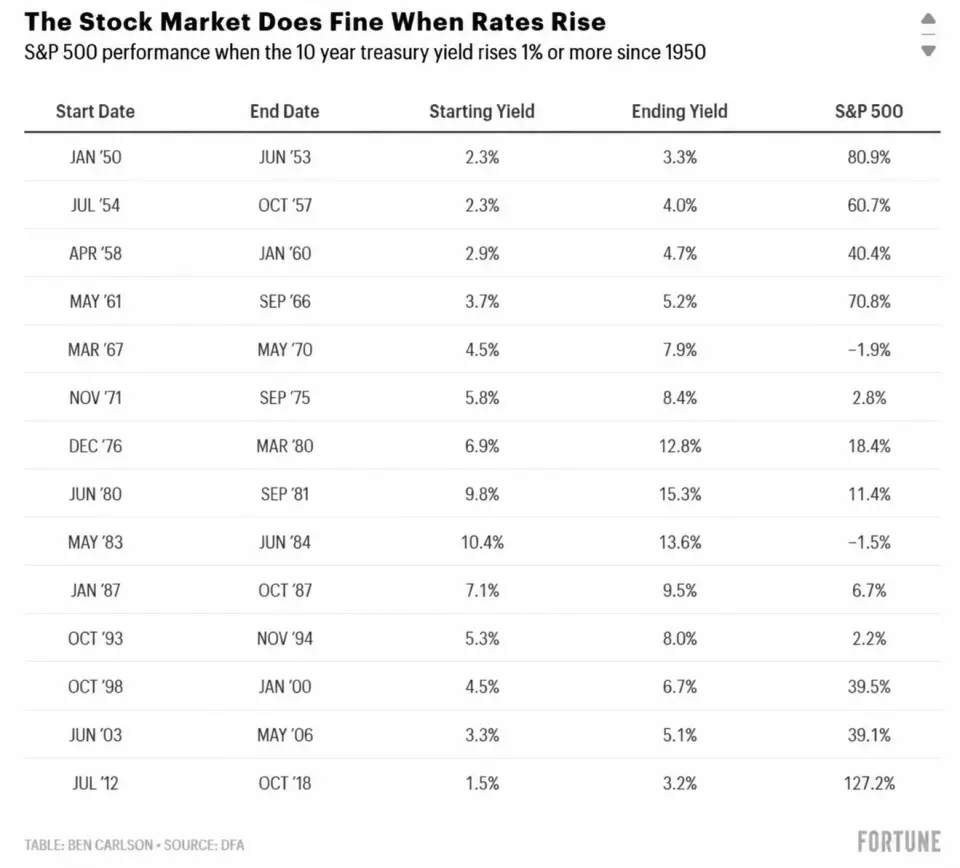
US stock markets are maintaining record highs despite a 30% surge in 10-year Treasury yields, a dynamic that defies traditional financial theory. While the S&P 500 remains near its all-time high, this strength is driven almost entirely by large-cap technology and AI-related stocks. Meanwhile, broader market indicators show significant weakness, with small-cap, bank, and utility sectors falling sharply. Analysts attribute the resilience to strong corporate earnings and robust economic growth, but warn that the narrow rally creates vulnerability if bond yields continue to rise or AI investment momentum slows.
Key points
- The 10-year Treasury yield has risen by approximately 30% this year, reaching 5.34%, a level not seen since 2002, yet the S&P 500 has gained double digits.
- Historically, rising interest rates usually depress stock prices, but the current market is an exception due to strong earnings growth and a booming AI capital expenditure cycle.
- The S&P 500 Equal Weight Index is on track for a seventh consecutive weekly decline, indicating that market gains are concentrated in a few large tech companies while the rest of the market suffers.
- Inflation has risen from 2.4% to 3.4% due to energy price spikes from the Iran conflict, but remains lower than the 2022 peak, allowing the market to tolerate higher rates.
- Fixed income yields of 5-7% are increasingly competing with equities for investor capital, potentially triggering volatility if rates continue to climb.
Background
This development follows a series of recent market stress tests. In late September 2026, the S&P 500 was within 0.44% of its record high, but 52% of index members were trading below their 200-day moving averages, a level of narrowness not seen since the dot-com peak. Bond yields had already reached 5.11%, their highest since 2007, causing global equity declines. The current situation extends this trend, with yields pushing higher while the broad market continues to show signs of weakness despite the index's strength.
How outlets are covering it
Ben Carlson of A Wealth of Common Sense argues that the current dynamic is unusual but not unprecedented, noting that the stock market has historically handled rising rates well in 12 out of 14 instances, provided inflation remains controlled. He emphasizes that earnings growth is the primary driver of current resilience. Axios highlights the macroeconomic impact, noting that record wealth from stock gains is driving consumer spending, but warns that this benefits primarily the top 1% of wealth holders, creating a 'gator economy' where the top is rising while the bottom remains flat. Futu News (via Zhitong Finance) takes a more bearish view, stating that the superficial prosperity of the S&P 500 masks underlying weakness, with sectors like banks and utilities falling sharply. They warn that if AI infrastructure development faces issues, the market could face broader selling pressure. The outlets disagree on the sustainability of the rally: Carlson sees it as a function of strong fundamentals, while Futu and Axios emphasize the fragility and narrowness of the current market structure.
Why it matters
The divergence between the S&P 500 and the broader market signals a potential shift in asset allocation. As bond yields rise to 5-7%, fixed income becomes a more attractive alternative to equities, potentially forcing investors to sell stocks. If the AI-driven rally falters, the lack of broad market participation could lead to a sharper correction. Additionally, the concentration of wealth gains in the top 1% may not translate into broad economic stability, as lower-income households face rising inflation and falling real wages.
What to watch
Investors will watch for signs of a shift in bond yields, which could trigger a re-allocation from stocks to fixed income. The performance of AI-related earnings will be critical; any downward revisions could spark broader selling. Additionally, the S&P 500 Equal Weight Index's trajectory will be a key indicator of market breadth. If it continues to decline, it may signal that the rally is unsustainable. Inflation data and energy prices will also be monitored, as any further spikes could reignite concerns about the Fed's policy stance.
- Where is the Stock Market Volatility? A Wealth of Common Sense
- The stock market is anything but normal right now — and these charts show it MarketWatch
- The AI wealth effect axios.com
- Gap Between Calm Market, Single-Stock Vol Harkens Back to 2000 Bloomberg.com
- The superficial prosperity of U.S. stocks fails to mask underlying weakness! While the S&P 500 is less than 2% away from its historical highs, small-cap stocks, banks, and utilities have suffered sharp declines. 富途牛牛
Want the full story? Read the original reporting
Read on A Wealth of Common Sense