
Navy Sailor Recalls Soviet Bear Bomber Flying Below Carrier Flight Deck
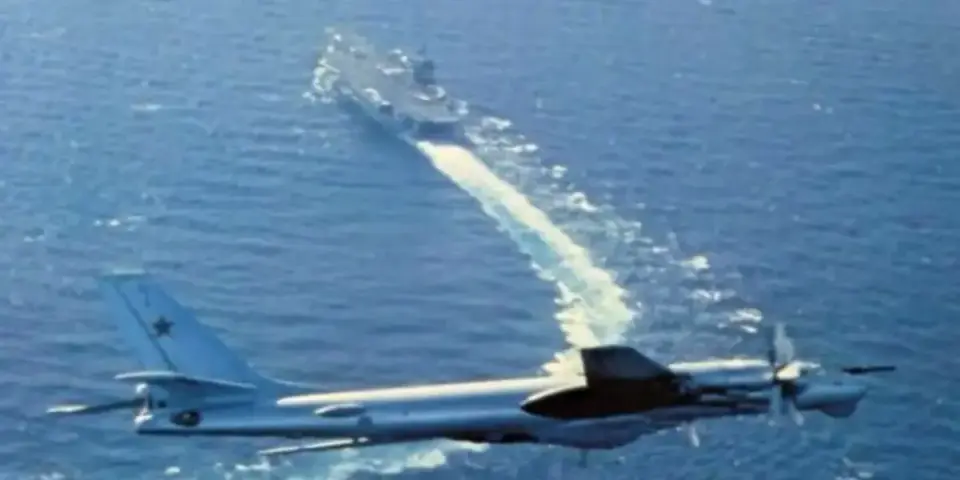
A former US Navy sailor recounts a 1960s or 1970s incident where a Soviet Tu-95 'Bear' bomber flew beneath the flight deck of a US aircraft carrier. The pilot performed a low-altitude pass to monitor NATO movements, prompting a slow, fuel-burning intercept by an F-4 Phantom. The sailor later shared this experience with a former Russian Bear pilot in Texas.
Key points
- The Tupolev Tu-95, known as the 'Bear,' is a four-engine turboprop strategic bomber first flown in 1952 and entered service in 1956.
- During the Cold War, Tu-95s and Tu-142s were used to monitor NATO carrier task forces, often flying over or near carrier decks.
- Former US Navy sailor Francis Smith described a specific incident where a Bear flew below the flight deck level of his carrier.
- Smith was taken above the flight deck by a pilot debriefing officer to observe the Bear as it passed alongside the ship at sea level.
- An F-4 Phantom intercepting the Bear flew at a very slow speed, appearing near a stall and burning significant fuel, to maintain close surveillance.
- Smith later told this story to a former Russian Bear pilot in Houston, Texas, confirming the historical interaction between the two air forces.
Background
This anecdote highlights the close-quarters interactions between Soviet and US naval aviation during the Cold War. While modern US Navy deployments, such as the recent 250-day mission of the USS Abraham Lincoln, focus on operational endurance and crew morale, historical records show that carrier operations were also defined by direct aerial reconnaissance and interception of Soviet bombers. The Tu-95 remains in service with the Russian Aerospace Forces until at least 2040, but its primary role in the 1960s and 1970s was maritime patrol and monitoring of Western naval movements.
Why it matters
The story illustrates the high-risk, close-proximity tactics employed during the Cold War, where Soviet bombers deliberately flew low to test US defensive responses and gather intelligence. It underscores the tension and technical challenges faced by both sides in maintaining air superiority and surveillance in contested maritime zones.
What to watch
No immediate future developments are indicated, as the event is a historical recollection. The Tu-95 fleet continues to serve in the Russian Aerospace Forces, but its role has shifted from direct carrier monitoring to strategic bombing and missile platforms.
Want the full story? Read the original reporting
Read on The Aviation Geek Club