
Buffett's Enduring Advice: Why Small Investors May Outperform Berkshire
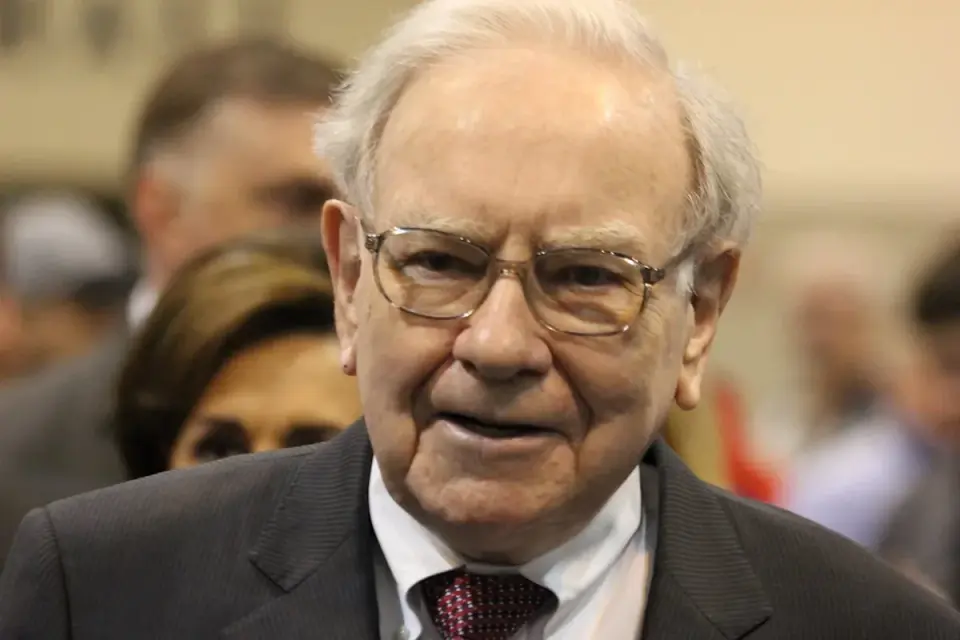
Warren Buffett continues to recommend the S&P 500 index fund as the optimal investment for most people, citing its ability to recover from crashes and generate substantial long-term returns. However, he notes that small investors have a wider range of opportunities than Berkshire Hathaway due to the latter's massive scale, which restricts it to large-cap stocks.
Key points
- Buffett has consistently recommended the S&P 500 index fund, even betting $1 million in 2008 that it would outperform hedge funds over 10 years, which it did.
- The S&P 500 has delivered nearly 750% total returns since 2000, surviving multiple recessions and bear markets, including the Great Recession and the 2022 downturn.
- Buffett stated that small investors can access a 'wider universe' of opportunities compared to Berkshire Hathaway, which is limited to companies with market caps of $10 billion or more.
- Buffett acknowledged that Berkshire's current strategy of buying large, first-class businesses will not produce the same high returns as in the past due to its scale.
- Consistent monthly contributions to an S&P 500 ETF, such as $200 per month, could accumulate over $1 million in 40 years at a 10% average annual return.
Background
This advice aligns with Buffett's recent warnings about overvalued markets, where he emphasized the importance of quality and long-term holding. In July 2026, he also discussed Berkshire's significant investments in Alphabet and Apple, noting that while these are strong bets, they do not represent the entire portfolio strategy. The current market environment, with the S&P 500 at 7,757.64, reflects the resilience of the index despite recent volatility.
How outlets are covering it
The Motley Fool emphasizes the S&P 500's track record and accessibility for new investors, highlighting its long-term performance and Buffett's personal endorsement. ET Now focuses on the structural advantage small investors have over large institutions like Berkshire, noting that Buffett believes smaller sums allow for more diverse and potentially higher-return opportunities. Both sources agree on the value of long-term investing but differ in emphasis: one on the index fund's reliability, the other on the limitations of scale for large investors.
Why it matters
For individual investors, this reinforces the strategy of passive, long-term investing in broad market indices. It also highlights the unique challenges faced by large institutions like Berkshire Hathaway, which must navigate a narrower investment landscape due to their size. Understanding these dynamics can help investors make informed decisions about their own portfolios and expectations.
What to watch
Investors should continue to monitor the S&P 500's performance and consider regular contributions to index funds. For large institutions, the focus will remain on identifying large-cap businesses with strong management and consistent growth. Buffett's estate will invest 90% of his cash in an S&P 500 index fund, further underscoring his confidence in this strategy.
- Warren Buffett Has Recommended the Same Investment for Decades -- and the Long-Term Results Have Been Extraordinary Yahoo Finance
- Warren Buffett shares the ‘secret sauce’ to Berkshire Hathaway's dominance. Use his strategy to grow your own wealth now Yahoo Finance
- This Is the 1 ETF Warren Buffett Recommends Most People Buy -- and History Says He's Always Been Right The Motley Fool
- Warren Buffett’s Investment Lesson: Why small investors have better chance of earning higher returns than Berkshire ET Now
- Warren Buffett's Timeless Investing Wisdom: 3 Simple Rules for Long-Term Success - Gross Profit Margin dars.gov.et
Want the full story? Read the original reporting
Read on Yahoo Finance