
Democrats' Midterm Sweep Triggers Wall Street Rally and AI Policy Fears
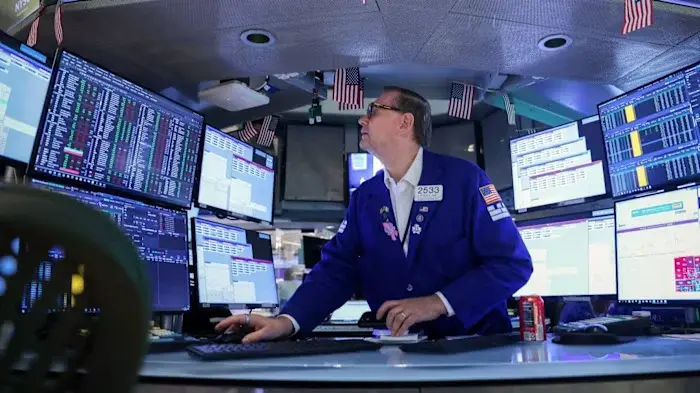
Democrats won a sweeping midterm victory, prompting a sharp rise in US stock markets as investors welcomed the prospect of a divided government. While billionaires like Richard Branson and Reid Hoffman criticized massive political spending, others warned that new Democratic controls could hinder the AI boom by restricting data center construction. Market analysts suggest that while broad economic policies remain constrained by President Trump's veto power, sectors like healthcare and housing may face significant regulatory shifts.
Key points
- The Dow Jones surged 1,569 points and the S&P 500 rose 1.6% on Wednesday, driven by investor optimism regarding political gridlock and reduced uncertainty.
- Elon Musk’s $224 million investment in Texas failed to secure Republican victories for the Senate and governor races, despite his record $474 million in nationwide political giving.
- Investors fear that Democratic control of Congress and key states could delay or block 10 to 15 gigawatts of planned AI data center capacity for 2027, potentially increasing the value of existing facilities.
- Democrats gained leverage to influence Social Security funding and expand retirement plan coverage, though they cannot easily repeal Trump’s tax cuts due to his veto power.
- Oil prices dropped nearly 9% as markets bet that Democratic pressure might force the White House to wind down the conflict with Iran, which has kept gas prices above $4 a gallon.
Background
This election follows a period of high inflation and economic anxiety, with voters citing the cost of essentials as a primary driver for change. The results mark a significant shift from the previous cycle, where Republicans held majorities in both chambers of Congress. The 2026 midterms also coincide with ongoing debates over the 'One Big Beautiful Bill Act' and the future of the Affordable Care Act.
How outlets are covering it
The Financial Times article was inaccessible due to a paywall, offering no direct analysis. The Wall Street Journal argued that while Democratic leaders like Elizabeth Warren are vocal critics of big banks, the Federal Reserve holds more power than Congress, suggesting the political 'bark' may be worse than the 'bite' for financial institutions. CNBC focused on the billionaire class, highlighting a split between critics of political spending and those worried about AI infrastructure hurdles. Bloomberg emphasized the practical limits of Democratic power, noting that while they can influence taxes and healthcare, they cannot easily reverse Trump’s executive actions on tariffs or the Iran war, leaving many economic issues unresolved.
Why it matters
The shift in congressional power could reshape US economic policy for years, particularly regarding AI infrastructure, healthcare costs, and retirement security. While immediate market reactions were positive, long-term implications for inflation, housing affordability, and technological innovation remain uncertain due to the constraints of a divided government.
What to watch
Investors will watch for specific legislative moves on data center regulations and healthcare subsidies. Markets may continue to favor established tech giants over smaller data center operators as construction delays loom. The White House may face increased pressure to address the Iran conflict and tariff policies to curb inflation, though executive actions remain within Trump's control.
- What markets want from the Democrats Financial Times
- For Big Bank Stocks, Capitol Hill’s Bark Is Worse Than Its Bite WSJ
- What Wall Street billionaires are saying about Democrats' midterm sweep CNBC
- What the Midterm Election Results Mean for Your Money Yahoo Finance
- Five financial impacts of the 'bluenami' in the US RTE.ie
Want the full story? Read the original reporting
Read on Financial Times