
Midterm voters reject data center expansion, forcing AI industry to rethink US strategy
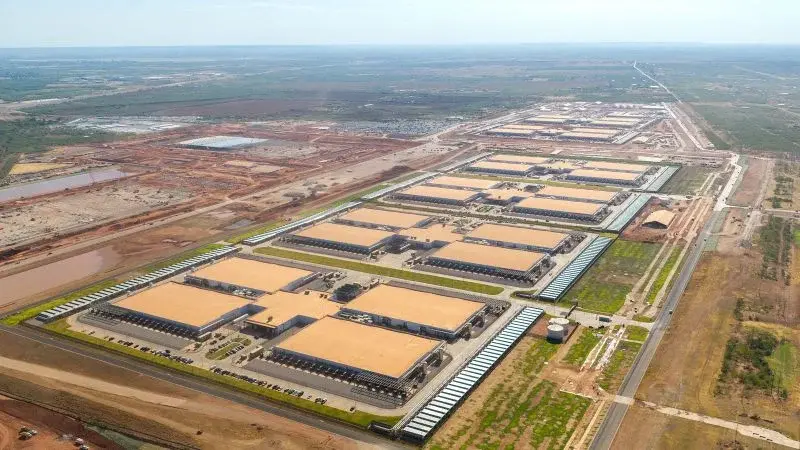
In the 2026 midterms, opposition to data centers became a decisive factor for Democratic victories in traditionally red states. Candidates in Texas, Ohio, and South Carolina leveraged local anger over energy costs and environmental impacts to defeat Republican incumbents. While Democrats won control of multiple state governments, the industry faces a fragmented regulatory landscape. Economists warn that slowing the AI buildout could reduce US GDP growth, while industry leaders argue for balanced regulation rather than outright bans.
Key points
- Democratic candidates successfully linked data center construction to rising electricity bills and corruption, helping them win statewide races in Texas, Ohio, and South Carolina.
- In Texas, James Talarico won the Senate seat and Gina Hinojosa became governor, marking the first Democratic sweep of the state since 1994; Hinojosa has called for a moratorium on new data centers.
- Voters in at least 10 Ohio cities passed charter amendments banning large data centers, with some measures receiving over 80% support.
- Texas is projected to account for roughly a quarter of new US data center power capacity through 2030, but 13.3 gigawatts of announced developments may be at risk under new leadership.
- Economists estimate that AI-related spending accounts for about 20% of US GDP; a slowdown in data center construction could reduce overall economic growth by up to 1%.
- The Nasdaq fell 11% below its all-time high following the election, reflecting investor concerns about regulatory hurdles and rising borrowing costs for AI infrastructure.
Background
Prior to the 2026 midterms, data centers were not a primary national issue, but local opposition grew significantly as projects expanded. Earlier coverage noted that Texas was poised to overtake Virginia as the largest global data center market. The recent election results represent a shift from previous cycles where AI infrastructure was largely supported by both parties, now facing a bipartisan backlash that has forced a reevaluation of the industry's relationship with local communities.
How outlets are covering it
CNN emphasizes the strategic use of data center opposition by Democrats to flip red states, highlighting specific campaigns in Texas and Michigan. Fox News focuses on the economic risks, with industry executives warning that bans could push billions in investment overseas to Canada, Europe, or Mexico. AP News provides a broader regulatory outlook, noting that 32 of 34 victorious governors support stronger restrictions, while CBS News highlights the macroeconomic impact, warning that a slowdown in AI spending could trigger a sharp GDP decline. Outlets differ on the severity of the backlash: CNN and AP frame it as a political victory for Democrats, while Fox and CBS frame it as an economic threat to US competitiveness and growth.
Why it matters
The election results signal a fundamental shift in the political landscape for AI infrastructure. With Democrats controlling multiple state governments and Congress, the industry faces a fragmented regulatory environment that could slow construction and increase costs. This may alter the global distribution of AI data centers, potentially moving investment away from the US. Additionally, the economic reliance on AI-driven growth means that regulatory hurdles could have broader implications for the national economy, affecting stock markets and consumer spending.
What to watch
Incoming Democratic governors, including Gina Hinojosa in Texas and Amy Acton in Ohio, are expected to implement moratoriums or stricter regulations on data center construction. Industry groups like the Data Center Coalition and OpenAI are pushing for 'common sense' regulations to build trust with communities. Investors will monitor whether capital expenditure slows, potentially leading to a reassessment of AI investment strategies. The next major test will be how state legislatures respond to gubernatorial proposals, particularly in Texas, where a Republican-controlled legislature may limit the governor's ability to enact a full moratorium.
- How Democrats used anger over data centers to flip red states CNN
- The Election Day Revolt That Threatens America’s AI Boom WSJ
- One industry faces multi-trillion-dollar reckoning after historic midterm election reshuffle Fox News
- AI data centers took a beating in the midterm elections. A reckoning may be ahead for tech giants AP News
- Data centers are unpopular — and a powerful motor of economic growth, experts say CBS News
Want the full story? Read the original reporting
Read on CNN