
Trump Secures Jensen Huang's Reinstatement as Nvidia CEO Amid Ongoing Chip Export Probes
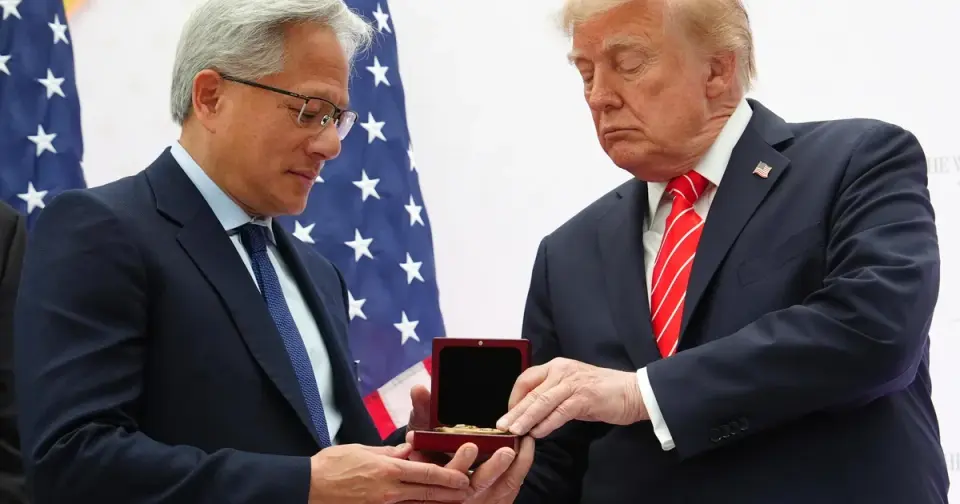
President Trump successfully pressured Nvidia's board to reinstate CEO Jensen Huang on Monday, reversing his resignation from two weeks prior. The move followed intense weekend negotiations where the White House assured the board that Huang posed no national security risk, despite ongoing investigations into his former partner Alice Huang and her firm Megaspeed. While the reinstatement triggered a significant stock rally, it drew sharp criticism from lawmakers and national security officials who argue the decision undermines export control integrity and prioritizes financial stability over security concerns.
Key points
- Trump and Vice President JD Vance spent the weekend negotiating with Nvidia's board, offering legal assurances that Huang was not under Justice Department investigation and did not pose a national security risk.
- Nvidia's board unanimously reinstated Huang as president, CEO, and board director on Monday, reversing his resignation from November 12, 2026, which followed reports of an affair with Alice Huang, a suspected Chinese intelligence asset.
- The White House explicitly stated that its assurances did not extend to Alice Huang or her firm Megaspeed, which was added to a U.S. trade blacklist this week amid allegations of diverting Nvidia chips to China.
- Nvidia shares surged over 30% following the reinstatement announcement, adding approximately $1 trillion to the company's market value and triggering a broad rally in U.S. tech stocks.
- Lawmakers from both parties and national security officials, including Secretary of State Marco Rubio and Treasury Secretary Scott Bessent, expressed private concern about the decision, with some allies voicing alarm over their public support for the move.
- Huang is scheduled to appear before House and Senate panels next week to address the reinstatement and ongoing investigations into potential export control violations involving Megaspeed and Super Micro Computer.
Background
Jensen Huang resigned as Nvidia CEO on November 13, 2026, after reports of extramarital affairs with Alice Huang, a former Megaspeed executive believed to be a Chinese intelligence asset, and two company employees. Megaspeed, a Singapore-based firm, had purchased nearly $5 billion in AI chips from Nvidia over three years and was added to a U.S. trade blacklist on November 23, 2026, amid allegations of diverting chips to China. The U.S. Justice and Commerce departments had been investigating Megaspeed since 2024 over potential export control violations. Nvidia had reached a $5 trillion market cap earlier in 2026, driven by the AI boom, and its stock spiraled after Huang's resignation, imperiling a company whose semiconductors and financing deals have powered U.S. AI growth. China's foreign ministry rejected the spy allegations, calling them 'unsubstantiated' and 'nothing but smears against China.'
Why it matters
The reinstatement of Jensen Huang as Nvidia CEO highlights the tension between financial stability and national security in the U.S. technology sector. While the move stabilized Nvidia's stock and supported the broader AI boom, it raised concerns about the integrity of U.S. export controls and the potential for foreign intelligence influence in critical technology supply chains. The decision also underscores the growing role of the White House in corporate governance, particularly for companies deemed essential to national economic interests. Ongoing investigations into Megaspeed and Super Micro Computer will likely shape future policies on semiconductor exports and corporate accountability.
What to watch
Jensen Huang is scheduled to appear before House and Senate panels next week to address the reinstatement and ongoing investigations into potential export control violations involving Megaspeed and Super Micro Computer. The FBI and Justice Department's National Security Division will continue to examine potential export control violations, while lawmakers from both parties are expected to scrutinize the White House's assurances and the board's decision. The outcome of these hearings could influence future policies on semiconductor exports and corporate governance, particularly for companies deemed essential to national economic interests.
- Inside Trump's effort to reinstate Jensen Huang as Nvidia's CEO CBS News
- The Frantic White House Push to Get Jensen Huang Back WSJ
- Jensen Huang Returns: Timeline Of The Scandal That Led To Resignation And Comeback Forbes
- Opinion | Why Jensen Huang Was Reinstated at Nvidia The New York Times
- Opinion | The clearest conflict of interest involving Nvidia is no secret The Washington Post
Want the full story? Read the original reporting
Read on CBS News