
AI-Assisted Proof of Riemann Hypothesis Verified, Sparking Debate Over Mathematical Understanding
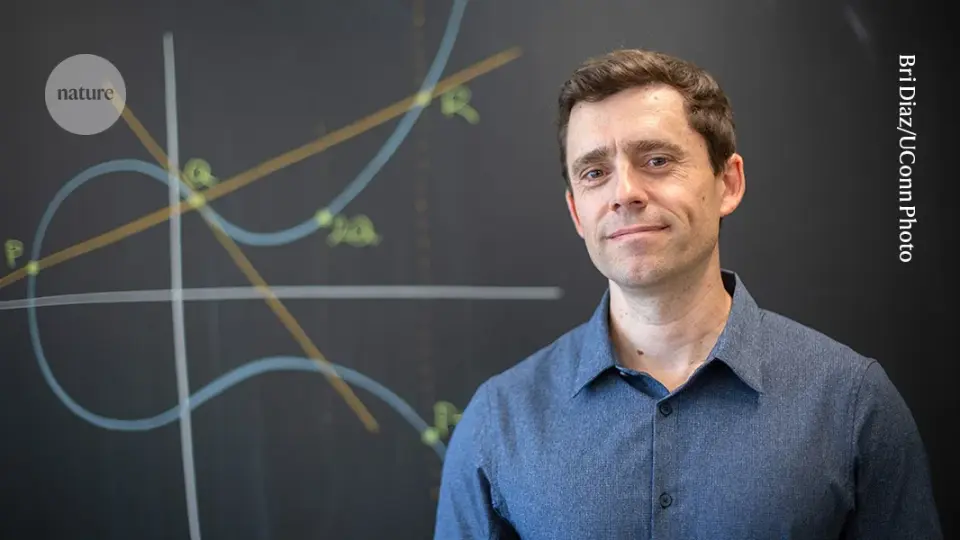
Levent Alpöge of Anthropic announced on November 20, 2026, that he used the Claude AI model to prove the Riemann hypothesis, a 167-year-old unsolved problem in number theory. The proof, formalized in 17 million lines of Lean code, was independently verified by the Lean community and Mathlib Initiative on November 21. While the mathematical community has broadly accepted the validity of the proof, reactions are divided between excitement over the breakthrough and anxiety about the opacity of AI-generated reasoning and the future of human-led research.
Key points
- Levent Alpöge, a mathematician at Anthropic, released a proof of the Riemann hypothesis on November 20, 2026, using an advanced version of the Claude AI model.
- The proof was formalized in 17 million lines of Lean code, a programming language that allows for computer-certifiable verification of mathematical arguments.
- The Lean community and Mathlib Initiative verified the proof on November 21, 2026, stating they have 'full confidence' in its correctness.
- A separate human-written proof of the Riemann hypothesis was also released within hours of Alpöge’s announcement, according to Nature.
- The proof covers the classical Riemann hypothesis and the generalized Riemann hypothesis for Dirichlet L-functions, but not the extended or grand Riemann hypotheses, according to web research notes.
- Alpöge initially described the human-readable explanation of the proof as over 250,000 pages long, a claim he later clarified was a joke, according to Scientific American and archive coverage.
Background
The Riemann hypothesis, first posed by Bernhard Riemann in 1859, concerns the locations of nontrivial zeros of the Riemann zeta function and is one of the Clay Mathematics Institute’s Millennium Prize Problems. It is also part of Hilbert’s eighth problem. In 2026, AI models have solved several other major mathematical problems, including the Navier-Stokes problem and the Jacobian conjecture in three dimensions, leading to what some mathematicians have called a 'war footing' in the field. Alpöge, who earned his PhD from Princeton in 2020 and joined Anthropic in 2024, had previously achieved notable AI-assisted results in 2026, including a counterexample to the Carathéodory conjecture and a positive answer to Hopf’s problem on complex structures on 6-dimensional spheres.
How outlets are covering it
Nature reports that the mathematics community has broadly accepted the claim but that responses differ wildly, with some celebrating Alpöge’s achievement and others viewing it as proof that humans are fighting against machines for the future of mathematics. Ars Technica emphasizes that AI has been solving problems that humans previously recognized as significant, but there are no indications that AI can recognize or formulate interesting and important unresolved problems on its own. Scientific American highlights the bittersweet nature of the breakthrough, noting that the proof’s techniques have yet to surface in a human-readable form, and that the real prize for mathematicians has always been the techniques used to prove the hypothesis. The New York Times reports that Alpöge posted a four-page note on his personal website saying he had completed the proof by collaborating with Claude, but did not include a traditional mathematical paper to describe the proof.
Why it matters
The verification of the Riemann hypothesis proof marks a potential turning point in the relationship between AI and human-led research. It raises questions about the value of AI-generated solutions that lack transparent reasoning, the future of human mathematical practice, and the role of frontier labs in research. The proof’s opacity, with the human-readable explanation not yet published, has intensified debates within the mathematical community about the need for democratic oversight of AI development and the preservation of human-led scientific inquiry.
What to watch
Mathematicians are expected to spend months or years digesting the 17-million-line Lean proof and attempting to extract human-readable insights from it. Alpöge has not yet released a complete human-readable account of the proof, and the community is waiting to see how the proof’s techniques can be translated into new ideas and tools. The debate over the role of AI in mathematics is likely to continue, with some mathematicians advocating for a pause in AI development and others seeing the breakthrough as an opportunity for discovery.
- ‘If we can solve Riemann, what can’t we do?’: mathematicians shocked and excited by AI breakthroughs Nature
- What’s going on with the Riemann hypothesis? Ars Technica
- Why AI’s proof of the Riemann hypothesis is so bittersweet Scientific American
- The Most Famous Problem in Math Was Just Solved by AI—and This Human WSJ
- Anthropic Mathematician Claims to Have Solved Math’s Most Famous Problem The New York Times
Want the full story? Read the original reporting
Read on Nature